





The Northern Network: More Than One Route
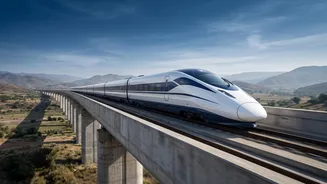
When discussing the 'North Corridor,' it's not a single line but a network of proposed high-speed rail projects designed to connect Delhi with major economic, cultural, and political hubs. The primary routes currently in various planning phases include
the Delhi-Varanasi, Delhi-Amritsar, and Delhi-Ahmedabad corridors. In late 2026, the Ministry of Railways also approved the extension of the Delhi-Varanasi and an associated Varanasi-Siliguri line all the way to Guwahati, creating a massive 1,500 km artery across Northern and North-Eastern India. These projects are managed by the National High Speed Rail Corporation Limited (NHSRCL), the same body implementing the country's first bullet train project between Mumbai and Ahmedabad.
What 'Planning Stage' Actually Means
A project being in the 'planning stage' is a lengthy and complex phase that happens long before any construction begins. The most critical component is the creation of a Detailed Project Report (DPR). This document is the blueprint for the entire corridor, outlining the final alignment, station locations, ridership forecasts, environmental impact, and cost estimates. To create the DPR, NHSRCL commissions multiple surveys, including aerial LiDAR surveys for precise mapping and ground surveys for social and environmental impact assessments. Once the DPR is complete, it is submitted to the Ministry of Railways. If approved, it then moves to the Union Cabinet for final sanction, which is necessary to begin the challenging processes of land acquisition and funding allocation.
Delhi-Varanasi: The Most Advanced Northern Line
The Delhi-Varanasi corridor is arguably the frontrunner among the new northern projects. The DPR for this roughly 813 km line has been submitted to the Railway Ministry. The proposed route starts from Sarai Kale Khan in Delhi and passes through key Uttar Pradesh cities like Noida, Agra, Lucknow, Prayagraj, and Bhadohi before reaching Varanasi. There is also a proposed spur line to connect Ayodhya. If built, the corridor would slash the travel time between Delhi and Varanasi to just about 3 hours and 33 minutes. The project is envisioned to be developed in phases, with the Delhi-Varanasi section being the first.
Delhi-Amritsar & Delhi-Ahmedabad Updates
The proposed Delhi-Amritsar corridor aims to connect the capital with major hubs in Punjab, including a spur to Chandigarh, covering about 465 km. This line would significantly reduce travel time, but as of late 2026, it remains in the proposal stage and was notably not included among the seven high-priority corridors announced in the Union Budget. Similarly, the 886 km Delhi-Ahmedabad corridor, planned to run via Jaipur and Udaipur, also has its DPR submitted and approved by the Railways. This line is strategically important as it would eventually merge with the under-construction Mumbai-Ahmedabad corridor, creating a seamless high-speed spine between Delhi and Mumbai. However, both projects are still pending final cabinet approvals before land acquisition can formally commence.
Patience is Key: Challenges and Timelines
Building a high-speed rail network is a multi-decade marathon, not a sprint. The primary challenges are land acquisition, which has caused significant delays in the Mumbai-Ahmedabad project, and securing the immense funding required. For example, the Delhi-Varanasi corridor alone is estimated to cost over ₹1.7 lakh crore. Officials estimate that even after a DPR is approved, it can take three to four years just to acquire land and get all necessary clearances before construction can even begin. While estimated travel times are often announced, official completion dates are rarely given at this early stage. For context, the first section of the Mumbai-Ahmedabad corridor is targeted to open in 2027, years after its initial conception.