
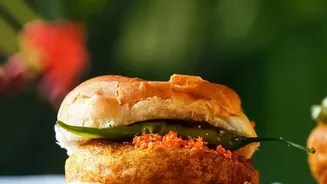
The Promise of Perfection
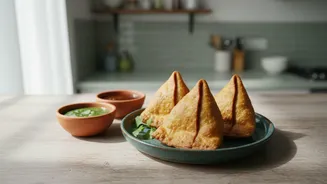
Picture the perfect samosa. It’s a flawless, golden-brown triangle, its pastry shell blistered and brittle, promising a satisfying shatter with the first bite. Inside, a warm, fragrant mix of spiced potatoes and peas awaits. Beside it sits a steaming
cup of masala chai or a dollop of tangy tamarind chutney. This is the image we hold in our minds, the one that fuels our cravings. This is the samosa of our collective memory, a snack that’s a staple at festivals, a comfort during monsoon rains, and an essential part of daily life across India. Its cultural significance is immense, a unifying food that transcends class and community, enjoyed everywhere from street corners to celebratory feasts. It's more than just a snack; it's a piece of history that travelled from the Middle East to become quintessentially Indian.
The Delivery Dilemma
Now, picture the reality of that same samosa after a 30-minute journey in a delivery box. The crispness has vanished, replaced by a soft, slightly damp exterior. The once-proud triangle might be a little deflated, its structural integrity compromised. This is the result of a simple, cruel enemy: steam. When a piping hot fried snack is sealed in a container, the escaping heat and moisture get trapped. The steam condenses into water droplets, which then rain back down onto the pastry, turning that beautiful, crunchy shell into a sad, soggy wrapper. The phenomenon, known as moisture migration, also happens from the inside out, as water from the hot filling moves toward the drier crust, softening it along the way. The result is an experience that is a pale imitation of the real thing, proving the headline’s point—the idea of a delivered samosa is wonderful, but the execution often fails.
The Simple Science of Soggy
The transformation from crispy to soggy isn't just a kitchen tragedy; it's a matter of chemistry and physics. The magic of frying comes from a process called the Maillard reaction, where high heat transforms sugars and proteins on the food’s surface, creating the characteristic golden colour and complex flavour. Simultaneously, the intense heat of the oil (ideally around 175°C) rapidly dehydrates the surface, creating a porous, rigid crust that we perceive as crispy. However, that crispiness is a fragile state. The potato filling of a samosa is high in starch. When cooked and then allowed to cool, these starch molecules undergo a process called retrogradation, where they recrystallize and push water out. This expelled moisture has nowhere to go in a sealed box except into the pastry. Trapped steam and starch retrogradation work together, a one-two punch that defeats the crunch every time.
The Magic of Fresh from the Kadai
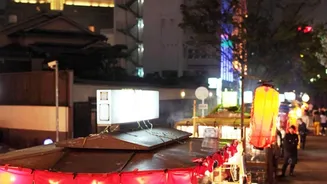
To truly appreciate the glory of a samosa, you must have it fresh. Stand near a halwai’s shop and the experience begins before you even take a bite. It’s a sensory symphony: the rhythmic sound of dough being rolled, the sharp hiss as a fresh batch hits the bubbling oil in a giant kadai, and the intoxicating aroma of spices mingling in the air. When the vendor plucks a perfectly fried samosa from the hot oil and places it on a plate—perhaps cracking it slightly and drizzling it with chutneys—that is the moment of peak perfection. The crust shatters exactly as it should, the steam from the filling escapes into the air instead of into the pastry, and the contrast between the hot, savoury interior and the crispy shell is a textural delight. Humans are hardwired to associate crunch with freshness, and this experience is the ultimate proof.
An Experience, Not Just a Convenience
In an age of unparalleled convenience, where almost any food can be brought to our doorstep, it’s easy to forget that some things are not meant to travel. The joy of a samosa isn’t just in its taste; it’s in the ritual. It’s about taking a break in the day, standing with friends or colleagues at a street-side stall, and sharing a moment over a simple, perfectly executed snack. It’s about the immediacy and the atmosphere, things that no delivery app can replicate. Choosing to seek out that fresh-from-the-fryer experience is a small act of rebellion against the homogenisation of our food culture. It’s a declaration that some things are worth the effort, that the journey to the food is as important as the food itself.