








What is NavIC and Why Does It Matter?
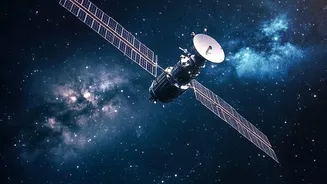
NavIC, which stands for Navigation with Indian Constellation, is India’s independent regional satellite navigation system, developed by the Indian Space Research Organisation (ISRO). Similar to the American GPS, Russia's GLONASS, or Europe's Galileo,
NavIC provides crucial Position, Navigation, and Timing (PNT) services. Its coverage area includes the Indian mainland and a region extending 1,500 kilometres beyond its borders. This homegrown system is vital for two key reasons. First, it offers a Standard Positioning Service (SPS) for civilian use in applications like vehicle tracking and disaster management. Second, and more critically, it provides a secure, encrypted Restricted Service (RS) for military and strategic users, ensuring that India’s defence forces have reliable navigation that cannot be denied or degraded by foreign powers during a crisis—a lesson learned during the 1999 Kargil conflict.
A Constellation Facing Wear and Tear
The original NavIC constellation, while a landmark achievement, has faced significant issues. A satellite navigation system needs at least four functional satellites to provide an accurate position. However, the first-generation satellites have been plagued by the failure of their imported rubidium atomic clocks, which are the ultra-precise timekeepers essential for calculating location. These failures, combined with some satellites simply reaching the end of their planned ten-year operational life, have reduced the number of fully functional satellites below the minimum required for standalone navigation services. As of early 2026, reports indicated that only three satellites remained fully available for positioning, crippling the system's ability to function independently and underscoring the urgent need for replenishment.
Enter NVS-03: A New Generation Takes Flight
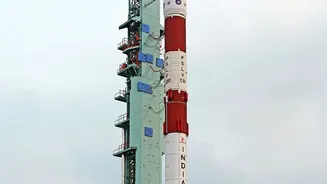
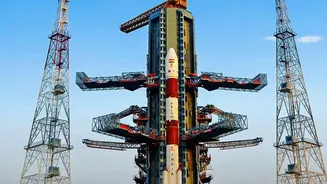
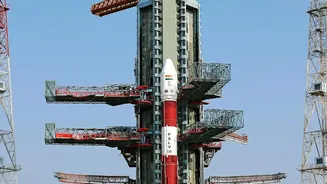
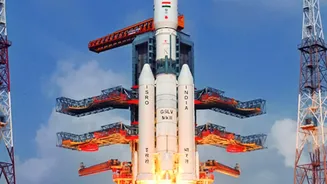
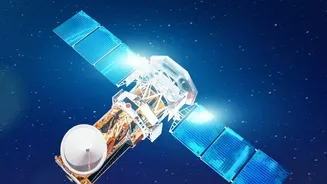
NVS-03 is the third satellite in the second generation of NavIC spacecraft, engineered specifically to address the shortcomings of the older fleet. With a launch targeted for October 2026 aboard a GSLV Mk II rocket, NVS-03 is designed to augment the existing constellation and replace ageing units. Its primary mission is to restore the full operational capability of the NavIC system, ensuring continuity of service for both civilian and military users. This is part of a broader plan to launch a series of five second-generation satellites (NVS-01 to NVS-05) that will not only maintain but also significantly enhance India's sovereign navigation infrastructure. The new satellite has a longer planned mission life of 12 years, promising greater durability.
The Heartbeat of Navigation: An Indian Atomic Clock
One of the most significant upgrades in the NVS series, including NVS-03, is the inclusion of an indigenously developed rubidium atomic clock. Developed by the Space Applications Centre in Ahmedabad, this domestic clock is a direct response to the premature failures of the imported clocks used in the first-generation satellites. An atomic clock's extreme precision is the core of any navigation system; even a timing error of one-billionth of a second can throw off a position by several metres. By developing its own atomic clock, ISRO not only enhances the reliability of the satellites but also takes a major leap forward in technological self-reliance, reducing dependence on foreign components for such a critical system.
Upgraded for a Wider Reach with the L1 Band
Beyond ensuring continuity, NVS-03 introduces a new capability designed to make NavIC more accessible to the public. While older NavIC satellites transmitted signals on the L5 and S bands, the new generation adds the L1 frequency band. The L1 band is the most common frequency used by global navigation systems like GPS and is the one most civilian devices, such as smartphones, smartwatches, and other low-power gadgets, are designed to receive. The inclusion of the L1 band will significantly broaden the interoperability and use of NavIC in consumer electronics without requiring special hardware, paving the way for its integration into the everyday lives of Indian citizens.