








A Week to Celebrate a 'Rocket Revolution'
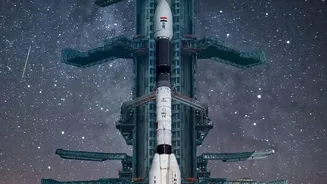
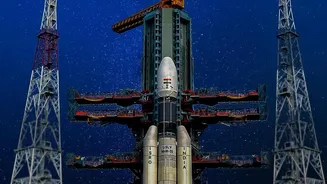
World Space Week 2026 is being marked across India with a clear and powerful theme: the 'Rocket Revolution'. This international observance commemorates milestones like the launch of Sputnik 1, but in India, it has become a platform to highlight the nation's
own soaring ambitions. The Indian Space Research Organisation (ISRO), along with educational institutions and private firms, is hosting exhibitions, lectures for students, and workshops focused on launch technology. The theme is particularly relevant as India works to develop a more diverse launch ecosystem, emphasizing reusable technology and the growing role of private companies. This focus signals a strategic shift, moving beyond singular achievements to building the fundamental infrastructure for a new era in space.
ISRO's Next-Generation Launchers
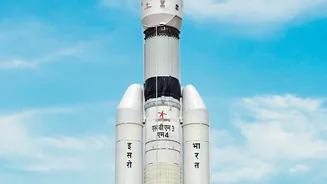
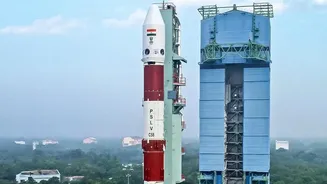
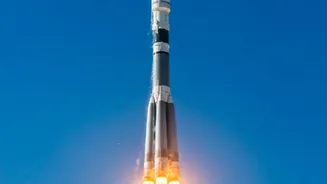
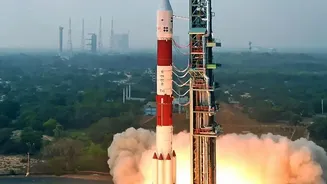
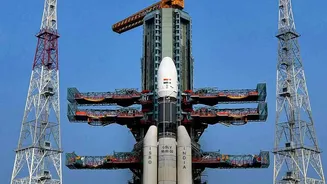
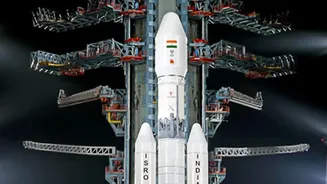
At the heart of this revolution is ISRO's concerted push into next-generation rocketry. While workhorse rockets like the PSLV and LVM3 remain the backbone of its operations, the future lies in reusability. A key project is the 'Pushpak' Reusable Launch Vehicle (RLV), a winged technology demonstrator that has undergone several successful landing experiments. The knowledge gained from Pushpak is feeding into the development of the Next Generation Launch Vehicle (NGLV), a heavy-lift rocket designed with a recoverable first stage. The goal is to dramatically slash the cost of accessing space, potentially reducing it by a factor of ten to around $2,000 per kilogram to Low Earth Orbit. This would not only make commercial launches more competitive but also make ambitious future projects, like the planned Bharatiya Antariksh Station, more feasible.
The Rise of Private Rocket Builders
The 'Rocket Revolution' isn't just an ISRO-led initiative. Since the space sector was opened to private participation in 2020, India has seen a boom in space-tech startups, with over 400 now active. Companies like Hyderabad's Skyroot Aerospace and Chennai's Agnikul Cosmos are at the forefront of developing their own launch vehicles. In July 2026, Skyroot made history when its Vikram-1 rocket successfully deployed satellites, making India only the third nation with a privately developed orbital launch vehicle. Agnikul is also making strides with its Agnibaan rocket, which features a unique single-piece 3D-printed engine. These companies are introducing modular, low-cost launch vehicles tailored for the booming small satellite market, helping to democratize access to space. This private-sector push allows ISRO to hand over routine operations and focus its resources on advanced research, deep-space exploration, and national security missions.
Fueling India's Future in Space
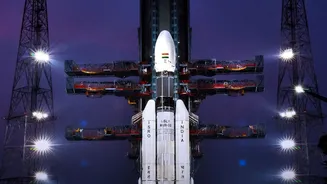
This focus on advanced rocket technology is directly linked to India's most ambitious space goals. The Gaganyaan programme, which aims to send Indian astronauts into orbit, is a primary driver. The first of three uncrewed test flights for the mission is targeted for late 2026, with the first crewed flight planned for 2027. A reliable, human-rated launch vehicle, a modified LVM3, is critical for astronaut safety. Furthermore, a fleet of powerful and affordable rockets is essential for deploying large satellite constellations, undertaking future missions to the Moon and other planets, and establishing the Bharatiya Antariksha Station, India's own space station, with the first module targeted for a 2028 launch. By increasing its launch frequency and driving down costs, India aims to capture a much larger share of the global space economy, targeting $44 billion by 2033.