





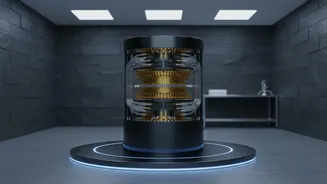
Beyond the Buzzword: What Is Quantum?
Traditional computers, like the one in your phone or laptop, process information using ‘bits’, which can be either a 0 or a 1. It’s a binary, on-or-off system. Quantum computers use ‘qubits’, which can exist as a 0, a 1, or both at the same time, thanks
to a principle called superposition. This, combined with another phenomenon called entanglement, allows them to process vast amounts of information simultaneously. The potential is immense. Quantum machines could one day solve complex problems that are currently impossible for even the most powerful supercomputers, revolutionising everything from drug discovery and materials science to financial modelling and cryptography.
From Theory to Tangible Access
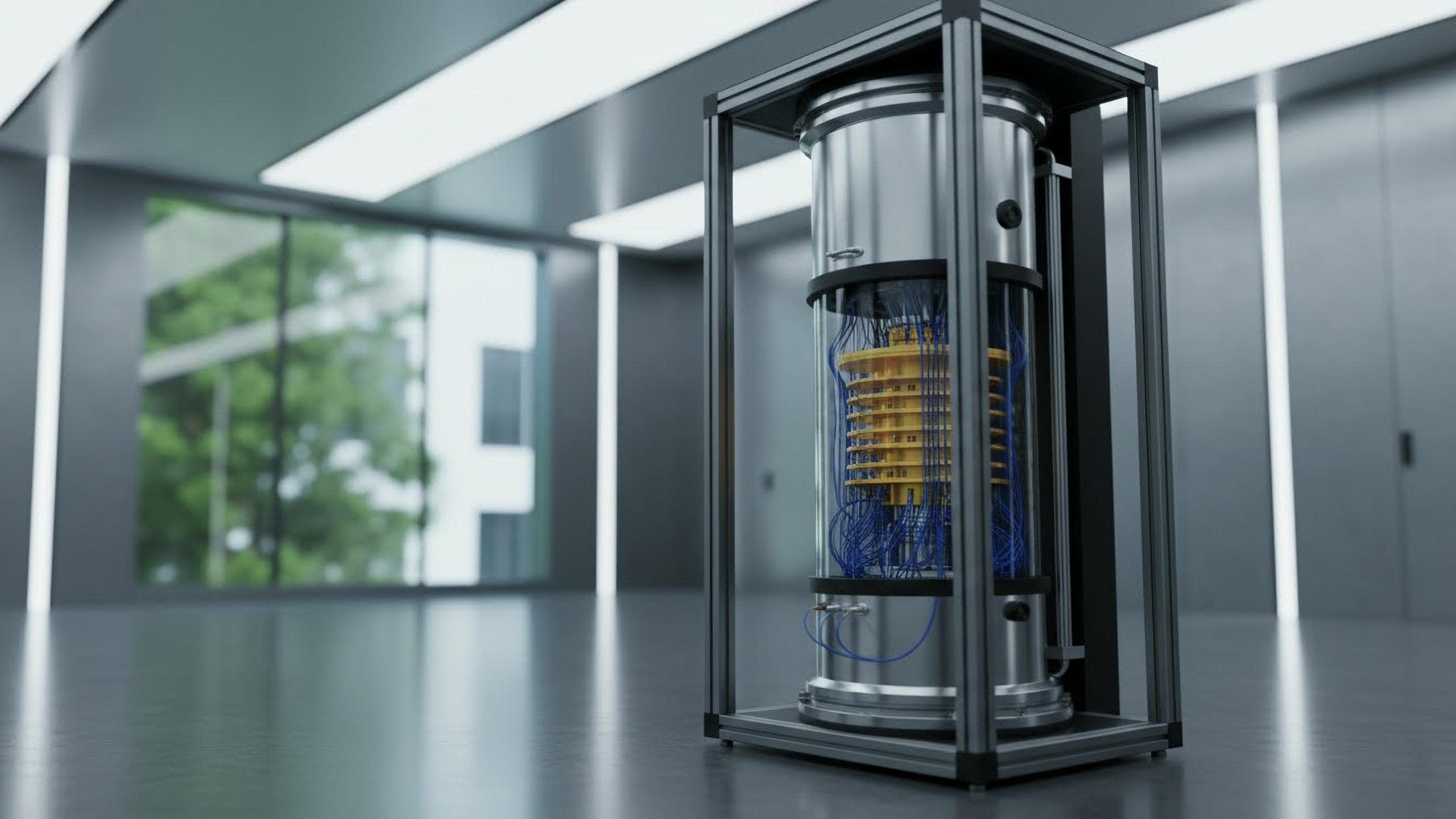
The major shift highlighted by the headline is the move from theoretical research to practical, hands-on access. For a long time, Indian researchers and startups could only experiment with quantum concepts through cloud-based simulators, which mimic a quantum computer's behaviour but don't offer real hardware experience. Now, several initiatives are opening the doors to actual quantum systems. For instance, Alliance University in Bengaluru recently inaugurated AU-QUASAR, which it calls India's first commercially accessible quantum experience centre. This facility, a collaboration with Indian quantum company QpiAI, houses an 8-qubit quantum computer physically on its campus, allowing users to work directly with the hardware. Similarly, initiatives in Andhra Pradesh and Tamil Nadu are also providing direct or remote access to real quantum machines, aiming to bridge the gap between academic theory and industrial application.
Why 'Hands-On' Is a Game-Changer
Providing direct access is about more than just novelty; it's a strategic move to build a robust ecosystem. Working with real quantum hardware allows researchers and developers to understand its unique challenges and potential, from system noise and qubit instability to the practicalities of running algorithms. This kind of experience is crucial for developing a skilled workforce that can build, operate, and innovate on quantum technologies. According to a recent report, one of the biggest challenges in the field is a significant talent gap. By lowering the barrier to entry, these public centres enable startups and academic institutions to experiment and develop proof-of-concept solutions without the massive capital investment typically required to build or own a quantum computer.
Powering India's National Quantum Mission
These access-focused centres align perfectly with the goals of India's National Quantum Mission (NQM). Launched in 2023 with an outlay of over ₹6,000 crore, the mission aims to establish India as a global leader in the field. A key part of the NQM strategy is to create a vibrant ecosystem that nurtures startups and scales up industrial R&D. The mission involves setting up four Thematic Hubs (T-Hubs) at premier institutions like IISc Bengaluru and IITs in Madras, Bombay, and Delhi to lead development in quantum computing, communication, sensing, and materials. By providing the infrastructure and access points for startups and researchers to test their ideas, these new public-access centres act as crucial enablers for the NQM's broader ambitions, helping to translate research into commercially viable products and services. Just recently, the NQM announced support for eight startups to accelerate innovation in areas like secure communication and superconducting systems.