





The Farmer's Balance Sheet
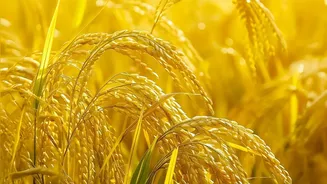
Before a single grain of rice reaches a plate, a farmer confronts a long list of expenses. The cost of production is the foundational element of pricing and includes everything from seeds and fertilisers to the labour required for planting and harvesting.
Water availability, either from monsoon rains or irrigation, is a critical and often costly variable. In recent years, deficient rainfall in key cultivation areas has put upward pressure on prices. Additionally, rising fuel prices impact the cost of running machinery and transporting the harvest from the farm to the market, adding another layer to the final price consumers pay. Even government policies on taxes, such as the GST on agricultural equipment, can influence a farmer's overheads and, consequently, the price of rice.
The Government's Tightrope Walk
The Indian government plays a multifaceted role in the rice economy, navigating a difficult balance between ensuring farmers' livelihoods, managing national food security, and keeping prices affordable for a population of over a billion. Its most visible tool is the Minimum Support Price (MSP), a floor price at which it procures grain for the Central Pool. This procured rice stocks the Public Distribution System (PDS), which supplies subsidised food to roughly 800 million people. However, this system is a massive logistical and financial undertaking. The government must manage procurement, storage in Food Corporation of India (FCI) godowns, and distribution, all of which comes with significant costs and challenges like leakage and storage losses. When buffer stocks are high, the government might release grain through open market sales to control prices, but when stocks are low, its options are limited.
The Global Ripple Effect
India is a dominant force in the global rice market, accounting for over 40% of the world's exports. This means domestic prices are inevitably linked to international dynamics. When global demand is strong, particularly from major importers in the Middle East and Africa, export prices can rise, which often translates to higher prices at home. Geopolitical events can also have a significant impact. For instance, recent reports from September 2026 indicate that the US-Iran conflict has prompted many countries to stockpile food supplies, leading to a surge in demand for Indian rice and a subsequent price increase of 15-25% for both basmati and non-basmati varieties. Conversely, government decisions to restrict or ban exports to protect domestic supply can send shockwaves through global markets, affecting prices worldwide.
The Hidden Sources of Conflict
The term "conflict" in the context of rice goes far beyond farmer protests. It refers to deep-seated structural tensions. One of the most significant is over water. The cultivation of water-intensive paddy, especially in states like Punjab, Haryana, and the Cauvery delta, has led to severely depleted groundwater tables and intense disputes between states like Karnataka and Tamil Nadu over river water sharing. This scarcity creates a direct conflict between the agricultural needs of different regions. There is also a conflict between traditional farming methods and the long-term sustainability of the land. Intensive cultivation has, in some areas, led to soil degradation and a decline in productivity, forcing farmers into a difficult economic position. This cycle of debt and depleting resources is a chronic source of distress and conflict within the agricultural community.
Beyond the Price Tag
Focusing solely on price mechanisms misses the larger picture of agricultural distress and environmental sustainability. While ensuring a fair price is crucial, a lasting solution requires addressing these deeper, systemic issues. Experts point to the need for structural reforms, including promoting crop diversification to reduce the over-reliance on water-guzzling paddy, especially in water-stressed regions. Investing in technologies for better water management, improving soil health, and strengthening supply chains to reduce wastage are also critical. The challenges are immense, involving a transformation from subsistence farming to a more modern, sustainable value chain. This means thinking not just about the price of this year's harvest, but about the long-term health of India's farms and farmers.