


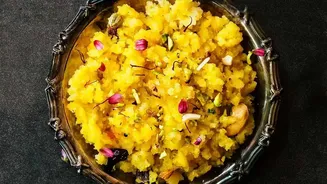
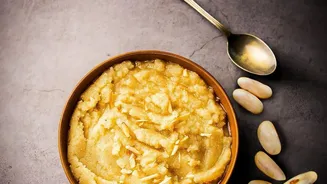
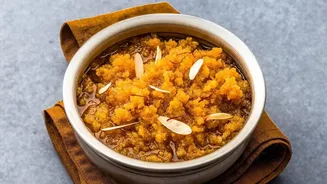
A Beloved Dessert for Feasts and Fasts
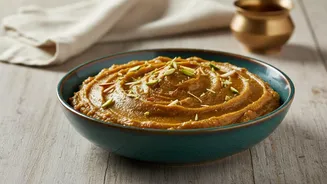
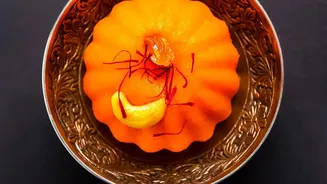
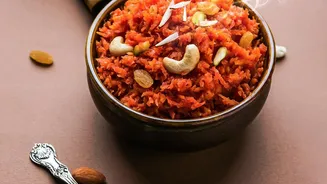
Aloo Halwa, or potato halwa, holds a special place in the hearts of Indian food lovers. It’s a deceptively simple dessert that transforms the humble potato into a rich, decadent treat. While delicious any time of year, this halwa is particularly popular
during fasting periods like Navratri, Ekadashi, or Shivratri. Because it is made from potatoes and other permitted ingredients, it serves as a 'falahari' dish, providing a quick and filling source of energy. Beyond its role in religious observance, it is pure comfort food—a warm, sweet indulgence that evokes a sense of nostalgia and home-cooked love.
Gathering Your Essential Ingredients
The magic of Aloo Halwa lies in its simplicity, with just a few key ingredients coming together perfectly. For this recipe, you will need approximately 500 grams of potatoes (about 4-5 medium-sized), which should be boiled and peeled. The other stars are half a cup of pure desi ghee for that irreplaceable aroma and flavour, about a cup of milk for creaminess, and three-quarters to one cup of sugar, which you can adjust to your taste. To bring it all together, you'll need half a teaspoon of green cardamom powder for fragrance. For a final flourish, keep a handful of chopped nuts like almonds, cashews, and pistachios ready for garnish.
Step 1: The Perfect Potato Preparation
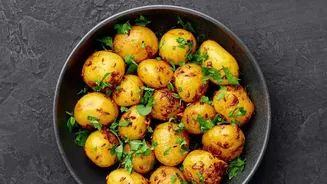
The texture of your halwa begins with how you prepare the potatoes. Start by boiling them until they are completely soft and a knife inserts easily. Once they have cooled down just enough to handle, peel them. The next step is crucial for a smooth halwa: mashing the potatoes. For a truly lump-free, silky texture, it's best to grate the boiled potatoes or pass them through a sieve or a ricer. While you can mash them with a standard masher, taking this extra step ensures you won't have any un-mashed bits in your final dessert. Set your perfectly smooth mashed potatoes aside as you prepare the pan.
Step 2: Roasting for Flavour
This is the most important stage, where patience pays dividends. Heat the ghee in a heavy-bottomed or non-stick pan over medium heat. Once the ghee is melted and warm, add your mashed potatoes. Now, begin the process of roasting, or 'bhunai'. Stir continuously, breaking up the potato and mixing it with the ghee. The mixture will absorb the ghee at first. Keep sautéing for about 10 to 15 minutes. You are looking for a transformation: the potato will slowly turn a light golden brown, and the kitchen will fill with a wonderful, nutty aroma. This roasting step is what gives the halwa its characteristic deep flavour.
Step 3: Creating Creaminess
Once the potato mash is fragrant and golden, it's time to add the sugar and milk. Add the sugar first and continue to stir. As it melts, the halwa mixture will become a bit loose. Keep cooking until it starts to come together again. Now, slowly pour in the milk while stirring constantly to prevent lumps from forming. Continue to cook the mixture, stirring frequently. The halwa will bubble and gradually thicken as the milk is absorbed and the moisture evaporates. You'll know it's ready when the halwa starts to pull away from the sides of the pan and the ghee begins to ooze out from the edges.
Final Touches and Serving
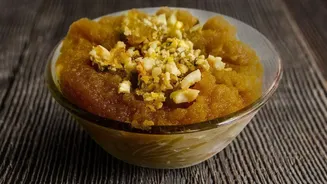
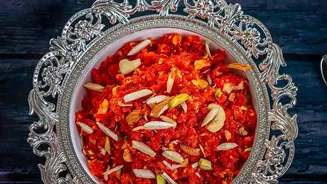
With the halwa at the perfect consistency, it's time for the finishing touches that elevate it from good to great. Turn the heat down to low and sprinkle in the green cardamom powder, stirring to distribute it evenly throughout the mixture. Add most of your chopped nuts, reserving some for garnish. Give it one final mix and cook for another minute. The Aloo Halwa is now ready. Serve it hot, garnished with the remaining chopped almonds and pistachios. The contrast between the warm, soft halwa and the crunchy nuts is a delightful experience.