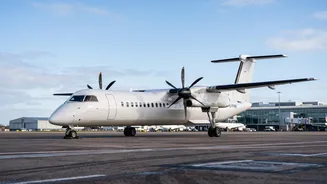









Kerala's government has given its approval to an ambitious proposal to launch India's first airline in the cooperative sector. Tentatively named 'Co-Keralam', the venture aims to reshape regional air travel by putting community ownership at its core.
What Exactly Is a Co-operative Airline?
Unlike traditional airlines owned by large corporations or governments, a co-operative airline is owned and controlled by its members. In this case, the plan involves around 200 of Kerala’s cooperative societies investing to become shareholders. Spearheaded by C. N. Vijayakrishnan, the chairman of the MVR Cancer Centre and Research Institute, the project aims to extend the state's robust cooperative movement—traditionally focused on banking and agriculture—into the capital-intensive aviation industry. The promoters will formally hand over the company's registration certificate and bylaws to the state government, marking a significant step forward for the project. The state government has granted in-principle approval, but will not provide direct financial assistance. Instead, the model is inspired by the successful public-private partnership of Cochin International Airport Ltd (CIAL), which was also built with capital from a wide base of investors, including Non-Resident Indians (NRIs).
The Strategic Goal: Connectivity and Affordability
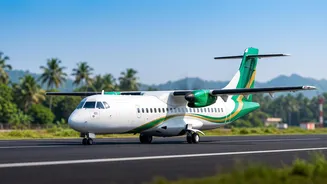
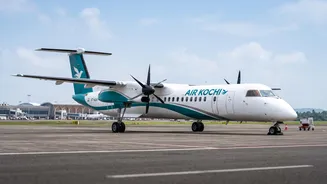
The primary objective of 'Co-Keralam' is to enhance regional connectivity and provide more affordable air travel options. The initial plan is to lease two 72-seater aircraft and operate out of a hub in Kochi. The proposed routes would connect Kochi with other cities within Kerala like Kozhikode and Kannur, as well as major South Indian destinations including Bengaluru, Chennai, Mangaluru, Coimbatore, and Madurai. Promoters are aiming for fares between ₹3,500 and ₹7,000, comparable to high-speed train services, to make flying more accessible. There is also a plan to offer discounted last-minute tickets for seats that remain unsold, which could be a boon for travellers with flexible schedules. If the initial phase proves successful, the fleet is expected to grow to four and eventually six aircraft.
How Will It Be Funded?
The financial engine of 'Co-Keralam' is its unique cooperative funding model. The proposal outlines a plan for approximately 200 cooperative societies to invest ₹2 crore each. This would create an initial capital pool of around ₹400 crore to get the airline off the ground. This strategy avoids placing a direct financial burden on the state government. By leasing aircraft instead of purchasing them outright, the airline also aims to keep its initial capital expenditure relatively low. A dedicated bank account has reportedly been opened at Kerala Bank to begin collecting these share contributions. The leadership structure is also set to reflect the public-private spirit, with the Chief Minister proposed as the company's chairman and the Cooperation Minister as its vice-chairman.
Significant Hurdles Remain
While the state government's approval is a major milestone, 'Co-Keralam' still faces a long and challenging journey before its first flight can take off. The Indian aviation industry is notoriously difficult, with high operational costs—especially for Aviation Turbine Fuel (ATF)—intense competition, and complex regulatory requirements. The airline must secure all necessary clearances from the Directorate General of Civil Aviation (DGCA), a process known for its rigorous standards. The commercial viability of the proposed routes and the ability to maintain affordable fares while covering high operating costs will be critical. The history of aviation in India is littered with failed airlines, highlighting the immense financial and operational pressures that 'Co-Keralam' will need to navigate successfully.
What Happens Next?
With the Kerala government's blessing, the project promoters, led by the Kerala Civil Aviation Development Cooperative Society, can now proceed with the formal steps of company registration and seeking regulatory approvals. The submission of the registration certificate and bylaws to the government is the immediate next step. Beyond just flying, the long term vision for the project includes establishing an aviation training institute, which would create more skilled jobs in the state. The initial phase of the airline alone is expected to generate around 200 jobs. The journey from a proposal to a fully operational airline is complex, but this initiative represents a bold attempt to apply a community centric model to a sector dominated by corporate giants.