







Our Planet's Hidden Engine
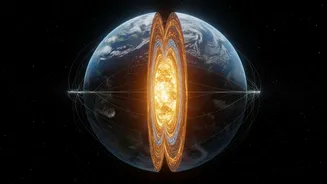
Deep inside Earth, beneath the crust and mantle, lies the core. It’s composed of two parts: a solid inner core of iron and nickel, and a liquid outer core of the same metals. This outer core, about 2,200 kilometres thick, is a turbulent sea of superheated,
electrically conductive fluid. The constant motion within this liquid metal ocean, driven by heat escaping from the core and influenced by the planet's rotation, generates massive electrical currents. This process, known as the geodynamo, is what creates Earth's magnetic field. This magnetic field is not just a scientific curiosity; it acts as an invisible shield, protecting all life on the surface from harmful solar radiation and cosmic rays.
A Sudden Change in Direction
For years, scientific models based on subtle changes in the magnetic field suggested that the liquid in the outer core flowed in a relatively stable, predominantly westward direction. But recent findings have challenged this view. A new analysis of satellite and ground-based data revealed that in 2010, a huge section of this molten river, deep beneath the Pacific Ocean, did something unexpected: it reversed course. This vast expanse of liquid iron, which had been drifting weakly westward, suddenly began moving strongly eastward. This abrupt change has puzzled scientists and opened up new questions about the complex and volatile nature of Earth’s deep interior.
Eyes in the Sky on the Deep Earth
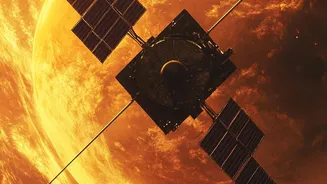
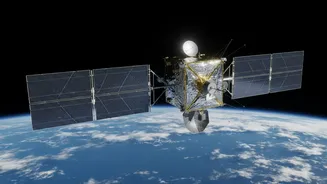
So how can we possibly know what’s happening in the core? We can't see it directly, but we can observe its effects. The key is to precisely measure the magnetic field from space. This is the job of missions like the European Space Agency's (ESA) Swarm satellites. Launched in 2013, this trio of satellites carries highly sensitive magnetometers that map our planet's magnetic field with incredible detail. By flying in specific orbits, the satellites can distinguish the magnetic signature of the core from other sources like the crust or the atmosphere. It was by analysing these high-precision measurements, combined with data from older missions, that scientists were able to reconstruct the flow patterns and pinpoint the startling 2010 reversal.
What Does This Reversal Mean for Us?
While a "core-flow reversal" might sound alarming, it poses no immediate threat to life on the surface. Instead, this discovery provides an unprecedented glimpse into the powerful forces at play within our planet. It challenges long-held assumptions that the core's dynamics were slow and steady, revealing instead that rapid, regional changes can occur within just a decade. For scientists, this is a crucial piece of the puzzle in understanding the geodynamo. By studying these shifts, they can refine their models of how the magnetic field behaves, how it changes over time, and even gain insight into the long-term processes that lead to full magnetic pole reversals, which happen over many thousands of years. The latest data suggests the eastward flow has already started to weaken, indicating this reversal might be part of a recurring, natural cycle that we are only now able to observe.