




The Healthy Illusion
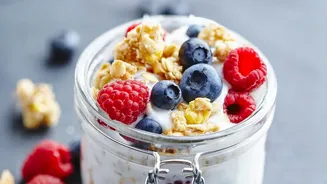
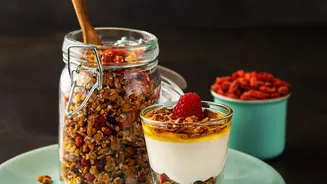
In the world of quick and easy breakfasts, the yoghurt parfait holds a special place. It’s a staple in cafes and a go-to for health-conscious individuals trying to start their day right. Visually appealing and texturally delightful, it promises protein
from yoghurt, vitamins from fruit, and wholesome fibre from granola. This perception is so strong that it creates what experts call a "health halo". This effect makes us believe a food is fundamentally good for us, causing us to overlook details like high sugar content or excessive calories, especially when we see words like "natural" or "whole grain" on the packaging. Unfortunately, this is often the case with the star of the parfait: the granola.
The Granola Deception
While granola often contains healthy ingredients like oats, nuts, and seeds, the commercially available versions can be nutritional traps. To achieve that signature crunchy texture and sweet taste, many brands bake their granola with significant amounts of sugar, honey, or other syrups, alongside oils. This process transforms nutrient-rich oats into a calorie-dense product that can rival sugary breakfast cereals. A single serving of some popular granolas can contain a surprising amount of added sugar, derailing your healthy intentions before your day has even properly begun. It's a classic case where the marketing and perception of a food don't match its nutritional reality.
Why Portion Size is Everything
This brings us to the crucial point: the portion size. The recommended serving for most granolas is surprisingly small—typically around a quarter-cup, or about 30 to 50 grams. Now, be honest: when you’re assembling your parfait, do you meticulously measure out a tiny quarter-cup, or do you pour freely until a satisfying layer of crunch covers your yoghurt? Most of us do the latter. This casual over-pouring, or "portion distortion," can easily double or triple your intake of calories, fat, and sugar without you even realising it. That tiny quarter-cup serving can contain 150-200 calories, so a more generous handful could easily push your "healthy" breakfast into the 400-500 calorie range from the granola alone.
Building a Better, Balanced Parfait
The good news is that you don't have to give up on parfaits. You just need to build them more mindfully. Start with a foundation of plain, unsweetened Greek yoghurt, which is high in protein and keeps you full. When it comes to the crunch, be deliberate. Read the nutrition labels on store-bought granolas and choose one with less than 5 or 6 grams of sugar per serving. Better yet, use it as a topping, not a main layer. Sprinkle a measured tablespoon or two for that desired texture. You can also make your own granola at home, giving you complete control over the sugar and oil content. Bulk up your parfait with fresh fruits like berries, which add natural sweetness and fibre, and consider adding a sprinkle of chia seeds or flax seeds for extra nutrients and healthy fats.