








The Race Against the Golden Hour
In medical emergencies, the first hour after a traumatic injury or a critical event like a heart attack is often called the "golden hour." The speed at which a patient receives advanced medical care can determine the outcome. In a city with over 70 lakh
registered vehicles, this crucial window is often lost to traffic jams. For years, the only solution has been a manual "green corridor," where traffic police physically clear a route for an ambulance. While effective, this process is resource-intensive, difficult to coordinate, and often creates more chaos in surrounding areas. Delhi's new Intelligent Traffic Management System (ITMS) aims to automate this life-saving process, making it faster, more efficient, and smarter.
How AI Will Clear the Way
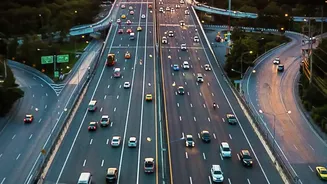
At its core, the ITMS is a network of smart technologies designed to make traffic management dynamic instead of static. Approved with a budget of over ₹1,789 crore, the system will be implemented by the Delhi Police across 42 key traffic corridors. It relies on a combination of hardware and software to create these emergency green corridors. Many ambulances and other emergency vehicles will be fitted with special sensors or GPS devices. As an ambulance approaches a traffic junction, these devices will communicate with the central traffic management system. The AI, which has a real-time map of traffic density from roadside cameras and sensors, will then get to work.
A Digital Green Corridor in Action
Instead of a police officer at every intersection, the AI algorithm will automatically start changing traffic signals along the ambulance's projected route. As the ambulance gets closer to an intersection, the signal in its path will turn green, and will remain green until the vehicle has safely passed. The system will do this sequentially, creating a wave of green lights that moves with the ambulance. Experts suggest the system could detect an approaching emergency vehicle from a range of 200-500 metres, giving it enough time to adjust the signal timing without causing abrupt disruptions. This automated process is designed to be much faster and more coordinated than any manual effort could ever be.
Managing the Ripple Effect
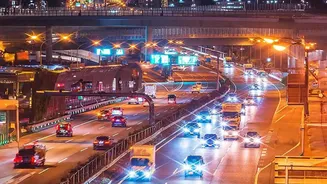
Simply turning a few lights green isn't enough; the system must also manage the traffic it holds back. The ITMS is designed to be an adaptive network. While it prioritises the ambulance, its algorithms will also work to mitigate the knock-on effects. By analysing traffic flow in the surrounding areas, the system can adjust signal timings on adjacent roads to ease the congestion caused by the held traffic. The goal is to prevent the creation of new gridlock zones. Furthermore, real-time information about these automated diversions and delays will be broadcast on Variable Message Sign boards and sent to digital platforms and navigation apps, helping other commuters reroute and avoid the area.
The Road Ahead: Rollout and Challenges
The ITMS will not appear overnight. It is scheduled to be rolled out in three phases over 24 months. The first phase will focus on five major corridors, including sections of the Ring Road and Outer Ring Road. While the technology holds immense promise, its success will depend on seamless execution. Ensuring all emergency vehicles, both public and private, are equipped with the necessary sensors will be a significant logistical task. Network connectivity across the entire city must be robust to ensure the system never fails. The Centre for Development of Advanced Computing (C-DAC) will provide technical support to oversee the project's implementation and maintenance.