





The Spice Aisle’s Sweet Little Lies
We’ve all seen them: spice jars promising “premium quality,” “all-natural goodness,” or “authentic flavour.” These marketing phrases are designed to make you feel good about your purchase, but when it comes to cinnamon, they often obscure a more important
truth. The vast majority of cinnamon sold in India and around the world, especially in powdered form, isn't the variety you might be thinking of. Most of what is simply labelled “cinnamon” is actually Cassia, a cheaper and more robustly flavoured relative. While delicious, it carries a health consideration that those marketing buzzwords conveniently ignore, which is why a closer look at the label is essential.
Not All Cinnamon Is Created Equal
There are two main players on the global cinnamon stage: Ceylon and Cassia. Ceylon cinnamon (Cinnamomum verum), often called “true cinnamon,” is primarily grown in Sri Lanka and Southern India. It's lighter in colour, has a more delicate and sweet flavour, and is more expensive to produce. Cassia cinnamon refers to several related species, most commonly from China, Vietnam, and Indonesia. This is the strong, spicy, reddish-brown variety that dominates supermarket shelves due to its lower cost and potent flavour. The Food Safety and Standards Authority of India (FSSAI) has separate standards for both, recognising them as distinct products. However, because Cassia is often sold as just 'cinnamon', many consumers don't realise there's a choice to be made.
The Cassia Conundrum: A Question of Coumarin
The most significant difference between the two types of cinnamon lies in a natural compound called coumarin. While present in both, its concentration varies dramatically. Cassia cinnamon is packed with it, sometimes containing up to 1% coumarin by weight. Ceylon cinnamon, by contrast, contains only trace amounts—often over 250 times less. This matters because, in high doses, coumarin can be harmful to the liver. European food safety authorities have set a tolerable daily intake (TDI) of 0.1 mg of coumarin per kg of body weight. A single teaspoon of Cassia powder can contain enough coumarin to exceed this daily limit for a smaller adult, making it a concern for anyone who consumes cinnamon regularly or in large amounts.
Meet Ceylon: The Milder, Safer Sibling
Given the concerns about coumarin, Ceylon cinnamon emerges as the safer choice for daily or heavy use. Its negligible coumarin levels mean you can enjoy its benefits without worrying about potential liver strain. While its flavour is less intense than Cassia's, it's more complex and aromatic, with subtle sweet and floral notes. This makes it ideal for delicate desserts, beverages like tea and coffee, and any dish where you want a nuanced spice flavour rather than an overpowering one. If you take cinnamon for health purposes, such as for its antioxidant properties or potential to help regulate blood sugar, switching to Ceylon is a strongly recommended and sensible precaution.
How to Be a Cinnamon Detective
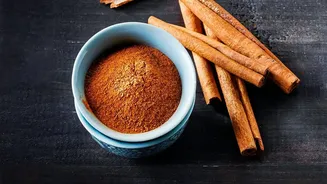
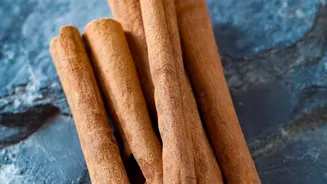
Telling the two apart is easy once you know the clues. For cinnamon sticks, the difference is visually obvious. Ceylon sticks are tan-brown and composed of many thin, fragile layers rolled together like a cigar. They are soft and brittle. Cassia sticks are reddish-brown, hard, woody, and consist of a single thick layer of bark that curls inward from both sides, forming a hollow tube. For powdered cinnamon, you must rely on the label, as visual identification is nearly impossible. Look for the words “Ceylon” or “Cinnamomum verum.” The country of origin can also be a hint; a product from Sri Lanka is almost certainly Ceylon. If a package is simply labelled “Cinnamon” or “Dalchini” without specifying the type, it is safest to assume it is Cassia.