


Decoding the ZTL Challenge
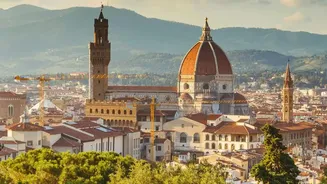
Almost every historic city and many smaller towns in Tuscany, including Florence, Siena, and San Gimignano, protect their historic centers with a 'Zona a Traffico Limitato' or ZTL. These are limited traffic zones where only authorized vehicles, like those
of residents and public transport, are allowed to enter during specific hours. The zones are monitored by cameras that automatically photograph the license plates of any unauthorized car that crosses the boundary. For a tourist in a rental car, this means a fine is automatically generated and will be sent to you months later, often with an added administrative fee from the rental company. The signs marking a ZTL are a white circle with a red border, but they can be easy to miss when you're navigating narrow, unfamiliar streets. It's crucial to understand that your GPS will not always warn you about a ZTL; its job is to find the shortest route, which can often lead you directly into a restricted area.
Your Strategy for Beating the ZTL
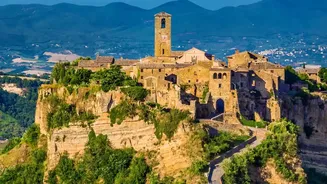
The simplest rule for a stress-free trip is to assume every historic center is off-limits and plan accordingly. The universal strategy is to park outside the old city walls and walk in. Before you even get in the car, look up a parking lot on the edge of your destination town and navigate directly there. Many popular towns like Siena and San Gimignano have large, well-signed car parks at the base of the hill, with a 5-to-15 minute walk uphill into the center. If your hotel is located within a ZTL, you must contact them in advance. Many hotels can register your car's license plate with the local police for temporary access, but this is never automatic and procedures vary by city. Get written confirmation from the hotel that your plate has been registered before you attempt to drive into the zone. When in doubt, always park outside. A short walk is infinitely better than a surprise €80-€335 fine appearing on your credit card statement.
Solving the Parking Puzzle
Once you've committed to parking outside the historic centers, the next step is finding the right spot. In cities like Florence and Siena, look for large paid parking garages ('parcheggi') on the outskirts. Blue-lined spaces on the street indicate paid parking, where you'll need to pay at a nearby meter ('parcometro') and display the ticket on your dashboard. Be careful, as white-lined spaces, which often mean free parking elsewhere in Italy, are typically for residents only in Florence. Yellow lines are for disabled permit holders. For day trips into Florence, an excellent option is a park-and-ride lot like Villa Costanza, located directly off the A1 motorway. You can park securely and take a tram directly into the city center, completely avoiding the stress of city driving. This approach—driving between towns, then becoming a pedestrian within them—is the key to a successful Tuscan road trip.
The Reward: Short, Scenic Drives
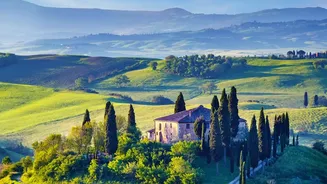
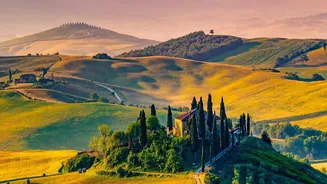
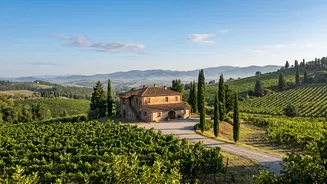
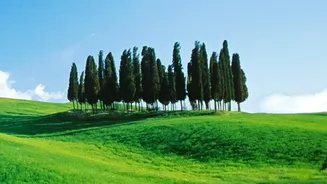
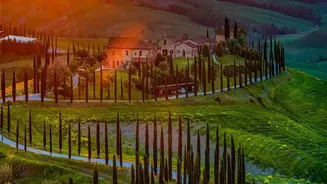
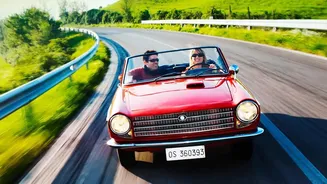
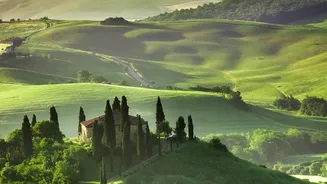
The payoff for all this planning is the freedom of the open road and the surprisingly short distances between iconic destinations. A Tuscan road trip is not about long, grueling days behind the wheel. Instead, it’s a series of pleasant, scenic hops. For example, the classic drive from Florence south into the Chianti region is under an hour. From there, continuing to the famous towers of San Gimignano is another 45 minutes. Getting from San Gimignano to the heart of Siena takes about 45 minutes as well. Even heading further south to the Val d'Orcia, the landscape of postcards, involves drives of rarely more than 90 minutes between towns like Pienza, Montepulciano, and Montalcino. These short driving days mean you can base yourself in one or two locations and take easy day trips, allowing more time for exploring, wine tasting, and long lunches, rather than just driving.