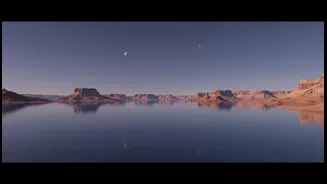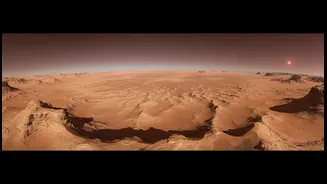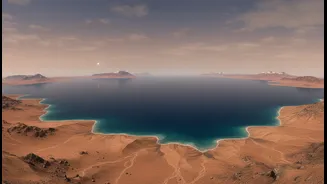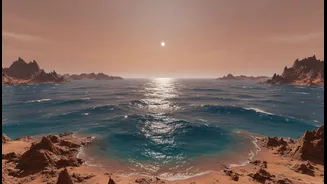






An Ancient 'Bathtub Ring'
Scientists have long debated the existence of a massive, ancient ocean in the northern lowlands of Mars. While evidence from rovers and orbiters has pointed to past rivers, lakes, and even catastrophic floods, the idea of a stable, long-lived ocean has been
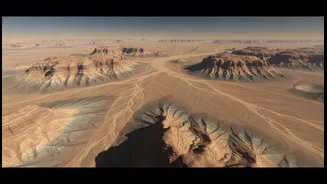
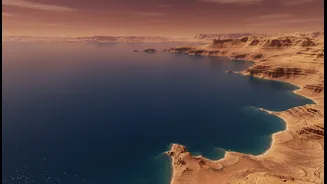
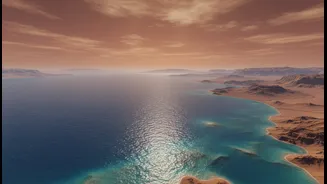
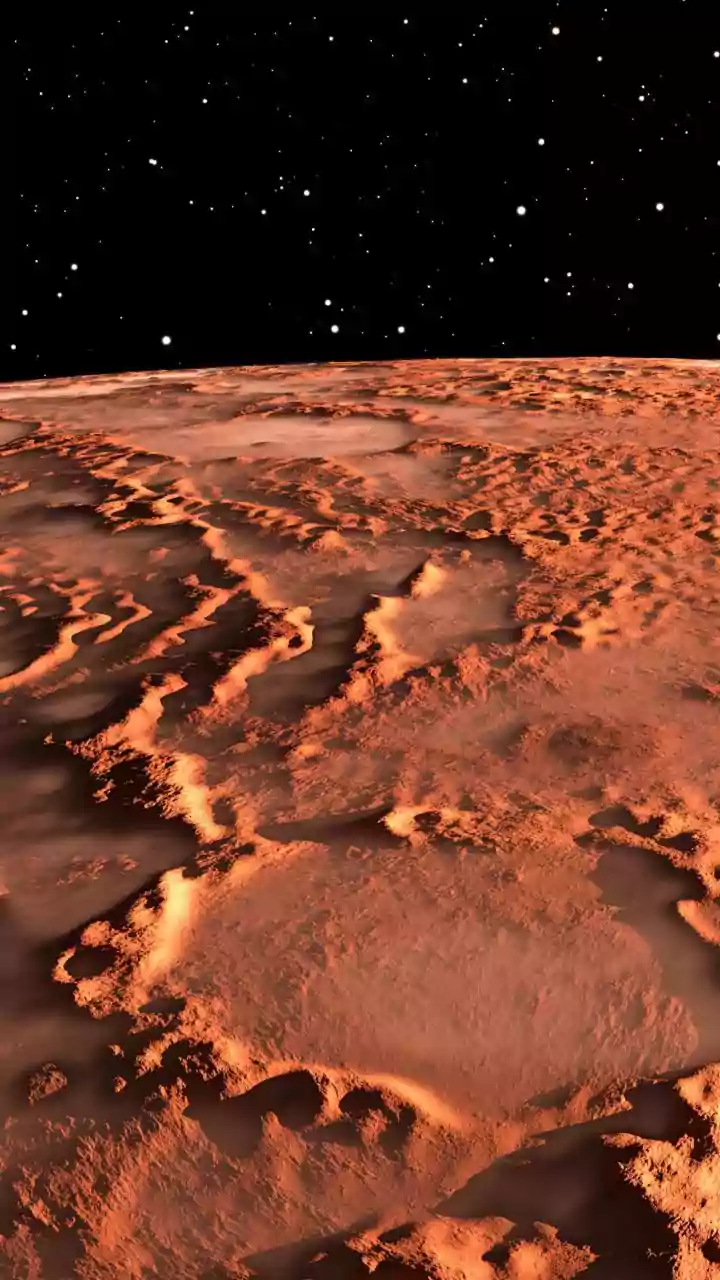
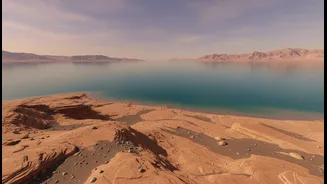
harder to prove. Recent studies have added a powerful piece to the puzzle: the identification of what resembles a coastal shelf, a vast geological feature analogous to the continental shelves found on Earth. By analyzing topographical data gathered by orbiters, researchers identified a distinct boundary line that stretches for thousands of kilometers, marking where land may have once met a massive body of water. This feature, described as a huge "bathtub ring," suggests not just a fleeting presence of water, but a persistent ocean that may have covered as much as a third of the planet's surface billions of years ago.
Reading the Geological Clues
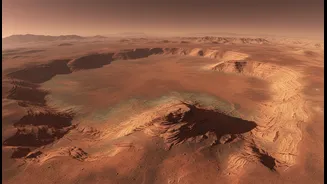
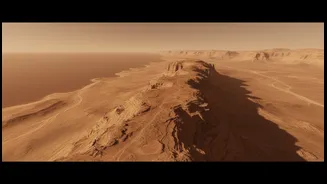
The latest findings build on a growing mountain of evidence. In recent years, data from China's Zhurong rover revealed subsurface structures consistent with coastal sediments, essentially pointing to a buried shoreline. These layered deposits, found deep beneath the plains, are distinct from features created by wind or volcanoes. They suggest a process where rivers carried sediment into a large, standing body of water, building up land over time, much like river deltas do on Earth. Researchers studying high-resolution images of the Valles Marineris canyon system also identified deposits at a consistent elevation, which they interpret as evidence of a former sea level for an ocean that could have been a kilometer deep in places. The newly identified coastal shelf ties these separate observations together, providing a large-scale framework for this ancient marine environment.
A More Dynamic, Water-Rich Past
This discovery significantly changes our picture of early Mars. Instead of a world with only intermittent and localized water, the evidence for a coastal shelf points to a more stable climate and a prolonged period where liquid water shaped the landscape on a planetary scale. The formation of such a massive feature would have taken millions of years of consistent processes, including rivers depositing sand and mud, and wave action distributing those sediments along a coastline. This implies a more Earth-like hydrologic cycle, with a warmer, thicker atmosphere capable of supporting vast liquid oceans. This moves the needle from a planet that merely had water to a planet that was, for a significant chapter of its history, a true water world.
The Search for Ancient Life
Naturally, where there's compelling evidence for long-standing water, the question of life follows. On Earth, shallow coastal environments and river deltas are rich with biological activity and are excellent places for preserving fossils. If Mars ever hosted life, these newly identified coastal shelf regions would be prime locations to search for its chemical or fossilized signatures. The sedimentary rocks that make up these ancient coastlines could hold a preserved record of Mars's environment from a time when it may have been habitable. This finding doesn't just add a layer to Mars's water history; it provides a more precise map for future missions, guiding rovers and landers to the most promising locations to hunt for definitive proof that we have never been alone in the solar system.