








A Surprising Find in the High Desert
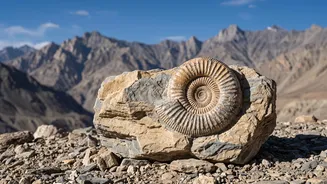
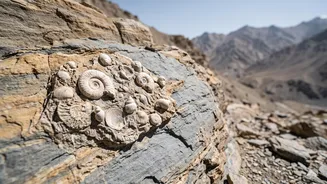
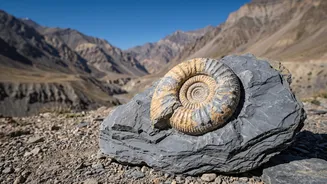
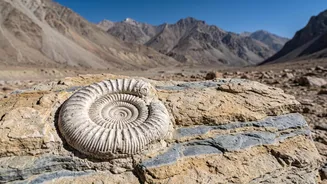
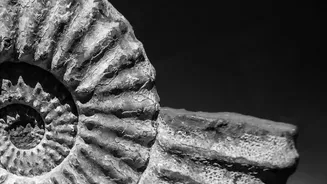
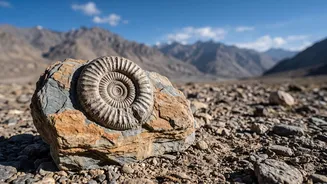
In the remote Changthang region of eastern Ladakh, geologist Dr. Ritesh Arya has unearthed an incredible collection of marine fossils. Discovered near Nyoma, the assemblage includes a wealth of snail-like gastropods, bivalves, and oyster-like forms that
are estimated to be between 34 and 38 million years old. This places them in the Eocene epoch. For Dr. Arya, founder of the Tethys Fossil Museum, the moment of discovery was a shock of recognition. The fossils were remarkably similar to those commonly found in the Subathu Formation in Himachal Pradesh, but finding them so far east in Ladakh was a complete surprise. The find also includes fossilized palm leaves and wood, painting a picture of a coastal landscape vastly different from the icy peaks and arid plains of today.
A Window into an Ancient Ocean
These are not just old shells; they are storytellers. The fossils suggest that 38 million years ago, this part of Ladakh was a warm, shallow marine environment, likely a coastline fringed with subtropical vegetation. This period, the Eocene, was a critical time in Earth's history. The Indian subcontinent, which had been an island for millions of years, was in the final stages of its slow-motion collision with the larger Eurasian continent. The body of water that separated them was the ancient Tethys Ocean. The fossils discovered in Nyoma are remnants of the life that thrived in this disappearing sea, a snapshot of the world just before the immense geological forces of the continental collision began to build the Himalayas.
The Birth of the Himalayas
The existence of a sea in this region is central to the story of the Himalayas. For tens of millions of years, the Indian plate drifted northwards after breaking away from the supercontinent Pangaea. As it moved, the floor of the Tethys Ocean was forced underneath the Eurasian plate. Thick layers of sediment on the ocean floor, rich with the remains of marine creatures, were scraped off and piled up at the continent's edge. The eventual collision was so powerful that it buckled the Earth's crust, folding and lifting these ancient seabeds. Over millions of years, this geological upheaval pushed the land upwards, eventually creating the towering Himalayan mountain range. The marine fossils found high in the mountains today are direct evidence of this process, proving that the roof of the world was once an ocean floor.
Why This Discovery Matters Now
This new fossil bed in Ladakh is a crucial piece of a massive geological puzzle. Scientists have long known about the Tethys Ocean, but the precise extent and timing of its retreat are still being mapped. This discovery suggests the Eocene sea extended further east into Ladakh than previously confirmed. By studying these fossils, scientists can refine the timeline of the India-Asia collision, which not only formed the mountains but also had a profound impact on global climate patterns. Each fossil helps reconstruct the past environment, telling us about the water temperature, depth, and the specific life forms that existed. This detailed picture helps build a more complete understanding of one of the most significant tectonic events in our planet's history. The specimens are now undergoing detailed study to confirm their species and exact age, promising more insights into Ladakh's dramatic transformation.