




1. The Future: GPS and Satellite-Based Tolling
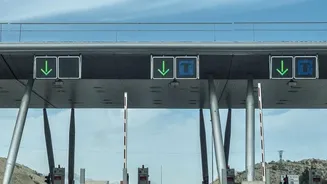
The most significant alternative to traditional tolling is the upcoming satellite-based system. The government is actively testing a Global Navigation Satellite System (GNSS) that will eliminate physical toll plazas altogether. This technology, also known
as a Multi-Lane Free Flow (MLFF) system, uses a combination of an onboard unit in your vehicle and Automatic Number Plate Recognition (ANPR) cameras mounted on overhead gantries. As you drive, the system tracks your vehicle's entry and exit points on a highway, calculating the toll based on the exact distance travelled. The fee is then automatically deducted from a linked account. Pilot projects are already underway, with a broader rollout expected to redefine highway travel by making it truly seamless and barrier-free.
2. The Pay-Per-Use Model on Modern Expressways
A precursor to full satellite tolling is already active on several of India’s newer expressways, such as the Delhi-Mumbai and Eastern Peripheral Expressways. This 'closed tolling' system is a departure from older highways where you pay a fixed fee at each plaza regardless of the distance you travel on that section. In a closed system, gantries record your vehicle's entry point. When you exit the expressway, the system calculates the toll based on the precise kilometers covered between your entry and exit points. This pay-as-you-use method is considered a fairer and more accurate way to charge commuters, ensuring that drivers only pay for the infrastructure they actually use. It represents a significant shift from the flat-rate model common on older highway stretches.
3. When the Toll Plaza's Scanner Fails
Here's a rule every FASTag user should know: if a toll plaza's scanning equipment is malfunctioning, you are permitted to pass through without paying. According to the National Highway Fee Rules, if a vehicle with a valid, functional FASTag with sufficient balance cannot be processed due to faulty infrastructure at the plaza, the vehicle user shall be permitted to pass without paying any fee. The plaza operator is required to issue a zero-transaction receipt in such cases. This rule places the responsibility for maintaining functional equipment squarely on the toll operators, not the drivers. If you find yourself in this situation, it is your right to request free passage, though you may need to cite the rule or contact the NHAI helpline at 1033 to register a complaint if the operator insists on payment.
4. The 10-Second Service Time Guideline
To minimize queues and ensure efficient traffic flow, the National Highways Authority of India (NHAI) issued guidelines in 2021 stating that the service time per vehicle at a toll plaza should not exceed 10 seconds, even during peak hours. This rule was designed to hold toll operators accountable for preventing long waiting times in the era of 100% FASTag implementation. While an associated rule about waiving tolls for queues longer than 100 metres was reportedly withdrawn in 2024 due to enforcement challenges, the 10-second service time objective remains a key performance indicator for plaza operators. NHAI now uses live monitoring systems at busy plazas to manage congestion, reinforcing the principle that swift passage is the standard.
5. The New Penalty System for Unpaid Tolls
With the move towards barrier-free tolling, a new digital enforcement mechanism was introduced in March 2026 to handle unpaid tolls. If the MLFF system records your vehicle passing but the toll is not paid (due to an inactive FASTag, for example), an electronic notice is sent to the registered owner via SMS or email. The vehicle owner then has a 72-hour window to pay the original toll amount. If the payment is not made within that period, the fee doubles. Crucially, unpaid toll dues are now linked to the VAHAN database, which can block you from getting a No Objection Certificate (NOC) for selling your vehicle or renewing its fitness certificate until all dues are cleared. This creates a powerful incentive for compliance in a barrier-free environment.