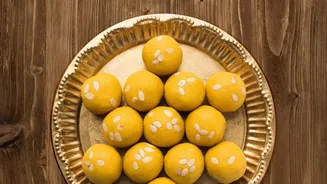







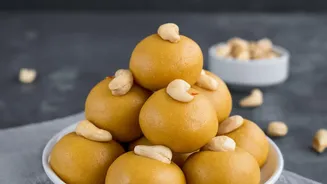
The perfect besan ladoo is a thing of beauty: a fragrant, melt-in-your-mouth sphere of nutty sweetness. Yet, this beloved Indian sweet can be tricky. Often, the difference between perfection and disappointment comes down to a few key details.
Error 1: Rushing the Roasting Process
Patience
is the most crucial ingredient in making besan ladoos. The core of their flavour comes from slowly roasting the besan (gram flour) in ghee. Many home cooks make the mistake of using high heat to speed things up. This is a critical error that can either leave you with a raw, pasty taste if undercooked, or a bitter, burnt flavour if the flour scorches. The correct method is to roast the besan on a consistent low to medium-low flame, stirring constantly. This process can take anywhere from 15 to 45 minutes, depending on the quantity and the pan. You'll know it's ready when the colour changes to a uniform golden brown and the kitchen fills with a distinctly nutty aroma. The mixture will also loosen from a thick paste into a more flowing, liquid-like consistency as it cooks.
Error 2: Incorrect Ghee-to-Flour Ratio
Ghee does more than just provide flavour; it's the binding agent that holds the ladoo together. Using too little ghee will result in a dry, crumbly mixture that refuses to form into balls. On the other hand, being too generous with the ghee can make the mixture greasy and loose, causing the ladoos to flatten and lose their shape. The key is to find the right balance, which is often a 2:1 ratio of besan to ghee by volume, though this can vary depending on the texture of your flour. It’s often best to add ghee in stages. Start by roasting the besan in about half the required ghee and add the rest gradually as the flour cooks. This allows the besan to absorb the fat evenly and gives you better control over the final consistency.
Error 3: Adding Sugar to a Hot Mixture
This is perhaps the most common mistake that leads to ladoo failure. After roasting, the besan and ghee mixture is extremely hot. Adding sugar at this stage will cause it to melt instantly, turning your perfectly roasted flour into a sticky, runny syrup. This not only makes it impossible to shape the ladoos but also ruins the texture, often causing them to become hard and crumbly once cooled. The correct technique is to transfer the roasted besan mixture to a separate plate or tray and let it cool down until it is just warm to the touch. You should be able to handle the mixture comfortably without it feeling hot. Only then should you mix in the sugar. This ensures the sugar integrates into the mixture without melting, providing sweetness and structure.
Error 4: Using the Wrong Type of Sugar
The type of sugar you use significantly affects the final texture of the ladoos. Using regular granulated sugar is a frequent error, as the large crystals don't dissolve properly, resulting in a gritty mouthfeel. The best option is to use powdered sugar. If you only have granulated sugar, you can grind it into a fine powder yourself using a blender. For an even more authentic, slightly grainy texture favoured by traditional sweet makers (halwais), 'tagar' or 'boora' sugar is recommended. This is a type of crystallized sugar that gives the ladoos a characteristic crumbly yet meltinthemouth quality. Whatever you use, sifting the sugar before adding it helps prevent lumps and ensures a smooth, uniform mixture.
While it might seem like all besan is the same, the texture of any flour can make a difference. Many recipes note that fine besan can sometimes lead to ladoos that stick to the roof of your mouth. For a more traditional, grainy (or 'danedar') texture, it's best to use a coarse variety of besan, often sold specifically as 'ladoo besan'. If you can't find coarse besan, a common trick is to add a tablespoon or two of fine semolina (rava/suji) to any regular besan before roasting. This adds a pleasant, subtle graininess. Another professional tip to create a 'danedar' texture is to sprinkle a tablespoon of water into any mixture right at any end of roasting; any besan will froth up and become more granular.