

A Sliver of Sea
The Strait of Hormuz is the only sea passage connecting the oil-rich Persian Gulf to the open ocean. Sandwiched between Iran to the north and Oman and the United Arab Emirates (UAE) to the south, it is a critical artery for global trade. At its narrowest
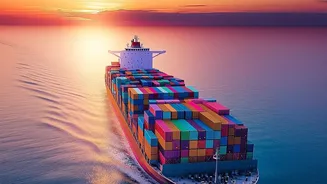
point, the strait is only about 39 kilometres (21 miles) wide. The actual shipping lanes are even more constricted: two-mile-wide channels for inbound and outbound traffic, separated by a buffer zone. This tight passage forces the world’s largest supertankers into a predictable, narrow path, a geographical reality that has profound economic and military implications. Its shallow depth and proximity to land make it an incredibly confined and monitored space.
The World's Energy Jugular
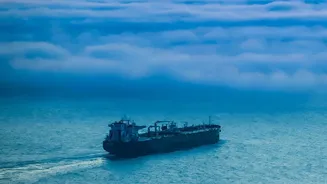
The numbers speak for themselves. Roughly 21 million barrels of oil pass through the strait every day. That accounts for about 20% of global petroleum consumption, or a fifth of the world's total supply. Add to that a significant portion of the world's liquefied natural gas (LNG), primarily from Qatar. Major producers like Saudi Arabia, Iraq, Kuwait, and the UAE all rely on this route to get their energy to international markets. The vast majority of these exports are destined for Asia, with countries like China, India, Japan, and South Korea being the primary customers. Any disruption, however brief, can send shockwaves through energy markets, causing prices to spike globally. This makes the stability of Hormuz a direct concern for economies and consumers thousands of miles away.
A Geopolitical Flashpoint
Where immense economic value is concentrated, geopolitical tension often follows. Iran’s long coastline along the northern edge of the strait gives it a powerful strategic position. Its naval forces can closely monitor and potentially disrupt traffic, a capability it has demonstrated during periods of heightened conflict. The presence of international naval forces, particularly the United States Navy, is a constant feature of the region, aimed at ensuring freedom of navigation. However, this also creates a situation ripe for miscalculation. Incidents ranging from the seizure of tankers to attacks on vessels have become a recurring feature of the strait's modern history, highlighting its status as one of the world's most sensitive chokepoints. Recent conflicts in early 2026 led to a virtual closure of the strait, causing the largest supply disruption in modern history and stranding thousands of mariners.
The Search for a Plan B
The extreme vulnerability of this single point has forced regional powers to seek alternatives, but none are a perfect solution. Saudi Arabia operates the East-West Pipeline to transport crude oil across the peninsula to the Red Sea, and the UAE has a pipeline to the port of Fujairah, which sits just outside the strait on the Gulf of Oman. However, the combined capacity of these pipelines can only handle a fraction of the oil that normally transits Hormuz. Furthermore, five major producing nations—Iran, Iraq, Kuwait, Qatar, and Bahrain—have no pipeline infrastructure to bypass the strait at all. These alternatives also come with their own security risks; pipelines can be targeted, and routes like the Red Sea have faced threats from other regional conflicts. As a result, despite billions invested in workarounds, the global energy market remains overwhelmingly dependent on safe passage through Hormuz.