





India is taking a giant leap in its space and defence ambitions. The Department of Science and Technology (DST) is backing Bengaluru-based startup Astrome to develop a cutting-edge, AI-powered satellite network, signalling a new era for local innovation.
A Landmark Public-Private Partnership
In a major boost for India’s 'Atmanirbhar Bharat' mission, the Technology Development Board (TDB) under the DST has signed a significant funding agreement with Astrome Technologies. The board will provide ₹64.05 crore to the Bengaluru-based deep-tech startup to develop a sovereign, AI-enabled satellite network. The total cost of this ambitious project is estimated at ₹128.11 crore, with the government's contribution aimed at accelerating the development of this critical indigenous technology. This move represents one of the most substantial recent government investments in a commercial space venture, underscoring a strategic push to foster private sector innovation in high-stakes technology domains. The funding, provided as optionally convertible debt, is designed to help Astrome advance its technologies from the current lab-validated stage (TRL-4) to being fully proven in an operational environment (TRL-9).
What is an AI-Enabled Satellite Network?
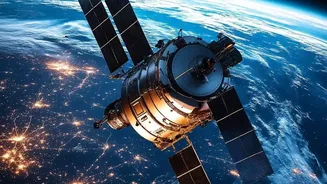
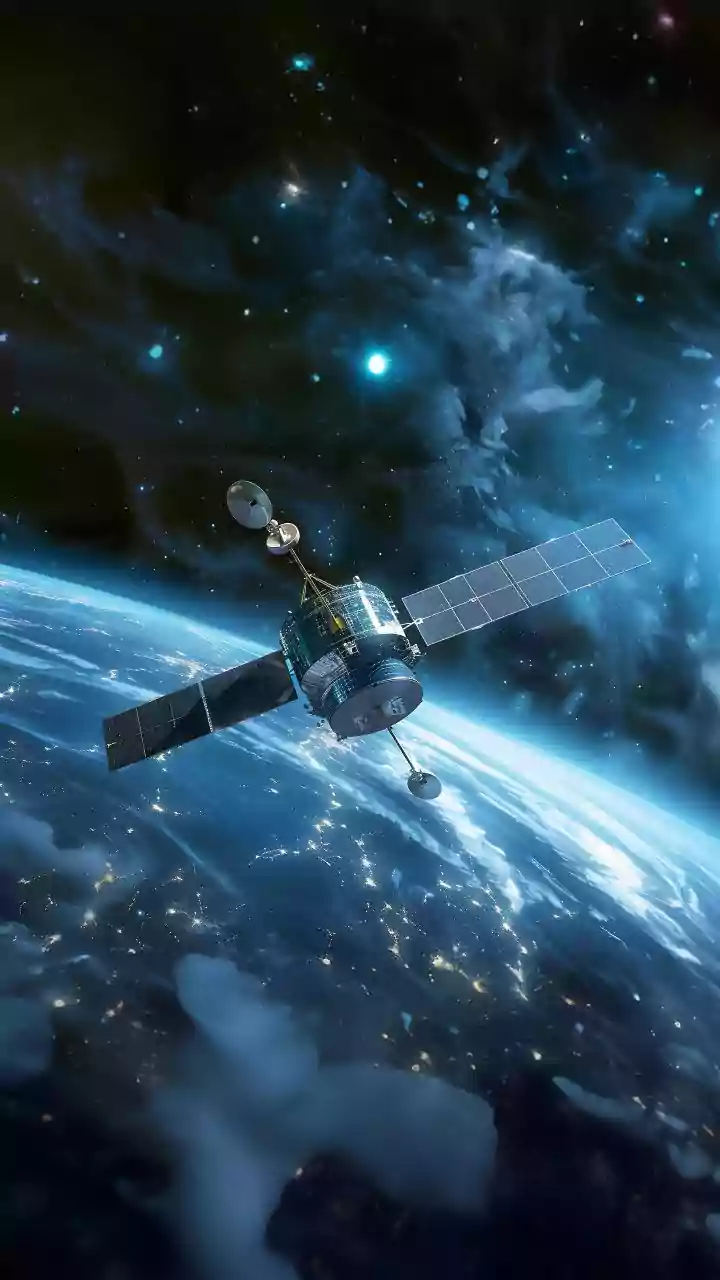
At its core, the project aims to build a constellation of small satellites that can gather electronic intelligence, also known as ELINT. These satellites, operating in low Earth orbit, will be equipped with payloads designed to detect and analyse a wide range of electronic signals. The 'AI' component is the game-changer here. Instead of relying solely on ground stations for commands and data analysis, artificial intelligence will be integrated at multiple levels. On the ground, AI-based software will rapidly process the vast amounts of information collected by the satellites, identifying patterns and generating usable intelligence far quicker than traditional methods. The system is also expected to feature autonomous anomaly detection, allowing satellites to identify and fix issues without human intervention, and machine learning models that can optimise bandwidth allocation based on real-time demand. This makes the network more efficient, resilient, and responsive.
Meet Astrome: A Homegrown Space-Tech Pioneer
Founded in 2015 by Neha Satak and Prasad H. L. Bhat, Astrome was incubated at the prestigious Indian Institute of Science (IISc) in Bengaluru. The company has been a trailblazer in developing millimeter-wave wireless communication technologies. Its flagship terrestrial product, GigaMesh, is the world's first multi-beam E-band radio, designed to deliver fibre-like internet speeds wirelessly and accelerate the rollout of 5G networks, especially in rural areas. Astrome is no stranger to government collaboration, having previously won challenges under the Innovations for Defence Excellence (iDEX) initiative to develop technology for the Indian armed forces. This new project leverages Astrome’s expertise in both satellite and ground communication hardware, including flat-panel antennas and software-defined modems, positioning it at the forefront of India’s burgeoning private space industry.
Strategic Implications for India
The development of a sovereign AI-ELINT constellation has profound strategic implications. Primarily, it is a national security asset, designed to provide persistent surveillance and intelligence-gathering capabilities over large geographical areas. Having an indigenous system reduces reliance on foreign partners for critical intelligence. Furthermore, the network will feature inter-satellite communication links, allowing the spacecraft to exchange information directly with each other, functioning as a cohesive network rather than individual points in space. This enhances coverage and the frequency of observations. For the 'Make in India' initiative, this project is a landmark success. It demonstrates the viability of the public-private partnership model in creating sophisticated, dual-use technologies that have both national security and potential commercial applications, strengthening India's position as a serious player in the global space-tech ecosystem.