





The Moon's Communication Blackouts
Communicating on the Moon is far more complex than on Earth. Here, a global web of cell towers and satellites ensures we are almost always connected. The Moon has no such infrastructure. Missions have historically relied on direct, line-of-sight communication
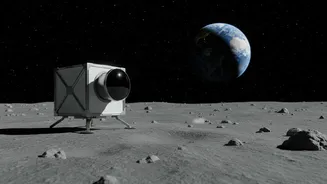
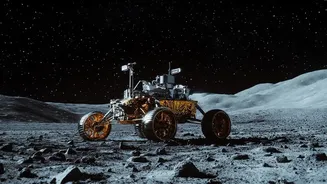
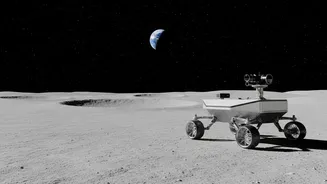
with Earth. If a rover, lander, or astronaut can't 'see' Earth, the link is broken. This creates massive blackout zones, most notably on the entire far side of the Moon, which never faces our planet. Even at the lunar South Pole, a high-priority target for its potential water ice deposits, the local terrain and the low position of Earth on the horizon create frequent communication dropouts. For a rover venturing into a permanently shadowed crater to search for ice, losing this connection means losing the ability to send back data or receive commands, effectively stranding it.
Introducing LunaNet: A Celestial Internet
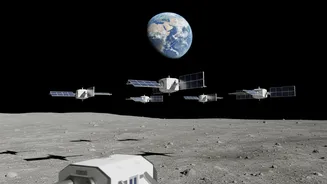
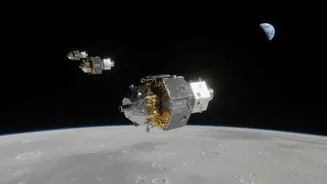
To solve this problem, NASA is spearheading an ambitious initiative called LunaNet. Think of it as building an internet and GPS system for the Moon. Instead of each mission bringing its own communication solution, LunaNet will establish a shared and interoperable network of satellites orbiting the Moon. This architecture, developed in collaboration with international partners like the European Space Agency (ESA), will feature interconnected nodes that provide networking, navigation, and even science services to any user—be it a NASA rover, a commercial lander, or an international astronaut. The goal is to move away from rigid, pre-scheduled communication links and create a flexible system where data flows continuously, much like Wi-Fi on Earth.
How the Relay System Works
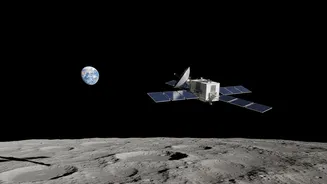
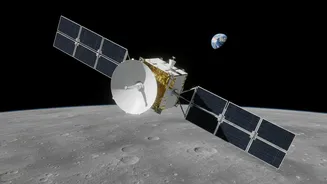
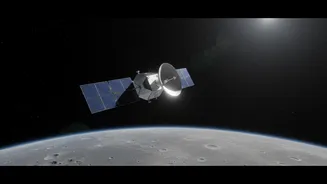
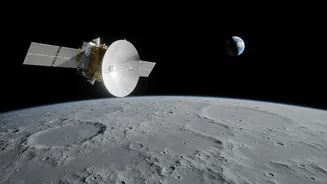
The system's backbone is a constellation of relay satellites in strategic lunar orbits. A key early component will be the ESA-developed Lunar Pathfinder satellite, which will provide communication services for various missions. A rover on the surface, for instance, will send its signal up to an orbiting satellite like Pathfinder. That satellite then acts as a 'bent-pipe,' relaying the signal back to a ground station on Earth, completely bypassing any mountains or craters that would have blocked a direct signal. This system uses a technology called Delay/Disruption Tolerant Networking (DTN), which ensures data is not lost even if a connection is temporarily interrupted; the data is stored and forwarded once a link is re-established. This makes the network robust and reliable, which is essential for complex operations.
Unleashing the Next Generation of Rovers
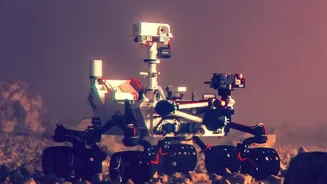
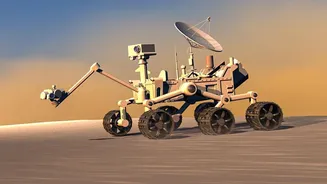
For lunar rovers, this reliable link is a game-changer. With LunaNet, rovers will no longer be tethered by line-of-sight constraints. They can confidently explore the scientifically rich but hard-to-reach parts of the Moon, such as the floors of permanently shadowed craters or the unexplored territory of the far side. Furthermore, the network will provide navigation services similar to Earth's GPS, allowing rovers to pinpoint their location with high precision and navigate more autonomously. This enhanced capability, combined with the potential for higher data rates through optical laser communications, means future rovers can stream high-definition video and transmit vast amounts of scientific data, accelerating the pace of discovery. This continuous, high-bandwidth connection makes missions safer, more efficient, and far more ambitious.
Beyond Rovers: Scaffolding for a Lunar Economy
The vision for LunaNet extends far beyond supporting robotic explorers. This infrastructure is the essential scaffolding for establishing a sustained human presence and a thriving lunar economy. By providing a common, reliable service, NASA is lowering the barrier to entry for commercial companies and international partners who want to operate on and around the Moon. The network will support everything from astronaut habitats and scientific outposts to commercial cargo deliveries and resource utilization efforts. It also includes crucial services like LunaSAR (lunar search and rescue) and space weather alerts, significantly improving astronaut safety. Ultimately, building this 'internet for the Moon' is a foundational step, creating an interoperable environment that will support decades of exploration and development.