


The New Frontier in Space Operations
The International Conference on Spacecraft Mission Operations (SMOPS-2026), held in Bengaluru, brought together leading minds from ISRO, NASA, ESA, and other global space agencies. While the topics ranged from interplanetary missions to satellite constellations,
a significant portion of the discussion centered on artificial intelligence and automation. ISRO Chairman Dr. V Narayanan noted that AI and machine learning are no longer theoretical subjects but a “need of the hour” for modern space missions, highlighting their pivotal role in everything from the Chandrayaan-3 landing to future exploration. The conference served as a key forum to debate how to manage the increasing complexity of space operations, driven by disruptive technologies and ambitious goals like human spaceflight.
More Than Just Autopilot
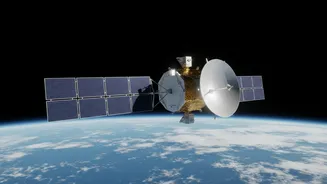
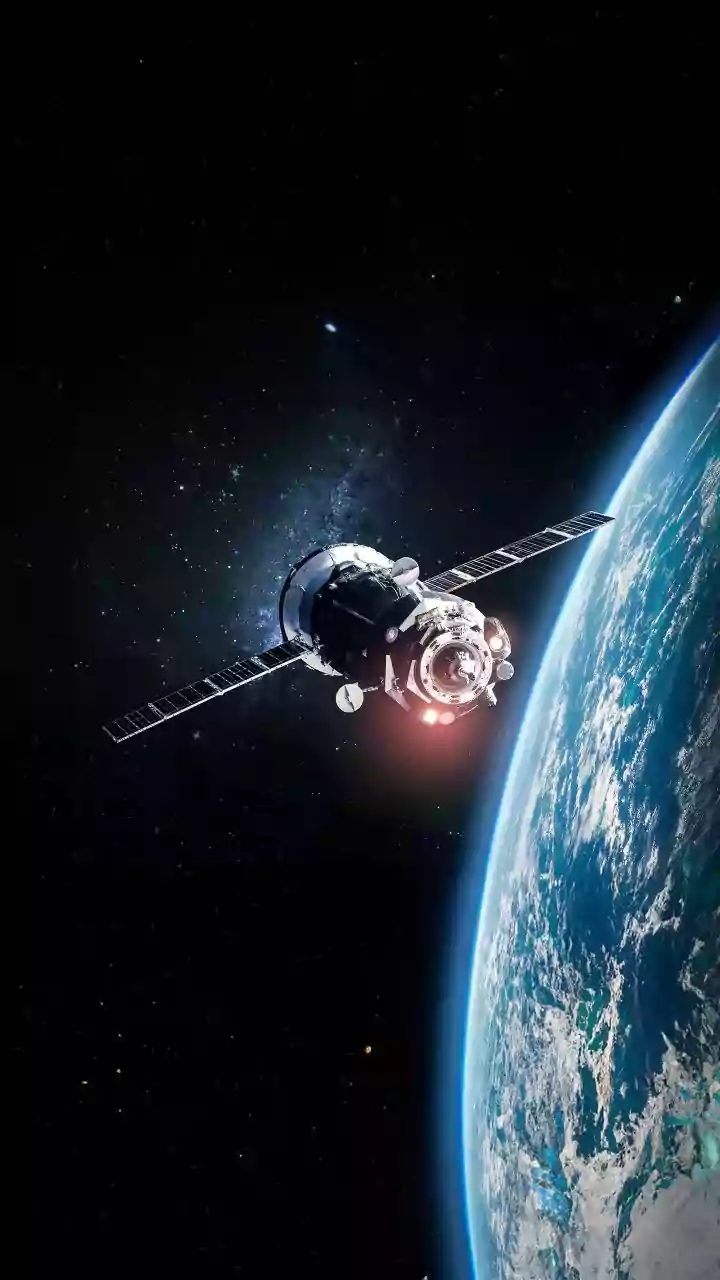
When experts talk about AI in space, they're referring to far more than a simple autopilot. Today’s systems are being designed to manage vast constellations of satellites, navigate distant terrains, and even conduct scientific experiments with minimal human input. The goal is to create spacecraft that can react to unforeseen circumstances, like a sudden solar flare or a system malfunction, faster than a signal could be sent back to Earth. This is especially critical for deep space missions, where communication delays can stretch from minutes to hours, making real-time human control impossible. The discussions at SMOPS-2026 underscored this shift from ground-based control to onboard autonomous decision-making.
The Promise of Letting Go
The benefits of increased automation are immense. For companies managing thousands of satellites in low Earth orbit, AI can optimize network traffic and reduce operational costs. For scientists, autonomous rovers can explore more of a planet's surface, making decisions on which rock to sample without waiting for commands from mission control. AI can also handle the deluge of data sent back from space, identifying patterns and anomalies that a human analyst might miss. This not only accelerates scientific discovery but also makes new, more ambitious missions possible by reducing the reliance on constant, expensive human monitoring and intervention.
The Unblinking Eye of Oversight
Despite the promise, a core theme at SMOPS-2026 was the non-negotiable need for human oversight. The space industry is acutely aware of the risks. A software bug, a hardware failure caused by radiation, or a malicious cyberattack could have catastrophic consequences. There is also the “black box” problem, where a complex AI makes a decision for reasons that aren't immediately clear to its human operators. This has led to a major push for concepts like "human-in-the-loop" (HITL) and "human-on-the-loop" (HOTL) systems. In a HITL model, a human is actively involved in the AI's decision-making process, while a HOTL model allows the AI to operate autonomously but with a human supervisor who can intervene if necessary.
Forging a Human-Machine Synergy
The path forward, as discussed by experts, is not about choosing between humans and machines, but about designing a robust partnership. This involves developing “explainable AI” that can articulate its reasoning, creating intuitive interfaces for human controllers, and establishing clear protocols for when and how a human can override an autonomous system. It also means building systems that are resilient to the harsh realities of space—from extreme temperatures to cosmic radiation that can corrupt data. As India and the world embark on more ambitious missions, including human spaceflight and interplanetary exploration, defining this human-machine synergy is one of the most critical challenges facing the sector.