






The Most Ambitious Catch
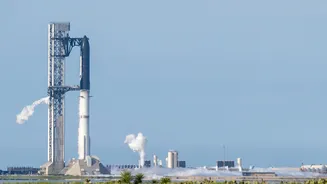
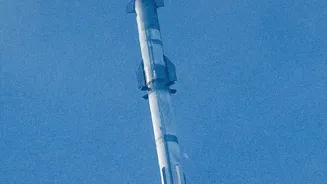
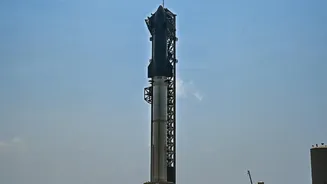
The primary focus of Flight 15 was a maneuver straight out of science fiction: catching the towering Super Heavy booster as it returned to Earth. The plan involved the launch tower, nicknamed 'Mechazilla', using two giant 'chopstick' arms to grab the booster mid-air
as it hovered during its landing burn. This feat is central to SpaceX's entire Starship architecture. By eliminating the need for heavy landing legs on the booster, the company saves precious weight, allowing for heavier payloads. More importantly, catching the booster directly at the launch pad is designed to slash turnaround times between missions, bringing the system closer to the rapid reusability of an aircraft and drastically reducing launch costs. The system has been successfully tested on previous flights, but each attempt remains a high-stakes event.
A Sudden and Costly Abort
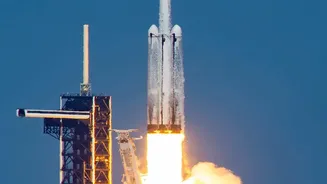
Shortly after a successful liftoff and separation from the Starship upper stage, the Super Heavy booster began its boostback burn to return to the launch site. However, as it prepared for its final landing sequence, an anomaly triggered an automatic abort. Onboard systems detected an issue—speculated to be related to guidance, navigation, and control (GNC) or a low fuel alarm—and autonomously determined a tower catch was too risky. Following its programming for such an event, the booster diverted its trajectory away from the launch site and toward a designated contingency zone in the Gulf of Mexico. It performed a landing burn over the water before making impact, preventing any risk to ground personnel or infrastructure but resulting in the loss of the vehicle.
An Investigation in Progress
In the aftermath, SpaceX has confirmed it is meticulously analyzing the telemetry data from the flight to pinpoint the exact cause of the abort. While the loss of the booster is a significant financial and operational setback, the event is consistent with SpaceX's development philosophy. The company famously employs an iterative design process, pushing its hardware to the limits in real-world tests to quickly find and fix flaws. This 'hardware-rich' approach, where failures are treated as valuable data-gathering opportunities, has been the engine behind the rapid progress of both the Falcon and Starship programs. The data from Flight 15's booster, even in its failure, will be invaluable for ensuring future catch attempts are more robust.
Mixed Results, Forward Progress
While the booster recovery failed, it's crucial to view the mission in its entirety. The Starship upper stage, meanwhile, successfully continued its own mission, achieving orbit and proceeding with its objectives, which on this flight included deploying a batch of next-generation Starlink satellites. In a remarkable turn of events, the upper stage itself completed its own de-orbit burn and was successfully caught by the Mechazilla tower a day later, a historic first for the program. This dual outcome—a major success with the ship and a failure with the booster—perfectly encapsulates the 'two steps forward, one step back' nature of aerospace development. For SpaceX, a flight that tests multiple systems and provides clear data on what to fix next is still considered a step in the right direction toward its ultimate goal of making humanity a multi-planetary species.