




The New Reality: A Congested Orbit
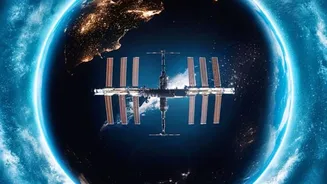
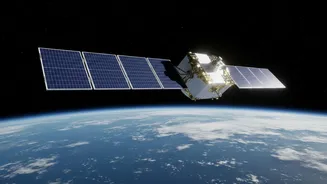
The era of space being a vast, empty frontier is decisively over. The proliferation of commercial 'mega-constellations' from companies like Starlink and OneWeb, alongside national and scientific missions, has fundamentally altered Earth's orbit. This
surge, while powering global connectivity and innovation, has created unprecedented operational challenges. Experts gathering for the International Conference on Spacecraft Mission Operations (SMOPS-2026) are grappling with a new reality: orbit is a finite resource, and managing it sustainably is now one of the most complex challenges in technology and international policy. The conversations are moving beyond just launching satellites to the difficult work of operating them safely in an increasingly hazardous environment.
Top of the Agenda: The Space Debris Crisis
A primary topic of debate is the growing threat of space debris. With over 36,000 tracked objects larger than 10 centimeters, and millions more smaller fragments, the risk of catastrophic collisions is very real. A single impact could create thousands of new pieces of debris, potentially triggering a chain reaction that could render certain orbits unusable. The debate at SMOPS and in the wider industry centers on responsibility and action. Who should pay for active debris removal? How can international 'rules of the road' be enforced when current guidelines are largely voluntary? Regulatory bodies are tightening rules, such as the FCC's 5-year de-orbit mandate, but a globally consistent approach remains elusive, making sustainability a core challenge.
The Human Factor: Automation vs. The Operator
It is impossible for humans to manually manage the thousands of daily collision-avoidance warnings for a large constellation. This has spurred a massive push toward automation and Artificial Intelligence in spacecraft operations. AI can process vast amounts of data to predict potential collisions, optimize satellite health, and manage complex networks autonomously. However, this shift raises its own set of critical questions. How much control should be handed over to AI in these critical systems? How can we verify that an autonomous system is trustworthy and secure from cyberattacks? The debate is not about whether to automate, but about finding the right partnership between human oversight and machine efficiency to ensure missions remain safe and effective.
Managing the Swarm: The Constellation Challenge
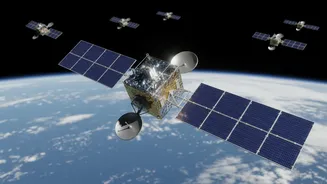
Managing a single satellite is complex; managing a constellation of thousands is a monumental task in logistics and data processing. These swarms must be coordinated perfectly to provide continuous service, avoid interfering with each other's signals, and steer clear of other spacecraft. This has given rise to the discipline of Space Traffic Management (STM), a key focus for industry experts. The market for STM is growing rapidly as the need for real-time monitoring and coordination becomes non-negotiable. The central debate is how to build this system. Should it be a government-run entity like air traffic control, a private service, or a hybrid model? Establishing these protocols is crucial not just for safety, but for the very business case of the multi-billion dollar satellite industry.