



The Soft, Savoury Soul: Poha
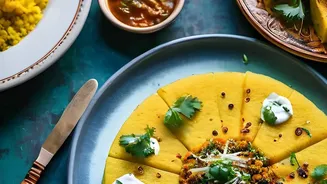
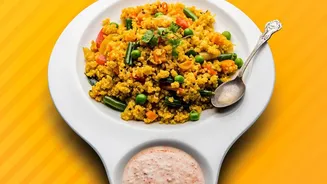
The foundation of this iconic breakfast trio is poha, a dish made from flattened rice flakes. Its genius lies in its texture: impossibly light, fluffy, and tender. Particularly in cities like Indore, which claims the poha-jalebi combination as its own,
the preparation is an art. The rice flakes are steamed, never fried, which keeps them moist and distinct. They are then tossed with turmeric, giving them a vibrant yellow hue, and tempered with mustard seeds, curry leaves, and fennel seeds. The final dish is often garnished with raw chopped onions, fresh coriander, and a generous handful of crunchy sev (fried chickpea flour noodles), adding another layer of texture. This creates a savoury, tangy, and wonderfully soft base that is comforting yet complex. It is light on the stomach, making it the perfect start to the day.
The Sweet, Crispy Swirl: Jalebi
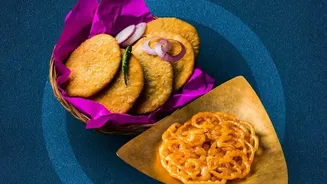
In stark contrast to the gentle poha is the jalebi, a confection of pure joy. These bright orange swirls are made by piping a fermented batter into hot oil, where it puffs up and fries to a state of being shatteringly crisp on the outside while remaining slightly chewy within. Once fried, they are plunged into a warm sugar syrup, which they drink up eagerly. The result is a bite that crackles, releasing a gush of intense sweetness. When eaten alongside poha, the jalebi provides a brilliant counterpoint. The sweet syrup cuts through the savoury and tangy notes of the poha, and the crispiness is a delightful shock against the softness of the rice flakes. This sweet and savoury pairing is a hallmark of the culinary culture in the Malwa region of Madhya Pradesh, where contrasting flavours are celebrated.
The Hearty, Flaky Crunch: Samosa
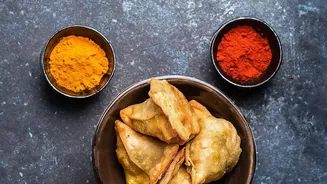
Completing this breakfast trifecta is the beloved samosa. While often considered a tea-time snack, it is a popular breakfast item in many parts of India. The samosa introduces a third, distinct set of textures. It boasts a golden, flaky pastry shell that gives way to a soft, spiced potato and pea filling. The contrast is internal: the crisp, sometimes bubbly crust against the warm, yielding interior. When added to the plate with poha and jalebi, the samosa brings a hearty, substantial element to the meal. Its savoury, spiced filling complements the tang of the poha, while its crunchy pastry echoes the crispness of the jalebi, but in a completely different, less sugary way. Instead of being served with chutney, the samosa in this combination is often enjoyed as is, its richness balanced by the other components on the plate.
A Symphony of Sensations
On paper, the combination might seem chaotic. Soft rice, a syrupy sweet, and a fried pastry? But on the plate, it is nothing short of a culinary symphony. This breakfast is a masterclass in balance and contrast. You have the soft poha, the crunchy-chewy jalebi, and the flaky-yet-soft samosa. Flavour-wise, it's a journey from the tangy and mildly spiced poha, to the pure sugary hit of the jalebi, to the robust, spicy earthiness of the samosa. Each bite can be different. A spoonful of poha followed by a piece of jalebi creates a sweet-and-savoury explosion. A bite of samosa with a little poha offers a mix of spicy, tangy, soft, and crunchy. It is this dynamic interplay that has made the combination a cultural institution, particularly in cities like Indore and Bhopal. It is more than a meal; it’s an experience that engages all the senses and represents a food culture built on layered flavours and textures.