





A Strategy in Confusion
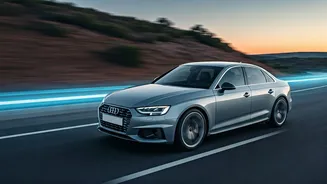
To understand the future of the Audi A4, we first need to understand a plan that was announced and then quickly abandoned. A few years ago, Audi decided on a new naming strategy: odd numbers like A5 and A7 would be for cars with combustion engines, while
even numbers like A4 and A6 would be reserved for all-electric vehicles. The idea was to create a clear distinction as the brand transitioned to electric power. This led to the widespread belief that the petrol-powered A4 as we know it would be replaced by a new car called the A5. However, the strategy proved too confusing for customers and dealers alike. In early 2025, Audi reversed course, announcing it would return to its traditional system where the number simply denotes the vehicle's size in the lineup, with suffixes like 'e-tron' or 'TFSI' specifying the powertrain.
Meet the New A5 Family
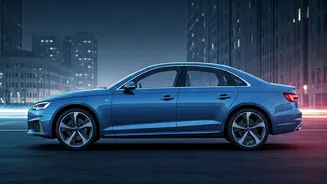
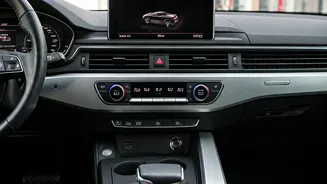
Despite the naming reversal, the product pipeline was already in motion. The car developed to be the successor to the current internal-combustion A4 will still launch as the new Audi A5. This new A5 family will be available in both Sportback (a sleek sedan-like hatchback) and Avant (station wagon) forms, powered by modern petrol, diesel, and plug-in hybrid powertrains. So, while the name on the boot is changing from A4 to A5, the spirit of the practical, premium, combustion-engine Audi for this segment continues. It is designed to compete directly with rivals like the BMW 3 Series and Mercedes-Benz C-Class, offering a fresh design, an upgraded interior with more physical controls, and a more practical hatchback-style boot opening on the Sportback model.
The A4's Electric Rebirth
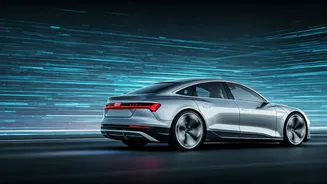
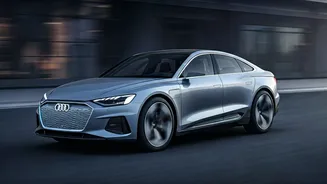
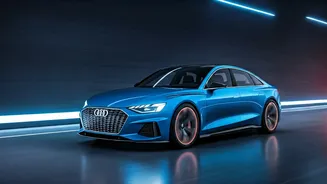
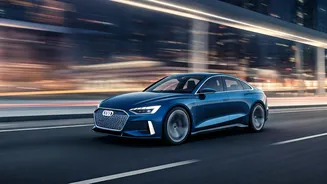
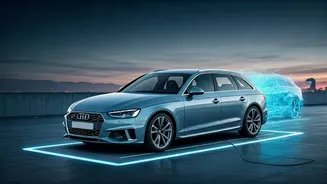
The A4 nameplate is far from dead; it is simply being saved for a grander, all-electric future. Audi has officially confirmed that the A4 will return around 2028, but as a dedicated electric vehicle, likely badged the A4 e-tron. This is not just an electric version of the old car but a ground-up EV built on Volkswagen Group’s next-generation Scalable Systems Platform (SSP). This advanced architecture promises significant improvements in efficiency, range, and in-car technology, positioning the A4 e-tron as a direct competitor to the future electric Mercedes C-Class and BMW i3. Preliminary details suggest powerful single- and dual-motor configurations, with a range-topping S4 e-tron model producing over 500 horsepower.
An Avant for Every Powertrain
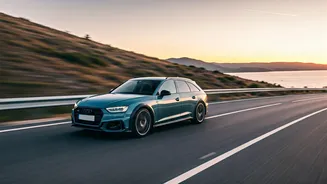
The most reassuring news for enthusiasts, especially in global markets where wagons are cherished, is the survival of the Avant. Audi’s commitment to the stylish and practical wagon body style remains firm across its changing strategies. In the immediate future, those wanting a new combustion-powered wagon will buy the A5 Avant. Looking further ahead, Audi’s Chief Technical Officer, Rouven Mohr, has been emphatic that the Avant is part of the brand’s DNA and will continue into the electric era. An all-electric A4 e-tron Avant is officially part of the plan, meaning buyers will eventually have a choice: a combustion or hybrid wagon in the form of the A5 Avant, or a fully electric one with the future A4 e-tron Avant.
The Road Ahead in India
For the Indian market, this strategic shuffle will unfold over the next few years. The new-generation Audi A5, in its Sportback and potentially Avant forms, is expected to make its way to India, replacing the current A4. Audi India has already established a strong foothold in the luxury EV space with its e-tron range of SUVs and the e-tron GT sedan. The arrival of a mainstream electric sedan like the A4 e-tron around 2028 will be a critical step in competing with a growing field of electric luxury cars. While a specific launch timeline for the A4 e-tron in India is yet to be announced, its development signals a clear, albeit complex, path forward for one of Audi’s most important nameplates.