






India's Next Frontier: The Bharatiya Antariksh Station
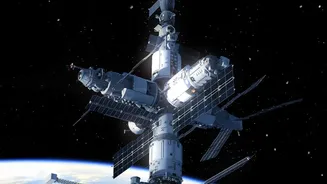
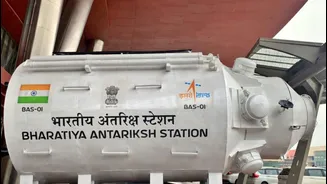
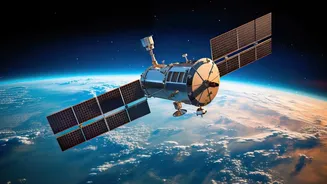
India is set to join an exclusive club of nations with its own orbital outpost. The project, named the Bharatiya Antariksh Station (BAS), envisions a modular space station in a low-Earth orbit approximately 400-450 kilometres above our planet. This isn't
just a single launch; the station will be constructed from multiple modules sent into space sequentially. The government has confirmed that the Indian Space Research Organisation (ISRO) has now moved into a crucial phase: designing the critical subsystems that will make the station functional. Once complete, the 52-tonne station is expected to host three to four astronauts for missions lasting from 15 days to potentially several months, providing a unique laboratory for scientific research in the microgravity environment.
From Blueprint to Building Blocks
The announcement that subsystem design has begun marks a significant transition from concept to concrete engineering. After completing the baseline design review, which resulted in 31 key design documents, engineers can now focus on the individual systems that will keep the station and its inhabitants alive and productive. These subsystems are the vital organs of any spacecraft. They include life support systems to provide breathable air and water, power systems to generate and distribute electricity from solar panels, propulsion systems for orbital adjustments, and communication arrays to stay in touch with ground control. This phase involves creating prototype hardware, essentially building and testing the foundational components that will eventually become part of India's home in the stars.
An Ambitious Timeline Built on Gaganyaan's Success
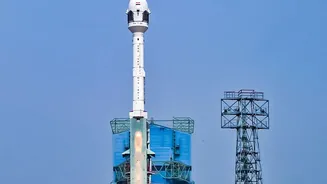
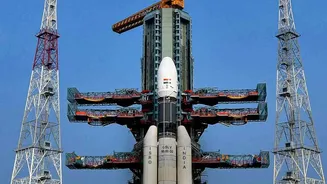
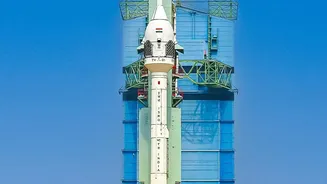
The timeline for the Bharatiya Antariksh Station is ambitious and intrinsically linked to the success of the Gaganyaan programme, India's first human spaceflight mission. The government has stated the first module, BAS-01, is targeted for launch by 2028. The full five-module station is planned for completion by 2035. The Gaganyaan mission is the essential stepping stone, as it is developing the critical technologies needed for human spaceflight. This includes the human-rated LVM3 launch vehicle, the crew module, life support systems, and the expertise required to safely send astronauts into orbit and bring them back. Technologies crucial for the space station, such as docking mechanisms that allow different modules and spacecraft to connect, are already being developed and tested as part of this broader push.
Why an Indian Space Station Matters
Having a permanent outpost in orbit is a powerful statement of a nation's scientific and technological prowess. For India, the BAS represents more than just a foothold in space; it is a platform for progress. The station will enable long-duration experiments in fields like materials science, biology, and medicine that are impossible to conduct on Earth. This research can lead to breakthroughs in everything from new medicines to advanced manufacturing techniques. Furthermore, it fosters self-reliance in critical space technologies. The government has approved the indigenous development of flight suits, crew seats, and docking technology, reducing dependence on foreign suppliers and boosting domestic high-tech manufacturing. Strategically, it secures India’s place as a major player in the future of space exploration, opening doors for international collaboration and ensuring the nation has a voice in shaping the future of off-world activities.