





The Devoted Queen and Her Loving Brothers
The most widely told story associated with Karwa Chauth is that of the beautiful Queen Veeravati. She was the adored only sister to seven doting brothers. After her marriage to a king, she returned to her parents' home to observe her first Karwa Chauth.
As per tradition, she began a strict fast at sunrise, abstaining from all food and water, with the intention of praying for her husband's longevity and well-being.
A Deception Born of Love
As the day wore on, the rigours of the fast took their toll. Weak from hunger and thirst, Veeravati eagerly awaited the moonrise, which would signal the end of her fast. Seeing their sister's distress, her seven brothers could not bear her suffering. In an act of misguided love, they devised a plan to trick her into breaking her fast early. They climbed a pipal tree and held up a mirror or a sieve with a lamp behind it, creating the illusion of a full moon in the dark sky. Believing their loving deception, Veeravati offered her prayers, broke her fast, and took a morsel of food.
The Heartbreaking Consequence
The moment she ate, the consequences were immediate and devastating. In some versions of the tale, she sneezed at the first bite and found a hair in the second, both considered bad omens. Then, a messenger arrived with the tragic news: her husband, the king, was dead. Heartbroken, Veeravati realised she had broken the sacred rules of the fast. As she rushed towards her husband's kingdom, she was met by Lord Shiva and Goddess Parvati. Parvati revealed the truth of her brothers' trick and explained that her husband's demise was a direct result of breaking the fast before the real moonrise.
A Path to Redemption
Weeping, Veeravati begged the goddess for forgiveness and a way to save her husband. Moved by her sincere repentance and powerful devotion, Parvati offered her a path to redemption. She instructed Veeravati to undertake the Karwa Chauth fast again, but this time with absolute and unwavering adherence to all the rituals. In some tellings, Parvati advises her to observe a fast on every chaturthi (fourth day of the lunar month) for a year. Veeravati followed the divine guidance with utmost faith. A year later, upon successfully and correctly completing the Karwa Chauth fast, her devotion paid off. The god of death, Yama, was forced to restore her husband's life.
The Legend's Legacy in Modern Rituals
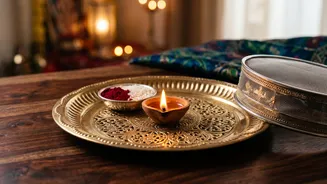
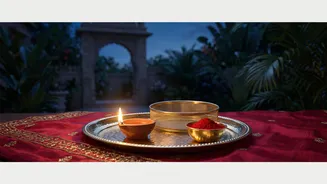
The story of Veeravati is not just a cautionary tale; it is the very fabric of Karwa Chauth's most iconic rituals. It underscores the profound importance of completing the fast only after sighting the real moon. The 'chalni', or sieve, that the brothers used for their trick has become a central element of the modern ceremony. Today, women look at the moon through a sieve before looking at their husbands, a symbolic act that serves multiple purposes. It is a reminder of Veeravati’s story and the need to filter out deception, ensuring it is the true moon they see. The ritual also signifies filtering out negativity and focusing devotion purely on the well-being of one's spouse, turning an object of deceit into a symbol of clarity and faith.