





Choosing between gliding on skates and pedalling on a bike can be tough. Both are fantastic low-impact workouts, but they offer vastly different experiences, especially when it comes to balance. Let's break down how they compare.
The Core of Balance: Two Different Challenges
The most significant difference
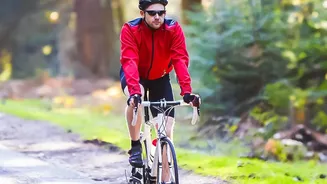
lies in the type of balance each activity demands. Cycling requires what can be described as 'supported' or 'static' balance. Once you're moving, the bike's momentum and gyroscopic forces from the spinning wheels help keep you upright. Your main job is to make small adjustments to steering and body weight. For most people who learned as a child, this balance feels intuitive. Inline skating, however, demands constant, active 'dynamic' balance. You are untethered, and your body is the sole instrument for stability. This requires continuous engagement of your core muscles—abdominals, obliques, and lower back—to stay upright. Every push, glide, and turn is a micro-adjustment, making skating an exceptional workout for core strength and stability. While a bicycle provides a stable frame, skates force your body to become the frame.
Muscle Engagement: Full Body vs. Lower Body Focus
Both cycling and skating are celebrated for building strong legs, but they work your muscles in different ways. Cycling is famous for targeting the quadriceps and hamstrings, delivering a powerful lower-body workout, especially when climbing hills or sprinting. While your core is engaged to maintain posture, the primary effort is concentrated in your legs. Inline skating provides a more comprehensive, full-body workout. The side-to-side push-off motion heavily recruits the glutes and hip abductor muscles, areas that cycling doesn't target as intensely. Furthermore, balancing on skates requires constant core activation, and swinging your arms for momentum and stability brings your upper body into play. This makes skating a well-rounded activity for toning muscles from your calves up to your shoulders.
The Cardio Question and Calorie Burn
When it comes to cardiovascular benefits, both are excellent choices. However, the calorie burn can differ based on intensity. Because inline skating engages more muscle groups simultaneously to maintain balance and propulsion, it can lead to a higher calorie expenditure at a moderate pace compared to cycling at a similar perceived effort. One study notes that inline skating at a steady pace burns a significant number of calories, which can be increased by going faster or tackling hills. Cycling allows for longer distances and coasting, which can reduce the continuous effort unless you're intentionally pushing the pace. Skating, on the other hand, rarely allows for 'rest' periods, as even gliding requires balance and muscle control. Ultimately, the best calorie-burning workout is the one you can perform with consistent intensity, but skating may have a slight edge for those seeking maximum burn in a shorter time.
The Learning Curve and Injury Risk
For many adults, cycling has a lower barrier to entry, as the basic skill is often retained from childhood. The initial wobbles are quickly overcome, and building confidence for longer rides is straightforward. Inline skating typically has a steeper learning curve for beginners. Mastering balance, stopping, and navigating uneven surfaces takes practice. However, once mastered, skaters often report high levels of agility. In terms of injuries, both sports have risks. Cycling injuries can be more severe due to higher potential speeds and collisions with traffic. Skating falls are often at lower speeds, but wrist, elbow, and tailbone injuries can be common, especially while learning. Regardless of your choice, proper safety gear, including a helmet, is nonstoppable.
The Vibe: Freedom vs. Distance
Beyond the physical metrics is the feel of the exercise. Cycling is the champion of distance and exploration. The ability to cover many kilometres in a session makes it perfect for commuting, scenic tours, and exploring new areas. There's a sense of mechanical efficiency and momentum that is deeply satisfying. Skating offers a different kind of freedom—one of fluid movement and agility. It’s more like dancing or skiing, with a rhythmic, gliding motion. Because skates are so portable, they offer great flexibility; you can carry them in a backpack and skate a park path on your lunch break. The experience is often more introspective and focused on the body's movement and flow.