





What is the Visa Bond Program?
The policy is essentially a security deposit for a visa. Under this permanent program, consular officers can require certain applicants for visitor visas (B-1 for business and B-2 for tourism) to post a substantial cash bond. The bond amounts are set
at $10,000, $15,000, or $20,000. This money is not a fee; it is intended to be refundable. If the visa holder complies with the terms of their admission and departs the United States on time, the bond is returned. However, if the individual overstays their visa or violates other conditions, such as applying for asylum, the entire bond amount is forfeited to the U.S. government.
From a Test Run to a Permanent Rule
This policy did not appear overnight. It began as a pilot program in August 2025 to test whether financial incentives could effectively reduce the number of people who overstay their visas. According to the U.S. Department of State, the pilot was a success. The agency reported that in the first 10 months, overstays from the targeted countries dropped dramatically. Citing these results, the department announced in early August 2026 that the program would be made permanent and even expanded, with the maximum bond amount increasing from $15,000 to $20,000.
The Official Goal: Targeting Visa Overstays
The primary justification for the visa bond program is to combat visa overstays. U.S. authorities define an overstay as anyone who remains in the country beyond the period of authorized admission granted on their visa. The State Department has noted that prior to the pilot program, there were tens of thousands of overstays from the selected countries. The government argues that the bond creates a powerful financial incentive for visitors to adhere to their visa's terms. Officials have also pointed to the high cost associated with enforcement, estimating that it costs roughly $18,000 to arrest and deport a single individual who has overstayed.
Who Is Actually Affected by This?
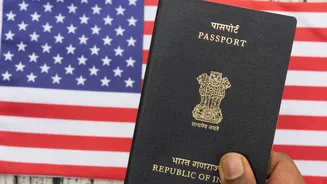
This is the most critical question for travellers from India. The program does not apply to all countries. It specifically targets a list of 50 nations that the U.S. government has identified as having high overstay rates or other risk factors. As of August 2026, India is not on this list. The requirement is primarily focused on countries in Africa, along with several nations in Asia, the Caribbean, and Eastern Europe. Some of India's neighbours, like Bangladesh and Nepal, are included on the list. This means that for now, Indian citizens applying for a U.S. visitor visa are not subject to this bond requirement.
How the Bond Process Works
The decision to require a bond is made on a case-by-case basis by a U.S. consular officer during the visa interview. It is not an automatic requirement for everyone from a listed country. If an applicant is deemed to be at risk of overstaying, the officer will inform them that they must pay a bond to proceed. The applicant is then given a set period to pay the bond. If the visa is ultimately denied for other reasons, the bond is cancelled. To ensure the bond is refunded, the traveller must not only depart on time but also enter and exit the U.S. through designated commercial airports where their departure can be electronically verified.
A Chilling Effect on Travel
While the State Department has praised the program's effectiveness, critics and travel industry groups point to its significant impact on legitimate travel. During the pilot program, visa issuances to citizens from the affected countries fell by a staggering 83 percent. Furthermore, reports indicated that nearly half of the approximately 20,000 applicants who were told they needed to pay a bond ultimately abandoned their visa applications, likely due to the prohibitive cost. This suggests that while the program may be deterring potential overstayers, it is also preventing many legitimate tourists, business travellers, and family members from visiting the U.S.