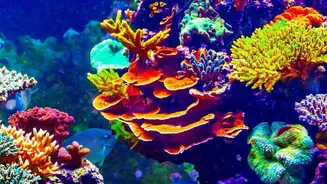



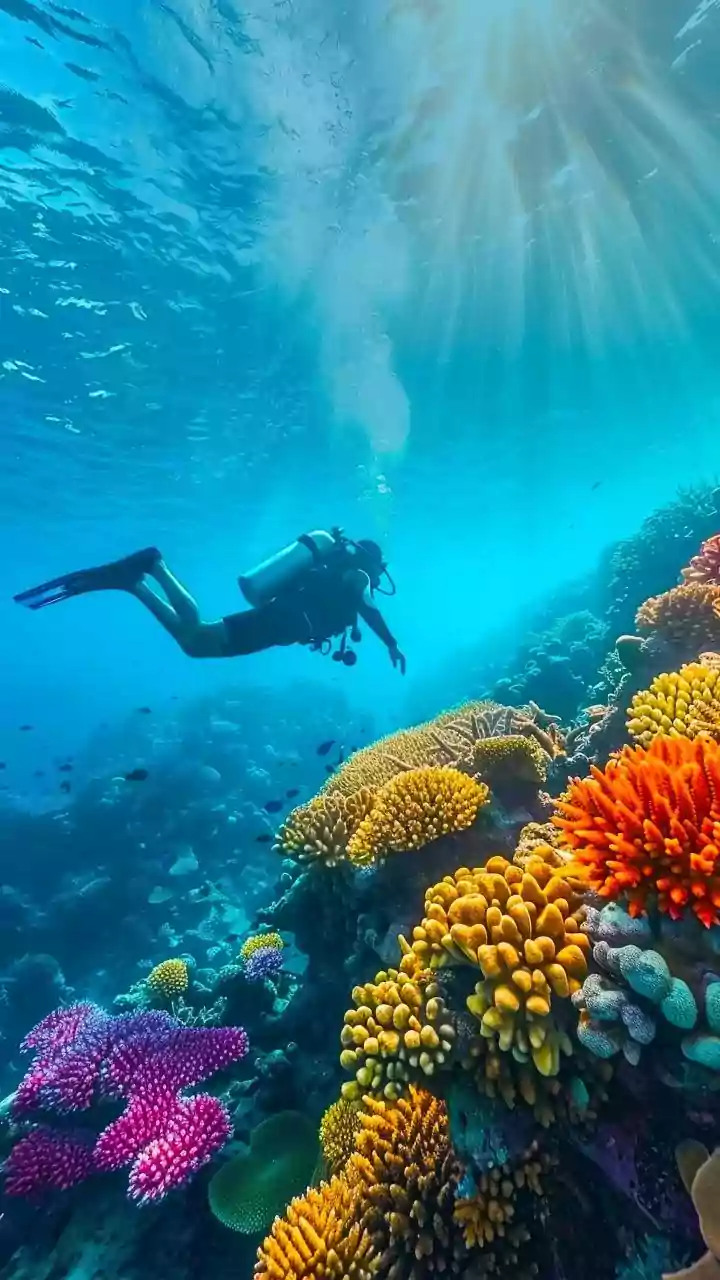


In the urgent fight to save the world's dying coral reefs, inspiration can come from the most unexpected places. A simple lab accident has led to a remarkable discovery, offering a new way to revive bleached corals at an astonishing speed.
An Accidental Observation
The breakthrough
began not with a complex experiment, but with a simple mishap. In 2025, at Stanford University's Hopkins Marine Station, marine scientist Stephen Palumbi noticed something peculiar in a lab tank. Two small fragments of coral, which had been broken off from the same parent colony, had accidentally tipped over and were touching. One was healthy and vibrant, while the other was stark white—bleached from simulated heat stress. Where the two made contact, a fascinating transformation was occurring: color was visibly creeping back into the ghostly white fragment. The life-giving algae that had been expelled were somehow returning. It was an observation that defied the typical slow timeline of coral recovery.
From Mishap to Method
This chance event caught the attention of Danny Collins, a PhD student in the same lab. At the time, Collins was studying how harmful bacteria could transfer to corals through physical contact with things like plastic debris. The accidental healing he saw flipped his research on its head: if a touch could deliver something harmful, could it also deliver something beneficial? To test this, the team designed a controlled experiment. They took genetically identical pairs of coral fragments—one healthy, one bleached. In half the pairs, the fragments were placed in direct contact. In the other half, they were separated by just a few millimeters. The results were dramatic. Every single bleached fragment that touched its healthy twin made a full recovery, some in as little as four to seven weeks. Meanwhile, the separated fragments did not recover, and some died.
A 'Nutrient Highway' Between Corals
So, what was happening on a microscopic level? The researchers discovered that when genetically identical corals touch, their tissues can actually fuse together. This fusion creates what Collins described as a 'tissue bridge', acting like a nutrient highway. Through this connection, the healthy coral could actively transfer its vital symbiotic algae, known as zooxanthellae, directly to its struggling, bleached counterpart. These algae are crucial, providing corals with most of their food through photosynthesis and giving them their vibrant colors. Once transferred, the algae didn't just trickle in; they flooded the bleached coral's tissues and began dividing at an incredibly fast rate, kickstarting the recovery process.
How Much Contact Is Needed?
The team also wanted to know if the contact needed to be permanent. Further experiments showed that even a brief interaction could trigger the healing process. Just three days of contact was enough to start the transfer of algae. Fragments that touched for about a week before being separated still went on to achieve a full recovery within the seven week timeframe. This finding is significant because it suggests that a long term connection isn't necessary to initiate the life saving 'algal transfusion'. The bleached coral, once given this initial boost, could finish the job on its own.
Hope, But Not a Silver Bullet
While the speed of this recovery is groundbreaking, the scientists are quick to manage expectations. The technique's major limitation is that it only works between genetically identical corals, akin to a successful organ transplant requiring a perfect match. Applying this on a massive scale to wild reefs, which contain hundreds of different genetic individuals, would be an overwhelming and impractical task. However, the discovery opens up new avenues for reef restoration. Instead of simply trying to prevent bleaching, this gives scientists a potential tool to aid recovery after a heatwave. The team is now exploring whether algae harvested from healthy corals could be delivered in batches to bleached reefs, bypassing the need for direct contact. This accidental discovery provides a powerful new understanding of coral resilience, but experts agree the ultimate solution remains tackling the root cause of bleaching: climate change.