






A Ghost in the Machine
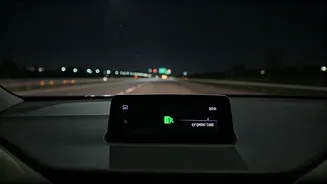
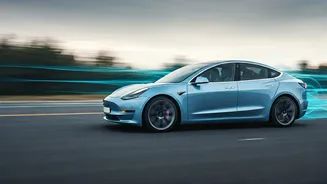
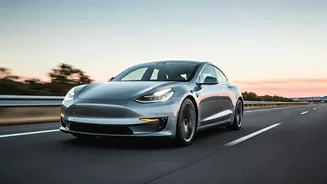
For years, some Tesla owners have reported a startling experience: their car suddenly braking for no apparent reason. This phenomenon, dubbed “phantom braking,” typically occurred while using driver-assistance features like Autopilot or Traffic-Aware
Cruise Control. Drivers described sudden decelerations at highway speeds, creating moments of alarm, though fortunately, regulators found no identified collisions resulting from the issue. The problem became prominent enough that the US National Highway Traffic Safety Administration (NHTSA) launched a preliminary evaluation in February 2022 to investigate the matter, covering roughly 695,000 Model 3 and Model Y vehicles from the 2021 and 2022 model years.
The Road to Investigation
The probe was triggered by a surge in complaints. By the time NHTSA opened its file in early 2022, it had received over 300 reports from owners experiencing unexpected braking. The agency's investigation pointed to a likely contributing factor: Tesla’s decision in mid-2021 to move away from using both radar and cameras for its driver-assist systems, opting instead for a “vision-only” architecture that relies solely on cameras. It’s believed that without the redundant data from radar, the system was more prone to misinterpreting visual cues on the road, causing it to brake unnecessarily. This connection, formally noted by a federal agency, marked a rare instance of a specific engineering choice being linked to a pattern of safety complaints.
The Verdict from Regulators
On July 2, 2026, NHTSA officially closed the investigation. The agency gave two primary reasons for its decision. First, and most importantly, the number of complaints has fallen dramatically. After Tesla issued a series of over-the-air software updates in early 2022 to address the problem, incident reports plummeted from their peak. Reports dropped to 45 in 2024, 19 in 2025, and only three in the first half of 2026. Second, regulators concluded that the events posed a “low demonstrated hazard.” They found no pattern of the braking causing drivers to lose control or depart from their lane, and no crashes, injuries, or fatalities were tied to the issue throughout the entire investigation.
What This Means for Tesla Drivers
For owners of newer Tesla models or those with up-to-date software, the phantom braking issue that triggered the probe is largely a thing of the past. The data strongly suggests that the software fixes implemented in 2022 were effective. However, the closure of the investigation is not a complete exoneration. NHTSA was careful to note that closing a preliminary evaluation does not rule out the existence of a safety defect. The agency retains the right to reopen the investigation or take further action if new circumstances or data warrant it. This means that while the acute problem seems solved, the underlying technology and its performance remain under a watchful eye.
The Bigger Picture for Autonomous Tech
The conclusion of this probe is a significant milestone not just for Tesla, but for the entire autonomous vehicle industry. It provides a useful case study on how regulators are navigating the complex world of software-defined vehicles. The resolution demonstrates a pathway where a company can address a potential safety concern via remote software updates, satisfy regulators, and avoid a massive physical recall. This is the second major Tesla investigation NHTSA has closed in a short period, following the closure of a probe into power steering issues that were also fixed with a software update. While Tesla still faces other safety probes, the outcome of the phantom braking case suggests a maturing relationship between the pioneering automaker and its regulators, where data and software fixes can provide a resolution to complex tech-related issues.