

The Current Timeline: A Phased Launch
The most anticipated question is: when will it run? According to recent statements from Railway Minister Ashwini Vaishnaw, the first service is expected to begin in phases. A key milestone is the targeted commissioning of the Surat-Bilimora section in Gujarat
by August 2027. This will be the inaugural stretch to become operational. Broader timelines suggest the entire 508-km Mumbai-Ahmedabad corridor may be completed by 2029 or 2030, a revision from the original 2023 deadline. An indigenously manufactured trainset is expected to be ready for testing by May or June 2027, with a trial period of two to four months before its official inauguration.
Construction Progress on the Ground
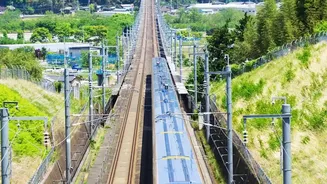
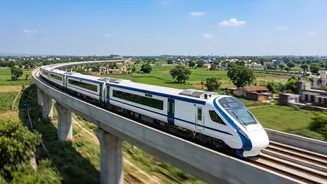
Significant construction progress is visible, particularly in Gujarat. Civil construction on the Vapi-Surat section is reportedly on track for completion by December 2026. As of mid-2026, work on piers, girders, and the track bed has advanced considerably, with track and electrical work now happening simultaneously with civil construction. Work is also progressing on the 12 stations planned along the route, with foundation work completed at eight stations and underway at several others in Maharashtra. One of the project's major engineering feats, a 7-km undersea tunnel near Thane Creek, is also under construction. By early 2026, all land required for the project had been acquired, removing a major hurdle that caused earlier delays.
The Technology: Indigenous and Imported
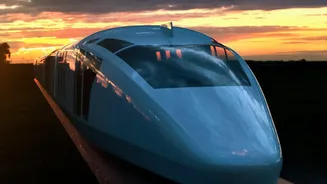
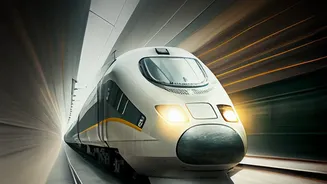
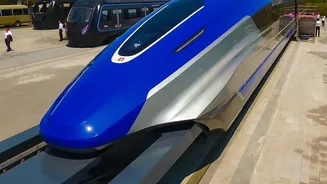
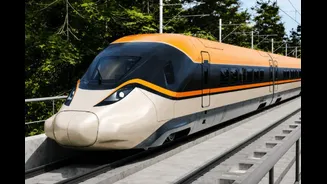
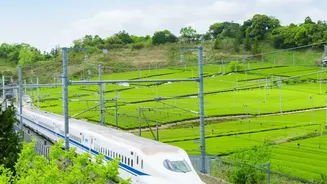
The project is a blend of Japanese technology and a growing 'Make in India' focus. The corridor is being developed with technical and financial assistance from Japan, using its famous Shinkansen technology, which allows for operating speeds of up to 320 kmph. However, there is a major push for domestic production. An indigenous high-speed trainset, capable of speeds up to 280 kmph, is being designed and manufactured by a collaboration between Integral Coach Factory (ICF) and Bharat Earth Movers Limited (BEML). The first prototype is expected to roll out in 2027, with the first body shell already completed and sent for testing. This domestic effort aims to reduce reliance on imports for future high-speed rail projects.
Cost and Funding: A Revised Estimate
The project's budget has seen a significant revision since its inception. The initial estimated cost of around ₹1.1 lakh crore has nearly doubled to approximately ₹2.1 lakh crore. This increase has been attributed to several factors, including delays in land acquisition, especially in Maharashtra, and revisions in the procurement plan for train sets. The project is primarily funded through a combination of budgetary allocations and a soft loan from the Japan International Cooperation Agency (JICA). Despite the cost increase, officials have noted that the per-kilometre cost remains competitive compared to similar high-speed rail projects globally.
The Route and Impact
The 508-kilometre corridor will connect Mumbai and Ahmedabad, passing through Maharashtra, Gujarat, and the Union Territory of Dadra and Nagar Haveli. It will feature 12 stations: Mumbai (BKC), Thane, Virar, Boisar, Vapi, Bilimora, Surat, Bharuch, Vadodara, Anand, Ahmedabad, and Sabarmati. Once fully operational, the bullet train is expected to slash travel time between the two major economic hubs to just under two hours for limited-stop services, a journey that currently takes over six hours by conventional rail. This dramatic reduction in travel time is anticipated to provide a major boost to business, tourism, and overall connectivity in the region.