



What Exactly Is Coumarin?
Coumarin is a naturally occurring fragrant compound found in many plants. It's responsible for the sweet smell often associated with freshly cut hay and is present in tonka beans, sweet clover, and, most notably for our kitchens, cinnamon. While it is a natural component,
health authorities have flagged that in high concentrations, coumarin can be problematic. The primary concern is its potential to cause liver damage in sensitive individuals, though this effect is usually reversible. It’s important to note that isolated coumarin is not permitted as a food additive, but its presence is unavoidable when using certain whole spices.
Not All Cinnamon Is Created Equal
Herein lies the most crucial part of the story: the type of cinnamon you use matters immensely. Most of the cinnamon found on supermarket shelves is Cassia cinnamon. It's affordable, has a strong, spicy flavour, and is widely grown in China and Indonesia. However, Cassia cinnamon is also very high in coumarin, containing up to 1% by weight.The alternative is Ceylon cinnamon, often called "true cinnamon," which originates from Sri Lanka. It has a milder, sweeter, more complex flavour and is significantly lower in coumarin. In fact, Cassia can contain up to 250 times more coumarin than Ceylon, making Ceylon the much safer choice for regular or heavy consumption.
How Much Is Too Much?
Health authorities like the European Food Safety Authority (EFSA) have established a Tolerable Daily Intake (TDI) for coumarin, which is the amount a person can consume daily over a lifetime without a significant health risk. The TDI is set at 0.1 milligrams (mg) of coumarin per kilogram of body weight.For an adult weighing 60 kg, this translates to a TDI of 6 mg of coumarin per day. Just one teaspoon of common Cassia cinnamon powder can contain between 5.8 to 12.1 mg of coumarin, which means a single spoonful could easily exceed the daily limit for some individuals. For a small child, the threshold is reached much more quickly. It's worth noting that exceeding the TDI for a short period, like a week or two, is not considered a health risk; the concern is with long-term, high-level exposure.
How to Make Safer Choices
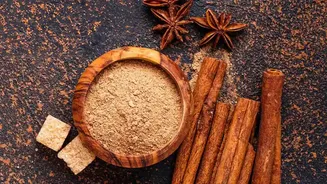
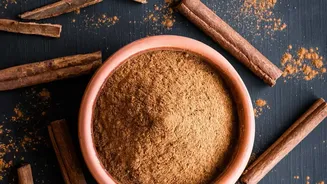
The good news is that you don’t need to give up your favourite spice. The key is moderation and awareness. For everyday cooking and baking, especially if you use cinnamon frequently, switching to Ceylon cinnamon is the safest bet. While it can be more expensive and harder to find in regular grocery stores, it is often available in specialty spice shops or online.You can often tell the difference between the two visually. Cassia cinnamon sticks are thick, hard, dark reddish-brown, and curl inward from both sides to form a hollow tube. Ceylon sticks, on the other hand, are tan-brown, fragile, and made of many thin, papery layers rolled into a single quill. When it comes to powders, Cassia is darker and has a coarser texture, while Ceylon is lighter and finer.
The Bottom Line on Cinnamon
While cinnamon has been linked to several health benefits, including antioxidant properties and improved blood sugar regulation, these should be weighed against the risks of high coumarin intake from the Cassia variety. The strong flavour of Cassia may be preferable in some robustly spiced dishes, and its occasional use is perfectly fine for most people. However, for those who sprinkle it on their oatmeal daily, stir it into their coffee, or use it in health supplements, making the switch to low-coumarin Ceylon cinnamon is a wise decision. People with existing liver conditions or those taking blood-thinning medications should be especially cautious and consult their doctor, as high coumarin intake can interfere with these conditions and medications.