



Gaganyaan's Critical Safety Test
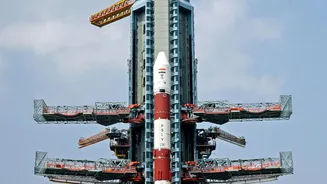
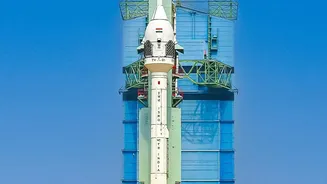
One of the highest-priority missions is the second Test Vehicle Abort Mission (TV-D2) for the Gaganyaan programme. This is not a mission to orbit, but a crucial safety drill designed to prove that the crew capsule can safely escape in case of an in-flight
emergency. Following a successful lower-altitude test in 2023, TV-D2 will simulate an abort at a higher altitude and speed, pushing the Crew Escape System to its limits. This uncrewed flight is one of the final major safety validations ISRO must complete before it proceeds with the first full uncrewed orbital flight of the Gaganyaan spacecraft, bringing India one step closer to sending its own astronauts, or 'Gaganyatris', into space.
An Advanced Eye on Planet Earth
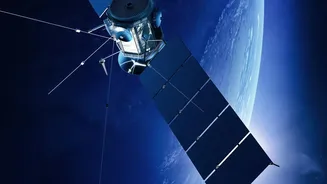
A landmark in international collaboration is on the horizon with the planned launch of the NASA-ISRO Synthetic Aperture Radar (NISAR) satellite. This sophisticated Earth-observation satellite is a joint effort between the two space agencies and is expected to be the world's most expensive Earth-imaging satellite. NISAR will use two different radar frequencies (L-band and S-band) to create incredibly detailed maps of Earth's surface, monitoring everything from glacier retreat and volcanic activity to changes in agricultural lands and groundwater levels. Launching from Indian soil on an ISRO rocket, this mission will provide crucial data for climate change research, disaster management, and resource monitoring for the benefit of the entire globe.
Bolstering India's Own GPS
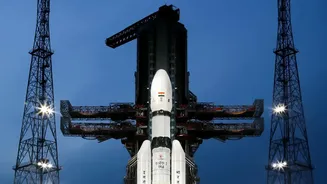
Building directly on the legacy of the NVS-03 satellite mentioned in the headline, ISRO plans to launch another next-generation satellite for the Navigation with Indian Constellation (NavIC) system. The upcoming launch will further augment and strengthen India's homegrown alternative to GPS. A robust and independent navigation system is vital for national security, transportation, and a wide range of commercial applications. With the recent launch of NVS-03, the constellation has already been strengthened; adding another satellite will enhance the accuracy, reliability, and continuity of NavIC services across India and the surrounding region.
Powering the Commercial Space Market
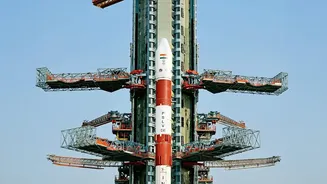
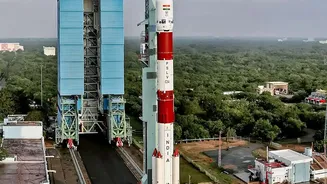
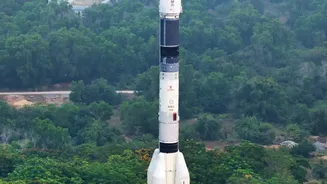
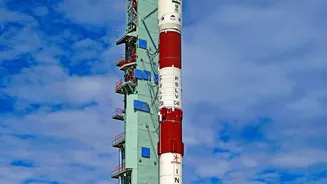
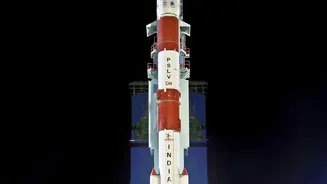
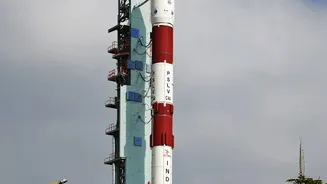
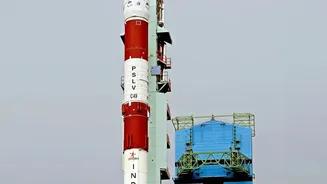
Beyond its own scientific and strategic goals, ISRO is also cementing its position as a reliable and cost effective launch provider for the world. Through its commercial arm, NewSpace India Limited (NSIL), the agency has at least two dedicated commercial missions planned using its workhorse Polar Satellite Launch Vehicle (PSLV). These launches will carry multiple small satellites for international customers, showcasing India's growing capability in the competitive global launch market. Furthermore, the Small Satellite Launch Vehicle (SSLV) is also slated for commercial flights, aimed at providing on demand launch services for the booming small satellite sector.
Advancing Weather and Climate Science
To improve weather forecasting and disaster warning, ISRO is also preparing to launch an advanced Earth observation and meteorology satellite. Missions like the INSAT -3DS follow -up and the India - France collaboration TRISHNA are in the pipeline. While TRISHNA is slated for early 2027, it highlights the focus on using space technology for direct societal benefits. These satellites provide critical data on cloud cover, sea surface temperature, and atmospheric conditions, which are indispensable for predicting cyclones, monsoons, and other extreme weather events. Enhancing this capability remains a key objective, ensuring the safety and well -being of citizens on the ground.