




A Deceptively Normal Day
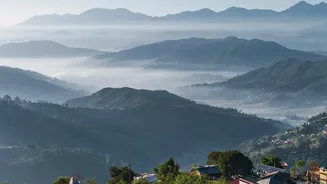
Before the roar of water and debris, it was just another day in the Melamchi river valley. On June 15, 2021, communities downstream were going about their business under monsoon skies. There was no extraordinary weather event, no immediate sign of the cataclysm
brewing high in the mountains. This deceptive calm is what made the subsequent flood so shocking. Unlike typical flash floods driven by intense local rainfall that can be tracked and warned against, this disaster was born from a hidden, geological trigger miles away, making conventional warning systems tragically ineffective.
The First Domino: A Mountain in Motion
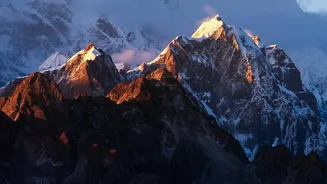
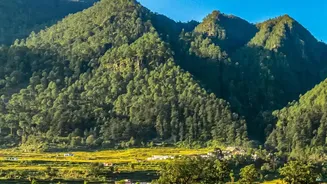
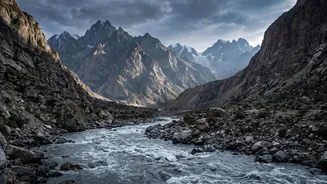
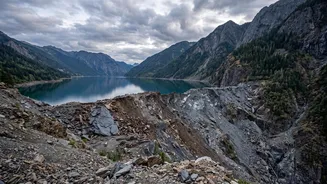
The disaster began not with rain, but with a collapse. High in the mountains, a massive volume of rock and sediment, destabilised by long-term geological processes and potentially weakened by the 2015 Gorkha earthquake, gave way. Researchers using satellite imagery and seismic data pieced together how this colossal landslide cascaded down the steep slopes. This wasn't just a slide; it was a complex chain reaction. Heavy monsoon rains and unusually high snowmelt had saturated the ground, creating the perfect conditions for failure. The initial landslide then slammed into the Melamchi River, forming a temporary dam of debris.
A Cascade of Destruction
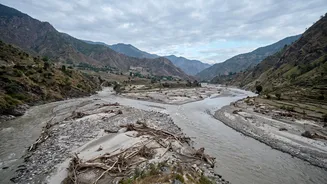
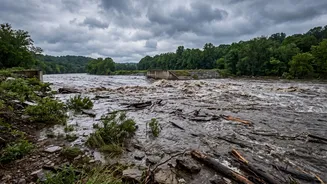
Behind this freshly formed natural dam, the river's flow backed up, accumulating immense pressure. The critical moment came when this dam catastrophically failed. An enormous pulse of water, now mixed with the sand, boulders, and logs from the landslide, was unleashed. This was no longer just a flood; it was a debris flow, a thick, powerful slurry with the consistency of wet concrete. Scientists call this a "cascading hazard," where one event triggers a sequence of others, each amplifying the destructive power. As it thundered down the valley, the flow eroded the riverbanks, picking up even more material and growing in size and force with every kilometre.
The Unstoppable Surge
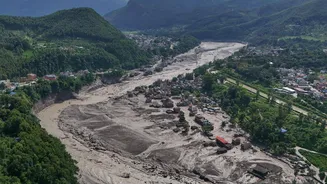
By the time the torrent reached Melamchi Bazaar and other settlements, it was a wall of destruction. The flood hit in the evening, after 8 or 9 pm, giving residents who had received some late warnings from upstream observers precious little time to escape to higher ground. The force of the flow was enough to bury the headworks of the ambitious Melamchi Water Supply Project under metres of debris, wash away bridges, and obliterate homes. In some places, the river level rose by as much as nine meters in just 30 minutes, a suddenness that is nearly impossible to survive.
A Warning for the Entire Himalayan Region
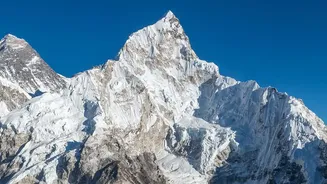
The forensic analysis of the Melamchi flood provides more than just an explanation for a past tragedy; it is a critical warning for the future. Scientists emphasise that climate change is making the Himalayas more volatile. Rapidly melting glaciers and thawing permafrost are destabilising mountain slopes, increasing the likelihood of such rock and ice avalanches. Events like this, where a geological failure rather than a cloudburst triggers a flood, are becoming a new and dangerous pattern. This research underscores the urgent need for updated risk assessments and early warning systems across the entire Himalayan belt, including in vulnerable Indian states, to account for these complex, cascading disasters.