

The Primal Allure of Earth's Fury
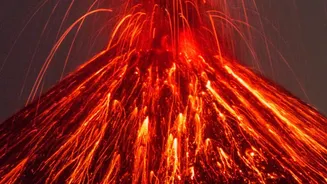
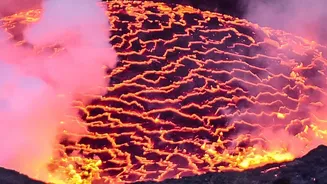
There is something undeniably magnetic about the raw power of a volcano. It's a direct connection to the planet's fiery core, a place where new land is born before our eyes. Destinations like Mount Etna in Sicily, the Reykjanes Peninsula in Iceland, and Hawai'i
Volcanoes National Park have become major tourist attractions, drawing visitors who want to witness this geological marvel up close. The appeal is not just the spectacle of flowing lava; it's the humbling experience of standing in a landscape that is actively being shaped by forces far beyond human control. This brand of tourism provides a significant economic lifeline to local communities, supporting everything from guided tours to local restaurants and hotels.
Science on Constant Watch
Turning a volatile landscape into a manageable tourist site is a monumental task that falls to volcanologists and civil authorities. These experts use a sophisticated network of tools to 'take the pulse' of a volcano. Seismometers detect tiny earthquakes that signal moving magma below ground. GPS stations and tiltmeters measure minute changes in the ground's surface, catching any swelling that might indicate building pressure. Gas sensors constantly analyze the air for tell-tale volcanic gases like sulfur dioxide, which can reveal what's happening deep inside the magma chamber. Furthermore, thermal cameras, drones, and satellite imagery provide a constant stream of data on heat changes and ground deformation from above. This combination of technologies allows scientists to create a detailed picture of the volcano's current state and forecast potential activity, though predictions are never 100% certain.
Case Study: Europe's Active Giant
Mount Etna in Sicily is a perfect example of this balance in action. As Europe's most active volcano, it is also one of the most intensely monitored on the planet. Italy's National Institute of Geophysics and Volcanology (INGV) uses a vast array of sensors to track its every rumble. Because Etna's eruptions are typically effusive—meaning lava flows more gently rather than exploding violently—tourism can often continue even during active periods. Authorities and guides work together, using real-time data to define safe altitude limits and accessible trails, closing off dangerous areas when necessary. This allows visitors, often with mandatory certified guides, to safely experience the volcano's power. However, nature always has the final say; a recent ash plume on August 11, 2026, led to the temporary closure of nearby airports, reminding everyone of the volcano's far-reaching impact.
Iceland: A Volcanic Renaissance
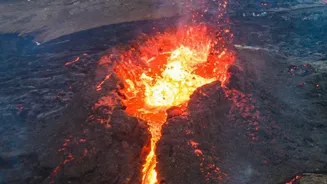
The Reykjanes Peninsula in Iceland has recently become a global hotspot for volcano tourism after centuries of dormancy. Since 2021, a series of fissure eruptions have provided stunning, and often accessible, displays of lava. These events are different from the explosive, ash-cloud-producing eruptions like that of Eyjafjallajökull in 2010. Icelandic authorities, including the Icelandic Meteorological Office and the Department of Civil Protection, have become experts at managing tourist flow, setting up marked hiking trails, and defining exclusion zones based on gas dispersion and lava flow direction. They stress that conditions can change rapidly, and it is life-threatening to walk on newly formed lava, which may look solid but could be hiding molten rock just beneath the surface.
The Rules of the Game: Your Safety Is Your Responsibility
Ultimately, safety in a volcanic area is a shared responsibility. Authorities can monitor and restrict access, but visitors must respect the rules. Heeding warnings about hazardous gases, staying on marked trails, and never entering a closed area are non-negotiable. The dangers are very real, from toxic gases like sulfur dioxide to unstable ground, sharp lava rock, and the risk of getting too close to an active vent. In Hawai'i Volcanoes National Park, officials constantly remind visitors that established overlooks are there for a reason and that entering closed sections can result in serious injury or death. Always visit with a licensed guide if required, wear sturdy closed-toe shoes, and carry essentials like water, a face mask, and a first-aid kit.