







An Artist Forged in Revolution
To understand the film, you first have to understand its creator, Ashkan Kooshanejad, known professionally as Ash Koosha. The British-Iranian artist, born in Tehran, has a long history of pushing boundaries, both political and technological. His early
career in Iran's underground music scene was marked by defiance; one rock concert he organized was raided by police abseiling from helicopters. After starring in a film about this very scene, 'No One Knows About Persian Cats,' which won an award at Cannes, the political climate forced him to seek asylum in the UK in 2009. In London, his work became even more experimental, blending his classical training with electronic music, virtual reality, and his own synesthesia—the ability to see sound as colour and shape. He's not just a musician but a futurist who has long explored the intersection of humanity and technology.
The Story That 'Had' to Be Told
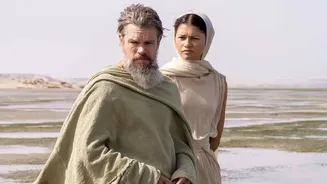
The film at the center of the buzz is 'Dreams of Violets'. It's a 75-minute docudrama that premiered at the prestigious Tribeca Festival, making history as the first fully AI-generated live-action feature to be selected by a major festival. While the headline claim is about its length—and at 75 minutes, it is indeed longer than some studio features—the real story is its purpose. The film dramatizes the brutal crackdown on anti-government protestors in Iran in January 2026, based on real journalism and eyewitness accounts. Koosha, who lived through similar oppression, felt compelled to tell this story but knew it was impossible to film traditionally. Going to Iran to shoot was out of the question for safety reasons, and he felt a social media post or blog was insufficient to capture the gravity of the events. AI became the only viable tool to bear witness.
How Do You 'Direct' an AI?
Koosha is adamant that this is not a case of pushing a button and letting a machine take over. He emphasizes that the film is 'very intentional'. While AI generated all the visuals, Koosha acted as a director in a very modern sense. He and his brother Pooya, through their company Fountain 0, used a suite of AI tools to build the world, characters, and scenes. The process involved meticulously describing physical appearances, worlds, and the physics of a scene, then collaborating with the AI to get the desired result. Koosha stresses that 99% of AI output is worthless without this intense human preparation, vision, and taste. The only part of 'Dreams of Violets' that is fully AI-generated is the video itself; the narrative, the intent, and the emotional core are entirely human-driven. The entire project was made in just a few months for around $2,000, a budget that would be unthinkable for a traditional film.
A New Frontier for Filmmaking
The existence of 'Dreams of Violets' ignites a fierce debate about the future of cinema. Koosha himself admits he finds most current AI-generated art to be 'garbage' and is wary of its crass use. His goal was not to replace jobs but to create a new, viable progression for cinema. He argues that AI can be an incredible tool for indie filmmakers, allowing them to tell ambitious stories that would otherwise be crushed by the need for a blockbuster-sized budget. The film proves that a powerful story can be told without a traditional crew, cameras, or sets, opening the door for what Koosha calls a new world of opportunities. However, the project also raises valid ethical questions about using AI to depict real-life trauma and death, a concern Koosha says he thought about 'every minute of every day' while making the film. For him, the alternative—letting these stories be silenced and forgotten—was far worse.