







Understanding the Presidential Electoral College
Unlike general elections where every citizen casts a vote for their representative, the President of India is elected indirectly. This task falls to a special body known as the electoral college. This college is composed of the elected members of both
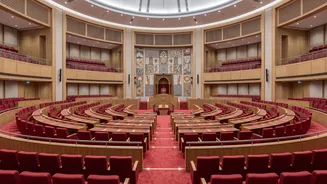
houses of Parliament—the Lok Sabha and the Rajya Sabha—and the elected members of the Legislative Assemblies (MLAs) of all states. The inclusion of both national and state legislators is a deliberate design to ensure the President represents both the Union and the states, reinforcing India's federal character. Nominated members of any house and members of state Legislative Councils are not part of this electoral college, ensuring that only those who have been directly elected by the people (or are representing those directly elected) have a say in choosing the head of state.
The System of Weighted Votes
Not every vote in the electoral college is equal. To ensure fairness and proportionality, the system uses weighted votes. This means the vote of an MLA from a populous state like Uttar Pradesh carries more value than that of an MLA from a smaller state like Sikkim. This principle ensures that the representation of each state in the presidential election is proportional to its population. The constitution lays out a specific formula to calculate this weight. Furthermore, the system is designed to maintain a balance between the states and the Union. The total value of all MLA votes from across the country is made equal to the total value of all MP votes, creating parity between the collective voice of the states and the voice of the central legislature.
Calculating an MLA's Vote Value
The value of an MLA's vote is determined by a formula prescribed in Article 55 of the Constitution. First, the total population of the state is divided by the total number of elected MLAs in its legislative assembly. This figure is then divided by 1,000. If the remainder is 500 or more, the value is increased by one. An interesting and crucial detail is that the population figures used for this calculation are from the 1971 census. This was a result of a constitutional amendment intended to promote family planning programs by ensuring that states which successfully controlled their population growth were not 'penalised' with a reduced vote share in the presidential election.
Delhi and Puducherry's Special Inclusion
Originally, Article 54 of the Constitution, which defines the electoral college, only included elected members of Parliament and state legislative assemblies. This excluded Union Territories (UTs). However, Delhi and Puducherry are unique among UTs as they have their own elected legislative assemblies. To grant them a voice in the presidential election, a specific constitutional amendment was required. The Constitution (70th Amendment) Act, 1992, was passed to include the elected MLAs from the National Capital Territory of Delhi and the Union Territory of Puducherry in the electoral college. This was a significant step in recognizing the democratic aspirations of the people in these territories, allowing their elected representatives to participate in this crucial national election for the first time.
Why This Inclusion Matters
The inclusion of MLAs from Delhi and Puducherry is more than just a constitutional footnote; it's a powerful affirmation of India's democratic and federal principles. It ensures that citizens in these Union Territories with legislatures have representation in the election of the country's first citizen. This move strengthens the idea that the President is a representative of the entire Indian republic, not just the states and the central government. The system of weighted votes, combined with the inclusive nature of the electoral college, showcases a sophisticated and balanced approach to electing the head of state—one that respects population size while ensuring that no single entity, whether a large state or the Parliament itself, can dominate the outcome.