




Kolkata's nickname, 'The London of India', isn't just a catchy phrase; it's a direct link to a past that shaped its very soul. This title speaks to a time when the city was the jewel of the British Empire, a legacy etched into its grand buildings.
The Making of an Imperial Capital
To understand
Kolkata's architecture, you have to go back to when it was Calcutta, the capital of British India from 1772 to 1911. The British East India Company, and later the Crown, envisioned Calcutta as the 'Second City of the Empire', a hub of power, trade, and culture that would rival London itself. This ambition was translated into stone and mortar. Grand administrative buildings, imposing commercial houses, and stately mansions were built to project an image of imperial dominance and permanence. Lord Wellesley, a former Governor-General, famously believed that India had to be ruled from a palace, not a country house, which led to the construction of the grand Government House (now the Raj Bhavan). The city was deliberately structured with distinct European and Indian sections, with the 'White Town' containing the grand boulevards and monumental architecture that form the basis of its London comparison.
Architectural Echoes of Empire
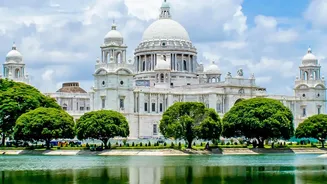
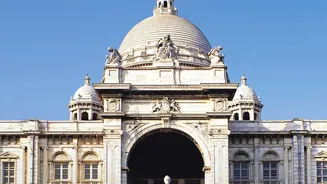
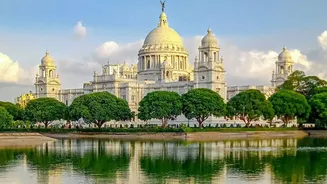
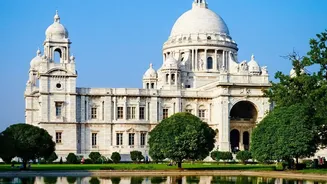
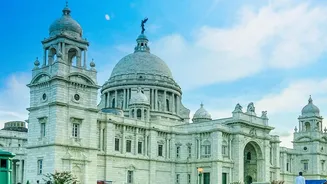
Many of Kolkata’s most famous landmarks are direct architectural descendants of European styles. The Calcutta High Court, the oldest in the country, was built in a striking Neo-Gothic style, echoing the grand civic buildings of Britain. Perhaps the most iconic structure, the Victoria Memorial, was conceived by Viceroy Lord Curzon as a tribute to Queen Victoria. Built with Makrana marble, the same used for the Taj Mahal, its design is an Indo-Saracenic fusion, blending British, Mughal, and other Indian elements to create a monument unique to the empire. Similarly, St. Paul's Cathedral was designed in a Gothic Revival style to serve the growing European community, with its tower modelled after the Bell Harry Tower of Canterbury Cathedral in England. These buildings were not just functional; they were statements, designed to make the British presence feel both powerful and everlasting.
The 'City of Palaces'
Long before 'London of India' became common, Kolkata was known as the 'City of Palaces'. This earlier nickname, coined by a traveller in the early 19th century, referred not only to the British-built administrative centres but also to the opulent mansions built by wealthy Bengali merchants and landowners, or 'Babus'. These powerful families, enriched through trade and alliances with the East India Company, built palatial homes that blended European neoclassical styles with traditional Bengali elements. The Marble Palace is a prime example, a 19th-century mansion with Neoclassical features, Corinthian pillars, and vast collections of Western art, standing as a testament to this unique cultural and architectural fusion. These private palaces, scattered throughout North Kolkata, added to the city's reputation for grandeur and opulence, solidifying its palatial image.
A Living Heritage for Modern Visitors
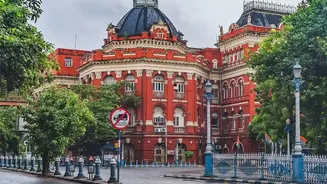
Today, these heritage sites are not merely relics of a bygone era; they are the vibrant heart of Kolkata and a primary reason visitors are drawn to the city. A walk through the B.B.D. Bagh area, formerly Dalhousie Square, is like stepping back in time. The area is a dense concentration of colonial landmarks, including the formidable Writers' Building, the former nerve centre of British administration, and the grand General Post Office. These buildings, once symbols of imperial rule, are now cherished as architectural treasures and major tourist attractions. The blend of stunning British-era charm with the dynamic pulse of Bengali culture, the bustling markets, and the city's famed culinary scene creates an experience that is unique in India. For visitors, exploring these sites is a journey into the complex history that shaped not just a city, but the modern Indian nation.