








The Return of a Legend, Reimagined
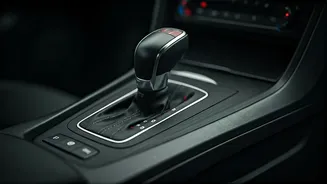
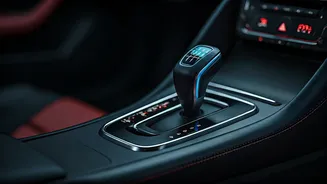
At first glance, the interior of the new Ferrari 12Cilindri Manuale is a dream come true for purists. A polished, open-gate metal shifter with a classic ball-top lever sits proudly on the center console, accompanied by a three-pedal layout. This is the setup
that defined Ferrari supercars for decades, a feature absent from its V12 models since the 599 GTB ceased production in 2012. However, this is not a simple mechanical throwback. Instead, Ferrari has engineered a sophisticated system it calls “Manuale By-Wire.” It’s designed to deliver the raw, tactile experience of shifting gears yourself without sacrificing the blistering speed and efficiency of a modern transmission. The goal isn’t to go back in time, but to bring the most beloved parts of the past into the future.
How 'By-Wire' Fakes It To Make It
So, how does it work if it's not a real manual? The secret lies in the fact that the gear lever and clutch pedal have no physical connection to the gearbox. Underneath it all is Ferrari's standard, lightning-fast eight-speed dual-clutch transmission (DCT). When you press the clutch and move the shifter through its metal gates, you're not moving linkages or rods. Instead, a series of advanced sensors reads the position of the lever and the travel of your foot on the clutch pedal. These inputs are converted into electronic signals and sent to the transmission's control unit, which then executes the gear change. Ferrari went to extraordinary lengths to make the simulation feel authentic, engineering mechanical resistance, springs, and rollers into the shifter mechanism to perfectly replicate the satisfying “clink-clack” sound and feel of a traditional gated manual.
The Best of Both Worlds
This innovative approach offers a unique combination of benefits. Drivers get the visceral, hands-on involvement that makes manual cars so engaging, but with the safety net of modern technology. For instance, the system is so realistic that if you get the clutch timing wrong, the car can actually judder or stall, just like a true manual. However, the electronic brain also prevents a catastrophic “money shift”—accidentally shifting into a gear that would destroy the engine at high speed. The system cleverly uses only six of the eight available gears in manual mode, mimicking a classic gearbox layout and reserving the top two overdrive gears for more relaxed, automatic cruising. When you’re stuck in traffic or simply want a rest, you can switch the car into a fully automatic mode, letting the DCT handle everything.
Why Now? Nostalgia Meets a Performance Reality
For over a decade, the pursuit of fractions of a second in performance figures led Ferrari and other supercar makers to ditch manual transmissions entirely in favor of dual-clutch automatics. A DCT can shift far faster than any human, which means better acceleration and track times. By developing a by-wire manual, Ferrari can keep its performance credentials intact—the 12Cilindri Manuale has the exact same horsepower and acceleration figures as the standard automatic version. This move is also a direct response to a growing market demand. Enthusiasts and collectors have increasingly voiced a desire for more analogue and engaging driving experiences. Brands like Porsche have seen tremendous success with manual options in their GT cars, proving there is a strong appetite for three-pedal driving. Ferrari's solution is a clever way to meet that demand without compromising the engineering of its latest supercar.