




Meet Toum: The Garlic Lover’s Dream
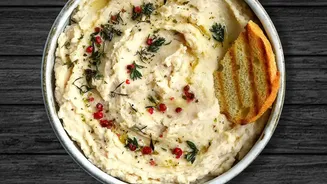
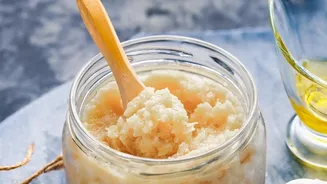
Toum, which simply means “garlic” in Arabic, is a staple condiment in Lebanese and other Levantine cuisines. It’s a powerful, pungent, and intensely flavorful sauce made from just four simple ingredients: fresh garlic, a neutral oil like canola or sunflower,
lemon juice, and salt. Served with everything from grilled chicken shawarma to roasted vegetables and pita bread, its cloud-like texture is as remarkable as its bold taste. Unlike aioli, which is often a garlic-flavoured mayonnaise containing egg, traditional toum achieves its creamy state through the power of garlic alone.
The Science of Emulsion
At its core, toum is an emulsion. An emulsion is a mixture of two liquids that normally don’t combine, like oil and water. To get them to mix and stay mixed, you need an “emulsifier”—a special agent whose molecules can grab onto both oil and water, holding them together in a stable suspension. In mayonnaise, the hero emulsifier is lecithin, a compound found in egg yolks. The lecithin molecules create a bridge between the oil and the water-based lemon juice or vinegar, allowing for a thick, creamy sauce. But with no egg in sight, what is doing the heavy lifting in toum?
Garlic's Hidden Superpower
The secret to toum lies within the garlic itself. When garlic cloves are crushed or pureed, they release a variety of compounds that act as natural emulsifiers. Research has identified proteins, saponins, and complex carbohydrates called fructans as key players in garlic's emulsifying ability. One particularly notable compound is allicin, which is formed when garlic is crushed. Allicin has surfactant-like properties, meaning one part of the molecule is attracted to water (hydrophilic) and another part is attracted to oil (hydrophobic). These compounds work together to surround the tiny droplets of oil, suspending them in the lemon juice and the water from the garlic itself, creating a thick and stable mixture where oil and water can no longer separate.
Why Is It White?
The brilliant white color of toum is also a direct result of this emulsification. When you have two clear liquids like oil and lemon juice, you might wonder how they produce an opaque, white sauce. The phenomenon is due to light scattering. An emulsion contains countless microscopic droplets of oil suspended in the watery phase. As light enters the sauce, it hits these tiny, densely packed droplets and is scattered in all directions. Because all wavelengths of light are scattered equally, our eyes perceive the sauce not as clear, but as bright white—the same reason milk and mayonnaise are also white.
The Art of a Stable Sauce
Anyone who has made toum knows it can be finicky. The most common reason a toum “breaks”—separating back into oil and a garlic-lemon sludge—is adding the oil too quickly. The garlic’s emulsifying compounds can only handle so much oil at once. The process requires slowly drizzling in the oil, almost drop by drop at first, while a food processor is running. This gives the garlic time to break down and release its emulsifiers, which can then properly incorporate the oil. Adding a tablespoon of ice water can also help stabilize the emulsion if it looks like it’s about to separate, as the cold temperature can help the mixture stay thick and fluffy.