







A Digital Doctor for Crops
Imagine a doctor that can diagnose an illness just by looking at a picture. That's essentially what researchers have developed for plants. Using a type of AI called computer vision, new systems can analyse images of plant leaves, stems, or fruit to identify
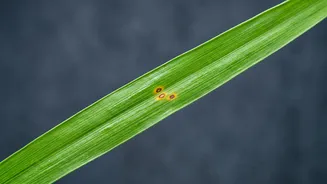
signs of disease. These AI models are trained on massive datasets containing tens of thousands of images of both healthy and diseased plants, learning to spot tell-tale patterns like discoloration, spots, and lesions that might be invisible to the naked eye. This technology allows for diagnoses that are not only incredibly fast—often taking just a few seconds—but also highly accurate, with some models achieving up to 95% accuracy.
From Smartphone Snap to Solution
For a farmer, the process is remarkably simple. Using a smartphone app, they can take a photo of a suspicious-looking plant. The image is uploaded, and an AI model, typically a Convolutional Neural Network (CNN), analyses it by comparing the visual data to its vast library of known diseases. Within seconds, the app can return a diagnosis, identify the specific disease or pest, and even recommend a targeted treatment plan. Some platforms, like Plantix, which is widely used in India, can already identify around 800 symptoms across 60 different crop types. This effectively puts a plant pathologist in every farmer's pocket, bridging a massive knowledge gap.
Tackling a Wide Array of Threats
The power of this AI lies in its versatility. Researchers are training models to identify a wide range of diseases that plague Indian agriculture. For example, specific AI models have been developed to detect common but devastating issues like blight in potatoes, rust in wheat, and various fungal and bacterial infections in tomatoes and chillies. In Maharashtra, AI analysis has identified pink bollworm as a top pest in cotton, while in Telangana, it has flagged the brown plant hopper as a major threat to rice. The technology isn't just reactive; by analysing weather patterns, soil conditions, and historical data, it can also provide predictive warnings about potential outbreaks weeks in advance.
The Promise for Indian Agriculture
The potential impact is enormous. Early detection means farmers can intervene before an infection spreads, saving a significant portion of the 20-40% of crops lost globally to disease each year. This leads to higher yields and better income. Furthermore, by enabling precise, targeted treatment, AI reduces the need for broad, preventative pesticide spraying. Studies have shown this can cut pesticide usage by 30-40%, which not only lowers costs for farmers but also lessens the environmental impact of agriculture. In India, where there is a massive shortfall of agricultural extension officers, AI-powered apps offer a scalable way to deliver expert advice directly to millions of farmers.
Hurdles on the Road to Adoption
Despite its promise, the widespread adoption of AI in Indian farming faces significant challenges. Many rural areas still lack reliable internet connectivity, which is essential for cloud-based AI processing. Furthermore, a high upfront cost for technologies like drones and sensors can be prohibitive for smallholder farmers, who make up over 85% of India's farming population. Digital literacy is another major hurdle; many farmers may struggle to use complex apps without proper training and support. To be truly effective, AI models also need to be trained on high-quality, region-specific data that accounts for India's diverse agro-climatic zones.