








The New Figure and What It Means
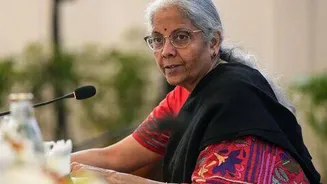
The headline-making figure comes from data presented in Parliament, showing that the Unified Pension Scheme (UPS) has seen very limited adoption. As of late July 2026, only 1,18,195 central government employees had opted for the scheme. This represents
just 4.3% of the roughly 27.6 lakh employees covered under the National Pension System (NPS). The UPS was introduced in April 2025 as a middle ground. It was designed to address long-standing demands from government employees for a guaranteed pension, similar to the much-discussed Old Pension Scheme (OPS). The slow uptake suggests that a majority of eligible employees are, for now, choosing to stick with the existing NPS framework, despite the lure of a more predictable, assured pension from the UPS.
The Old Pension Scheme (OPS): A System of Guarantees
The Old Pension Scheme (OPS) was the default for government employees who joined service before January 1, 2004. Its primary feature is that it is a 'defined-benefit' plan. This means retirees are guaranteed a fixed monthly pension for life. This pension is typically calculated as 50% of their last drawn basic salary, adjusted periodically with Dearness Relief to counter inflation. A major point of attraction for the OPS is that employees do not contribute any portion of their salary towards the pension fund; it is entirely funded by the government. This makes it a secure, zero-risk option for the retiree but places a significant, long-term financial burden on the government exchequer.
The National Pension System (NPS): A Market-Linked Approach
Introduced in 2004, the National Pension System (NPS) replaced the OPS for all new government recruits and is open to private-sector employees and the self-employed. It is a 'defined-contribution' scheme. Here, both the employee and the employer make regular contributions to a pension account. This money is then invested in market-linked instruments like equities and bonds. The final pension amount is not guaranteed; it depends on the total contributions and the returns generated by the investments over the years. While this involves investment risk, it also holds the potential for higher returns compared to traditional savings. Upon retirement, a portion of the corpus can be withdrawn as a lump sum, while the rest must be used to purchase an annuity for a regular pension.
Head-to-Head: The Core Comparison
The choice between these schemes boils down to a fundamental trade-off: security versus growth. The OPS offers complete security with a guaranteed, government-paid pension, but it is accessible only to a specific group of pre-2004 government employees. Some states have recently decided to revert to the OPS for their employees, sparking a nationwide debate about its financial sustainability. The NPS, on the other hand, puts the onus on the individual to build their retirement corpus through contributions and market-linked growth. It offers flexibility, portability, and tax benefits, but the final outcome is subject to market performance. The new UPS tries to bridge this gap by offering an assured pension within the contributory framework of the NPS, but its low adoption shows employees are still weighing its benefits against the familiar NPS structure.
Who is Affected and What's Next?
This debate directly impacts millions of central and state government employees. Those under NPS have been vocal in demanding the security of the OPS, which prompted several states to make the switch and the central government to introduce the UPS as a compromise. However, the central government has repeatedly stated that there is no proposal to restore the OPS for its employees, citing the heavy fiscal burden. For now, central government staff must choose between the standard market-linked NPS and the new UPS with its guaranteed benefits. Private-sector employees, meanwhile, continue to rely on options like the NPS and Employee Provident Fund (EPF) to build their retirement savings. The slow start for the UPS indicates that the final chapter on India's pension debate is far from written.