



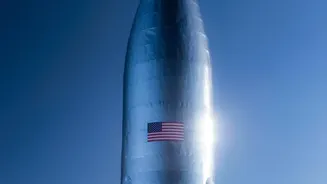
A Landmark Mission with a Twist
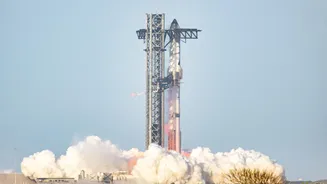
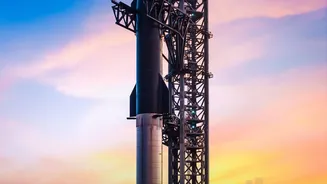
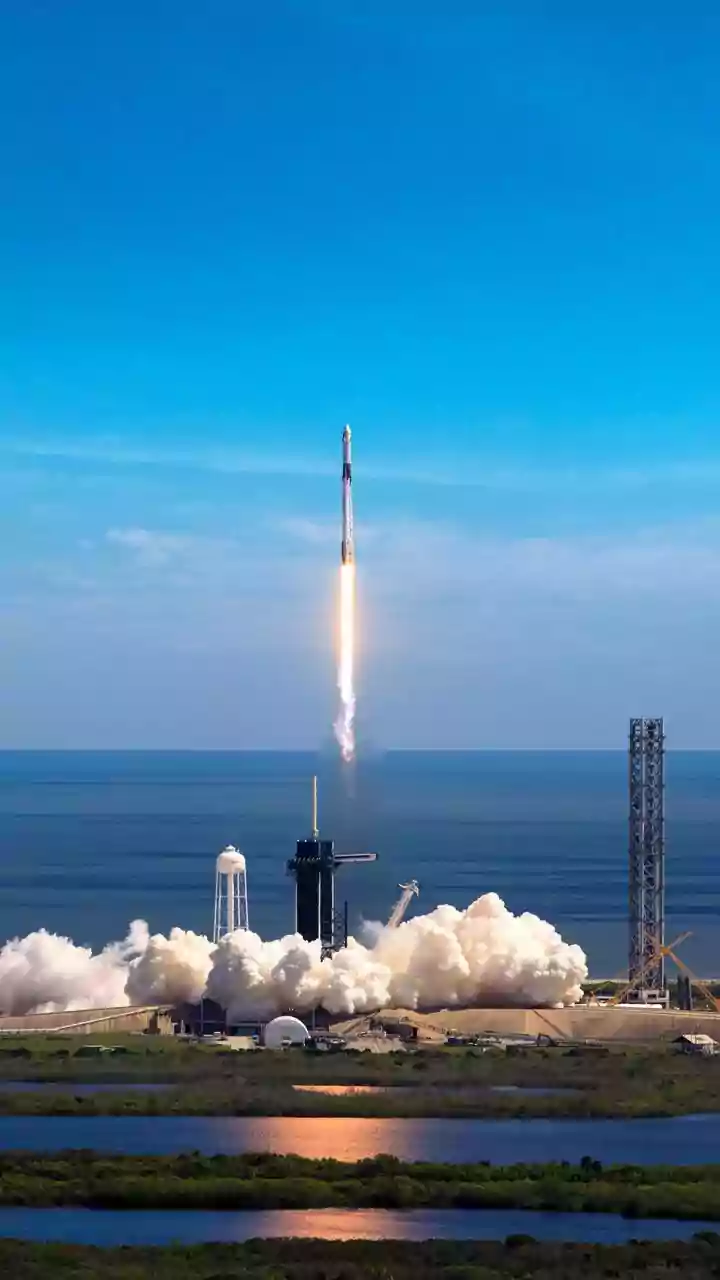
On Friday, November 13, 2026, the world's most powerful rocket, Starship, lifted off from Starbase, Texas, for its 15th test flight. The mission's ambitious goal was to launch to orbit and then recover both of its massive stages by catching them with
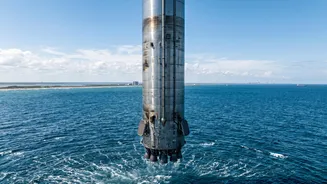
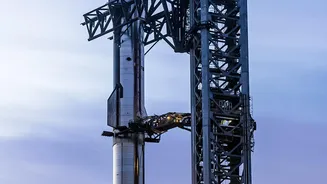
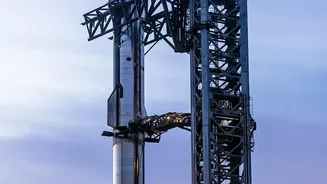
the launch tower's mechanical arms, nicknamed 'Mechazilla'. While the mission was a partial success, it was the second half of the plan that made history. The Super Heavy booster, which provides the initial thrust, aborted its catch attempt due to a low-fuel issue and was lost over the Gulf of Mexico. However, the Starship upper stage, known as 'Ship 42', continued its journey, setting the stage for a spectacular finale.
22 Hours in Orbit
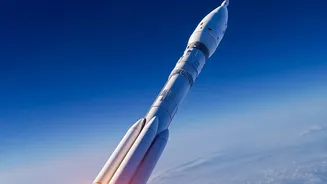
Before its dramatic return, the Starship spacecraft had a busy day. The primary mission objective was to deploy 26 next-generation Starlink V3 satellites into low-Earth orbit, which it completed successfully. This demonstrates Starship's capability not just as a test vehicle but as a functioning commercial launch platform. Following payload deployment, the spacecraft spent the next 21-plus hours circling the Earth approximately 14 times. This extended duration in space was the longest for any Starship mission to date and allowed engineers to monitor the vehicle's systems, including the crucial heat shield, ensuring they were healthy for the fiery plunge back through the atmosphere. Three of the deployed satellites were even equipped with cameras to photograph the heat shield's condition in orbit.
The 'Holy Grail' Catch
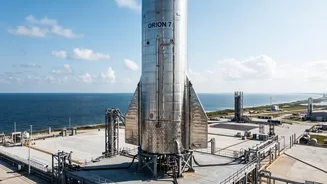
On Saturday, November 14, nearly 22.5 hours after launch, Ship 42 performed a deorbit burn and began its descent. Onlookers watched as the 171-foot-tall vehicle performed a controlled 'bellyflop' maneuver to slow itself before igniting its Raptor engines for the final landing sequence. It then masterfully maneuvered itself into a vertical position and descended precisely between the launch tower's waiting 'chopstick' arms, which closed around it, securing the vehicle in a historic first-of-its-kind recovery from orbit. Recovering the upper stage is considered far more difficult than the booster because it travels to orbital velocity and endures the much more intense heat of re-entry. As one SpaceX commentator emotionally stated on the company's live broadcast, 'We caught a Starship, and now everything changes'.
Why This Changes Everything for SpaceX
The successful catch of the Starship upper stage is a monumental step toward SpaceX's goal of a fully and rapidly reusable launch system. While the company's Falcon 9 rocket reuses its first-stage boosters, the upper stage is always discarded. By recovering both the Super Heavy booster (which it has done on previous flights) and now the orbital Starship, the entire system can theoretically be relaunched with minimal refurbishment. This could drastically slash the cost of accessing space, with some analysts suggesting a potential 70 percent cost reduction compared to expendable rockets. Success unlocks the potential for a launch frequency closer to that of commercial aircraft, enabling everything from the rapid expansion of the Starlink network to ambitious missions to the Moon and Mars, for which NASA plans to use a modified Starship as a lunar lander.