



A Cosmic Clean-Up Operation
The UK's first nationally commissioned Active Debris Removal (ADR) mission is a landmark project designed to tackle the growing problem of space junk. Backed by over £60 million in government funding, the mission will involve launching a specialised spacecraft
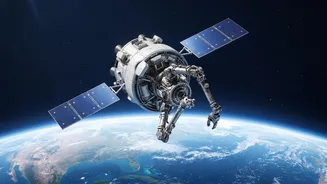
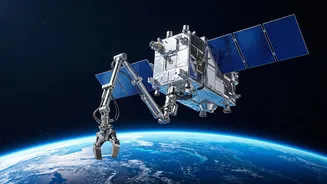
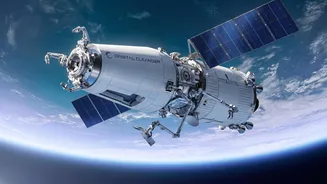
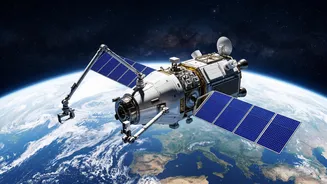
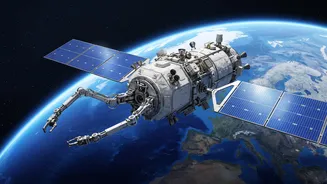
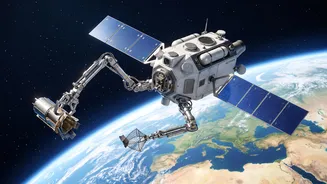
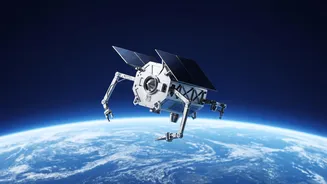
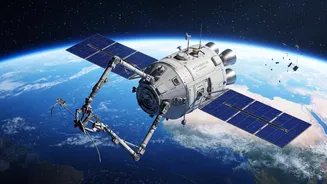
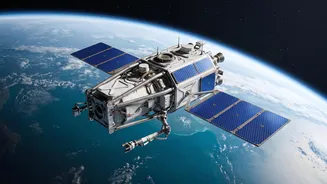
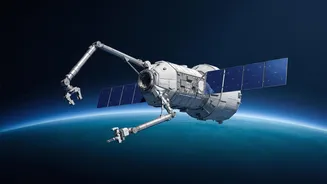
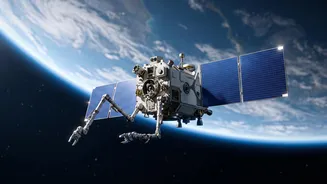
to capture and remove two defunct UK-registered satellites currently in low-Earth orbit. The spacecraft, being built by the company ClearSpace, will use advanced robotic technology, including a multi-armed capture system, to grab these old satellites. After capturing them, it will guide them into a lower orbit where they will safely burn up in Earth's atmosphere, leaving the orbital path clearer for active satellites.
Why Space Debris Is a Big Deal
Low-Earth orbit is becoming dangerously cluttered. It’s not just old satellites; it's also spent rocket stages and millions of tiny fragments from past collisions. There are over 32,000 tracked objects in orbit, but only about half of them are active satellites. These pieces of junk travel at incredible speeds—up to 17,000 miles per hour, or about ten times faster than a bullet. At that velocity, even a small fragment the size of a paint chip can cause catastrophic damage to an active satellite, potentially knocking out services we rely on daily, such as GPS, weather forecasting, and global communications. Experts warn of a potential chain reaction known as the 'Kessler syndrome', where collisions create more debris, leading to more collisions, which could make parts of orbit unusable for generations.
A World-First Mission with a Future Focus
This UK mission is the first of its kind, designed to remove more than one piece of debris in a single outing. The innovative spacecraft is also designed to be refuellable, meaning it could potentially perform multiple cleaning missions over many years. Targeted for launch in 2029 from the SaxaVord Spaceport in Scotland, the mission is about more than just tidying up. It aims to establish the UK as a leader in the emerging market for in-orbit servicing, assembly, and manufacturing (ISAM). The technologies developed for this mission—like advanced autonomous navigation and capturing objects not designed to be caught—are crucial for future space operations, including repairing, refuelling, and upgrading satellites in orbit.
Your Chance to Make Space History
To celebrate this pioneering venture, the UK Space Agency is inviting the public to name the mission's spacecraft. The agency is looking for a two_word name that reflects the mission's innovative and sustainable spirit, accompanied by a short explanation. The competition is open until December 10, 2026, and offers a unique opportunity for anyone to become part of the UK's space story. The chosen name will be etched onto the side of the actual spacecraft, cementing a piece of public engagement into the history of space exploration. This initiative follows a tradition of public involvement in space, aiming to inspire the next generation and raise awareness about the importance of keeping our orbital environment safe and sustainable.