



A Milestone of Speed and Scale
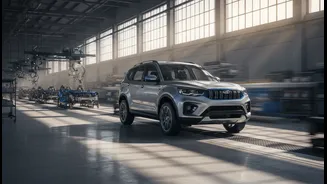
In July 2026, Mahindra & Mahindra announced a landmark achievement at its advanced manufacturing facility in Chakan: the production of its three-millionth vehicle. But the headline number, while impressive, hides the more compelling story. The plant,
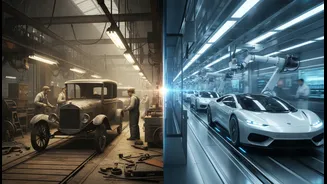
which began operations in December 2009, took 107 months—nearly nine years—to roll out its first million vehicles. In stark contrast, the most recent million, taking the tally from two million to three million, was completed in just 27 months. This dramatic acceleration is a powerful indicator of the company’s transformation, reflecting surging customer demand and a revolution in its manufacturing capabilities. Averaged out, the production rate has jumped from roughly 9,300 vehicles a month during the first-million period to around 37,000 a month for the latest million.
The Long Road to One Million
Mahindra's automotive story began long before the Chakan plant, starting with the assembly of Willys Jeeps in 1949. For decades, the company built its reputation on rugged, utilitarian vehicles that became staples across rural and semi-urban India. Models like the Commander and the iconic Bolero, launched in 2000, defined the brand as a maker of tough, no-nonsense workhorses. The path was one of steady, incremental growth. Reaching the first million-unit milestone at Chakan was a testament to this legacy of persistence, built over nearly a decade of consistent production after the plant opened in 2009. It represented the culmination of Mahindra's first era: solid, dependable, but operating at a different pace and scale.
The SUV Boom and Strategic Shifts
The turning point for Mahindra was its strategic decision to double down on the passenger SUV segment, transforming its brand from purely utilitarian to aspirational. The launch of the Scorpio in 2002 was a precursor, but the modern surge began with models like the XUV500. In recent years, a trio of blockbuster products—the Thar, XUV700, and Scorpio-N—completely redefined the company’s trajectory. These SUVs captured the imagination of a new generation of Indian buyers, creating unprecedented demand and lengthy waiting lists. This product-led revival was the primary engine behind the need for rapid production growth. The company's focused portfolio of high-demand SUVs allowed it to capture significant market share, recently becoming India's second-largest passenger vehicle original equipment manufacturer.
Manufacturing Gets a High-Tech Overhaul
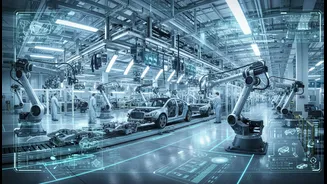
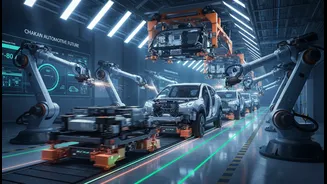
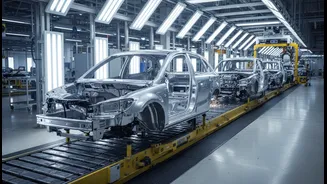
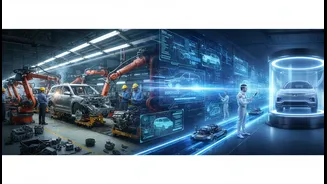
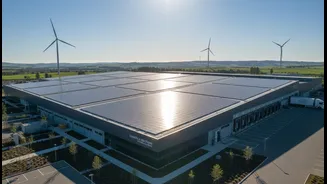
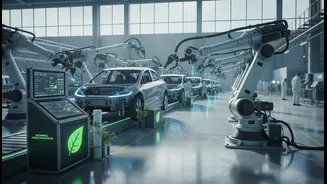
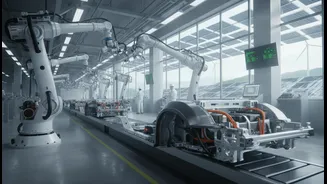
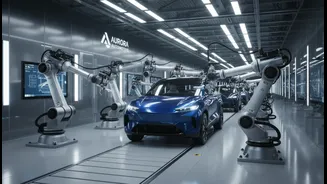
Meeting this new demand required more than just great products; it demanded a manufacturing revolution. The Chakan plant evolved into a state-of-the-art facility leveraging Industry 4.0 technologies. Today, it employs approximately 1,500 robots, with over 98% automation in the body shop. Technologies like AI-based monitoring, 5G connectivity for industrial IoT, and multi-model assembly lines allow for immense flexibility and efficiency. This lets Mahindra produce 19 different models and over 450 variants—spanning internal combustion engines (ICE), commercial vehicles, and electric vehicles (EVs)—on the same production lines. The choice of the BE 6, a 'Born Electric' SUV, as the three-millionth vehicle was symbolic, highlighting that the plant is not just building faster, but is also future-ready.
What This Means for the Road Ahead
This accelerated production capability positions Mahindra strongly for its next phase of growth. The company is not just clearing its backlog of orders but is also laying the groundwork for an ambitious future that heavily features electric vehicles. The Chakan plant’s ability to seamlessly integrate EV manufacturing—powered by 100% renewable energy—is a strategic advantage. With plans to launch 16 new SUVs by 2031, including a robust lineup on its INGLO electric platform, the ability to scale production rapidly will be crucial. The four-fold increase in production speed isn't just a historical statistic; it's a forward-looking statement of intent, signaling Mahindra's readiness to compete and lead in India's dynamic and fast-evolving automotive market.