



Why Separation is Everything
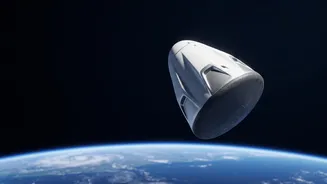
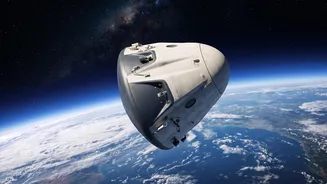
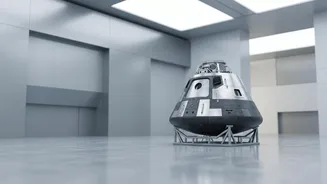
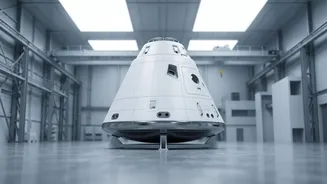
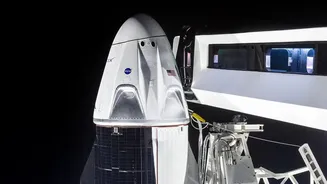
In human spaceflight, success isn't just about reaching orbit; it's about returning safely. For the Gaganyaan crew module—the capsule where Indian astronauts will live—the ability to separate cleanly and reliably from other components is a matter of life
and death. These 'separation events' occur at different, high-stakes moments: an emergency abort on the launchpad, detaching from the service module before re-entry, or jettisoning protective covers to deploy parachutes. The recent push by the Indian Space Research Organisation (ISRO) involves three specific tests designed to prove these systems are flawless, ensuring the crew can be kept safe at every critical phase of the mission. When astronauts' lives are on the line, there is no room for error.
Test 1: The Post-Splashdown Uprighting System
The first major qualification test focuses on the moments immediately after the mission ends. When the crew module splashes down in the ocean, it can easily be tipped over by waves, creating a disorienting and dangerous situation for the crew inside. To counter this, ISRO has developed the Crew Module Up-righting System (CMUS). It's essentially a set of inflatable flotation bags powered by stored cold gas. A recently completed test successfully demonstrated that high-pressure gas could inflate these bags within the required timeframe, powerfully turning the capsule to the correct upright position. This ensures the astronauts remain stable and safe as they await recovery teams.
Test 2: The Umbilical Cord Separation
The second test validates the Crew Module-Service Module Connect & Disconnect System (CS-CDS). Think of this as the primary umbilical cord connecting the crew capsule to the Service Module, which provides power and life support during orbit. Before the crew module begins its fiery re-entry into Earth’s atmosphere, this connection must be severed cleanly. Any failure here could be catastrophic. The test involved a simulated crew module to prove that the umbilical connection, known as CSU-2 on the crew module side, can separate without causing any structural damage. ISRO confirmed the test was a success, validating that the mechanism works as designed and with the necessary safety margins.
Test 3: The Parachute Cover Jettison
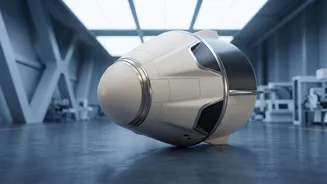
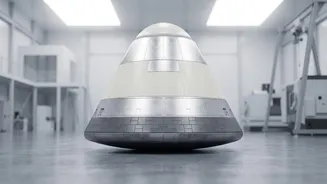
The final test in this trio addresses the structural integrity of the crew module when the apex cover is jettisoned. This cover is a protective shield over the parachute compartment, which is essential for surviving the intense heat of re-entry. However, to slow the capsule for a safe landing, this cover must be blown away to allow the parachutes to deploy. This jettisoning process exerts significant force on the crew module's structure. In the qualification test, ISRO applied loads approximately 1.75 times greater than what's expected during an actual flight. The module withstood these forces, confirming its structural design is robust enough to handle the stress of the apex cover separation, clearing the path for the crucial parachute deployment sequence.
Building Confidence for India's Space Dream
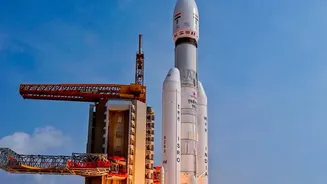
These three tests are part of a much larger, meticulous campaign to ensure every system on Gaganyaan is ready for human flight. This includes extensive parachute testing, like the Integrated Main Parachute Airdrop Tests (IMAT), and launch abort system demonstrations that pull the crew capsule away from the rocket in an emergency. While the headline-making event will be the launch itself, this intense focus on qualification and separation systems is the true foundation of the mission's safety architecture. Before the first uncrewed flight, designated G1 and expected in late 2026, and the subsequent first crewed flight (H1) in 2027, every component must be proven. This methodical, safety-first approach is ISRO’s promise to its future astronauts and the nation.