




An Ocean Frozen in Time
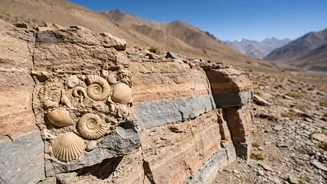
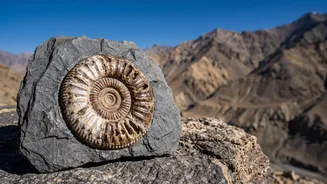
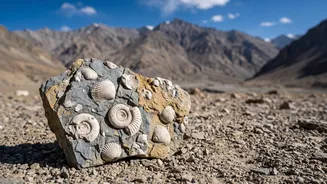
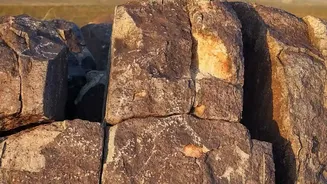
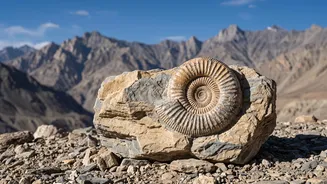
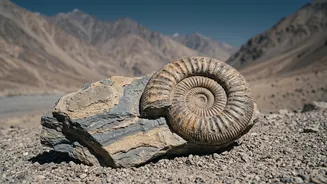
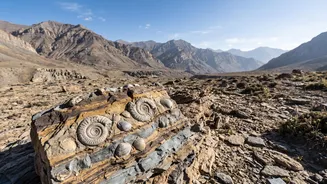
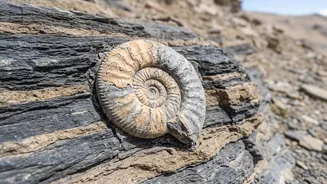
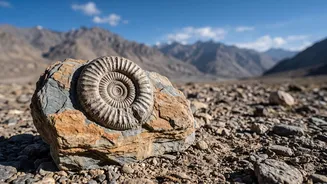
In the remote Changthang region of eastern Ladakh, geologist Dr. Ritesh Arya has unearthed a treasure trove of ancient marine life. During a recent expedition near Nyoma, his team found a rich collection of fossils dominated by spiral-shaped gastropods
(snail-like molluscs), bivalves, and oyster-like specimens. These are not just any fossils; they are the petrified remains of creatures that lived in a sea that vanished millions of years ago. Finding them here, thousands of metres above sea level, provides a breathtaking glimpse into a world that existed long before the Himalayas were born. Dr. Arya, the founder of the Tethys Fossil Museum, noted the striking similarity of these fossils to those from the well-known Subathu Formation in the outer Himalayas, but finding them so deep in Ladakh was a genuine surprise.
Ladakh's Eocene Past: A Warm Welcome
The fossils have been preliminarily dated to the Eocene epoch, approximately 34 to 38 million years ago. This period was a pivotal time in Earth's history. The planet was much warmer, and what is now the cold, arid landscape of Ladakh was a shallow, warm, tropical sea fringed with palm trees. The discovery also included fossil palms, wood, and traces of burrowing creatures, painting a picture of a vibrant coastal environment. This lost world was part of the vast Tethys Ocean, which once separated the Indian subcontinent from the rest of Asia. The fossils act as a time capsule, confirming that this marine realm extended much farther east into the Ladakh corridor than scientists had previously recognized.
The Rise of the Himalayas
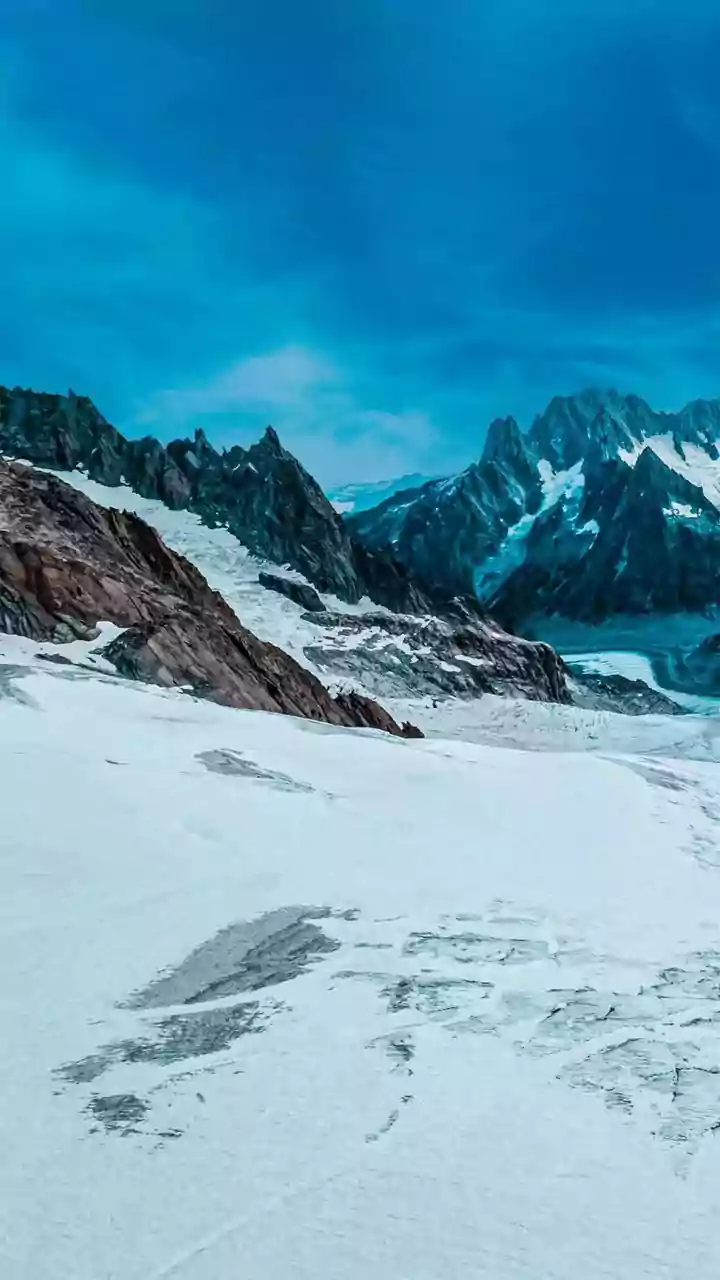
So, how did sea creatures end up on the roof of the world? The answer lies in one of the most powerful geological events in our planet's history: the collision of continents. Around 50 million years ago, the landmass that is now the Indian subcontinent, which had broken away from Africa, was drifting northwards. It eventually slammed into the Eurasian plate. This colossal impact buckled and crumpled the Earth's crust, thrusting the seafloor of the Tethys Ocean upwards. Over millions of years, this process created the towering Himalayan mountain range. The marine sediments, along with the shells and skeletons of the creatures that lived there, were lifted thousands of metres into the sky, where they remained preserved in rock for millennia.
Why This Discovery Matters
These fossils are more than just a curiosity; they are critical data points for understanding our world. For palaeontologists, they help reconstruct the biodiversity and climate of a lost ecosystem. For geologists, they provide crucial clues about the timeline of the Himalayan uplift and the final closure of the Tethys Sea. By comparing these fossils to others, scientists can map the extent of this ancient ocean with unprecedented accuracy. As Prof. Ashok Sahni, an eminent palaeontologist, noted, this discovery is on par with other remarkable fossil finds in the Himalayas. The ongoing analysis will help pinpoint the exact age and species, offering a fresh angle on the epic geological story of how India shaped Asia and created the world's highest mountains.