






A Sudden and Stunning Exit
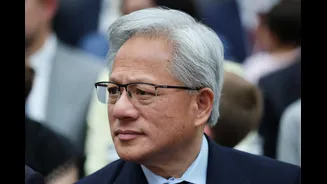
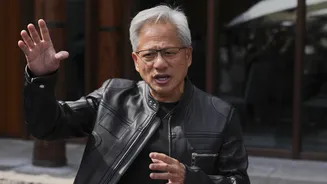
After more than 30 years at the helm, Jensen Huang's tenure at the company he co-founded came to an abrupt end in mid-November 2026. The resignation followed a series of damaging reports concerning his personal conduct, which prompted Nvidia's board to launch
an independent investigation. In a statement, the board announced Huang's immediate departure as President, CEO, and a member of the board, thanking him for his 'immeasurable contributions' without detailing the reasons for the exit. The news sent shockwaves through the market, wiping hundreds of billions of dollars off the company's valuation as investors grappled with the reality of an Nvidia without its charismatic and visionary leader. Huang himself later acknowledged making 'serious mistakes' in his personal life that he deeply regretted.
The Interim Leader: Who is Colette Kress?
Stepping into the breach is Colette Kress, Nvidia's long-serving Executive Vice President and Chief Financial Officer, who was appointed Interim CEO. Kress has been with Nvidia since 2013 and is a well-respected figure in the tech industry, with previous experience at major companies like Microsoft and Cisco. As a familiar and trusted voice for investors, she regularly co-hosted earnings calls alongside Huang. The board has expressed full confidence in her ability to 'steady the ship' during this turbulent period. Kress is tasked with ensuring that the company's operations, customer commitments, and product roadmap continue without interruption while the search for a permanent successor gets underway. She will continue to serve as CFO simultaneously, holding two of the most critical roles in the corporation.
The Search for a Successor
Nvidia's board has initiated a formal search for a new permanent CEO, stating it will consider both internal and external candidates. This is a monumental task, given that Huang had no publicly anointed successor. Analysts and media reports have floated several high-profile names. External candidates mentioned include AMD CEO Lisa Su, a distant relative of Huang's who engineered a remarkable turnaround at her own company, and Arm CEO Rene Haas, who is a former Nvidia executive. Internally, some point to figures like Ian Buck, one of Nvidia's top engineers instrumental in creating its foundational CUDA software. The challenge is finding a leader who not only understands Nvidia's complex technology but can also command the respect of its fiercely loyal engineering talent and continue its aggressive innovation.
A Founder's Shadow Looms Large
Complicating the succession search is the towering figure of Jensen Huang himself. Just days after his resignation, he issued a public statement indicating he would be 'honored' to return as CEO if the board determined it was in the best interest of the company and its stakeholders. This move has fueled a campaign by some employees and investors to reinstate him. However, sources close to the board suggest that directors are not currently considering his return and are focused on moving forward with the search for a new leader. Huang's legacy is inseparable from Nvidia's identity, from its flat management structure to its relentless focus on innovation. Any new leader will have to navigate this legacy and the powerful loyalty he still commands.
What This Means for Nvidia and AI
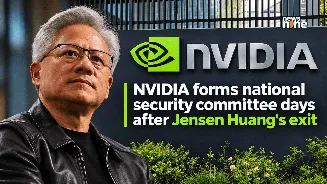
The leadership crisis at Nvidia is more than just a boardroom drama; it has implications for the entire global technology landscape. It's impossible to overstate how critical Huang was to Nvidia's vision, transforming it from a gaming chip company into the undisputed engine of the AI revolution. The company's next steps are crucial. The board has formed a new committee to oversee national security and trade compliance, signaling a focus on stabilizing relationships with governments. For the wider industry, the key question is whether Nvidia can maintain its aggressive technological roadmap and market dominance without its founder. The new CEO will inherit a fundamentally excellent business but will face immense pressure to prove that Nvidia is more than just one man.