



What is NavIC?
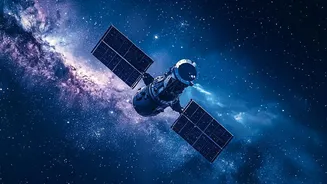
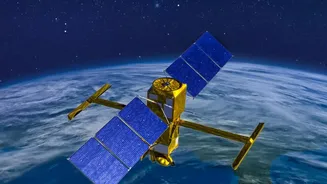
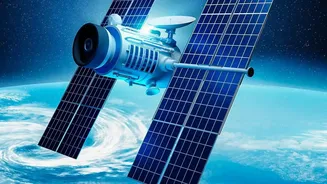
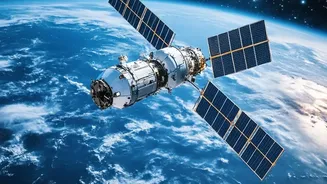
NavIC, which stands for Navigation with Indian Constellation, is India's independent regional navigation satellite system, developed by the Indian Space Research Organisation (ISRO). Think of it as India’s answer to the American GPS, but designed specifically
to serve the Indian subcontinent and a region extending 1,500 kilometres beyond its borders. The system was born from a strategic need for self-reliance, a lesson learned during the 1999 Kargil War when access to foreign-operated GPS data was not guaranteed. NavIC provides two types of services: a Standard Positioning Service (SPS) for all civilian users and a highly secure, encrypted Restricted Service (RS) for strategic use by the military and other authorised agencies. Its applications are vast, covering everything from disaster management and vehicle tracking to guiding precision missiles and supporting military operations.
A Constellation in Trouble
To provide accurate positioning, a navigation system needs a minimum of four operational satellites to be visible to a receiver on the ground. This allows it to calculate latitude, longitude, altitude, and time. The original NavIC constellation was designed with seven active satellites. However, over the years, the system's strength has dwindled. Several of the first-generation IRNSS satellites have been crippled by the failure of their imported rubidium atomic clocks, which are essential for transmitting the precise timing signals needed for navigation. As of July 2026, the government confirmed in Parliament that NavIC is operating with only three satellites providing full positioning services: IRNSS-1B, IRNSS-1I, and the newer NVS-01. With only three active satellites, NavIC cannot provide standalone positioning, although its timing service remains functional.
Enter the Next Generation: NVS-03
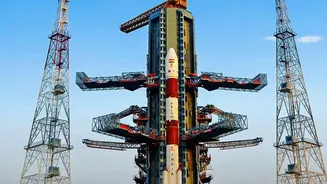
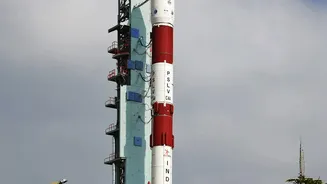
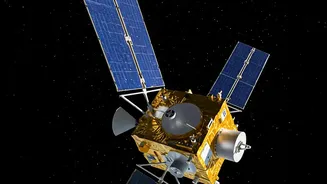
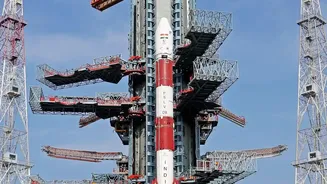
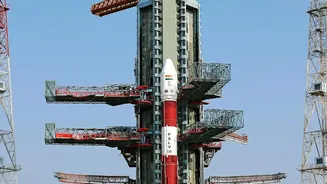
To address the shortfall, ISRO began launching the second-generation NVS series of satellites. These are more advanced, have a longer mission life of 12 years, and are equipped with superior, indigenously developed atomic clocks to avoid the problems that plagued the first generation. They also broadcast on the L1 frequency band, making them more compatible with civilian devices like smartphones and wearables. The first of this series, NVS-01, was successfully launched in May 2023 and is one of the three currently operational satellites. However, a setback occurred with NVS-02, which failed to reach its intended orbit after its launch in January 2025 due to a propulsion system malfunction. This makes the upcoming launch of NVS-03, scheduled for a window between October 15 and 20, 2026, particularly crucial.
Why the Fourth Satellite is a Game-Changer
The successful launch and operationalization of NVS-03 will be a significant milestone. It will restore the NavIC constellation to the minimum requirement of four fully functional satellites, thereby reactivating its standalone positioning service. This is not just a technicality; it's fundamental to the system's purpose. For civilian applications, it means a more robust and reliable indigenous navigation network. For the armed forces, it is a matter of strategic autonomy. An operational NavIC ensures that India's military has secure, uncompromised access to navigation for guiding missiles, coordinating troop and naval movements, and directing aircraft, without any reliance on foreign systems that could be denied or degraded during a conflict. With NVS-03 in place, NavIC will once again be able to provide the precise, independent navigation that is vital for national security.
The Road Ahead for NavIC
NVS-03 is a critical patch, but it's part of a larger plan to rejuvenate and expand India's navigation capabilities. Two more satellites, NVS-04 and NVS-05, are already in advanced stages of development. These future launches will not only replace the remaining aging first-generation satellites but will also add redundancy and strength to the constellation, ensuring its long-term health and reliability. The goal is to move beyond the minimum requirement and build a robust, multi-satellite system that can confidently serve India’s civilian economy and strategic interests for decades to come. The successful deployment of NVS-03 will be the first and most important step in turning that long-term vision into a reality.